

Sort by
ESP12E ESP8266 Wireless Trans…
ESP12E ESP8266 Wireless Transceiver Module
The ESP12E ESP8266 is a highly integrated chip designed for the needs of a new connected world. This
esp module
offers a complete and self-contained Wi-Fi networking solution, allowing it to either host the application or offload all Wi-Fi networking functions from another application processor.
It is completely addressable over SPI and UART protocols allowing you to connect your sensors or project directly to it through its GPIOs. ESP8266 is a low-cost Wi-Fi chip with a full TCP/IP stack and MCU (Micro Controller Unit) capability.
ESP8266 Serial Wifi Wireless Transceiver Module is a self-contained SOC with an integrated TCP/IP protocol stack that can give any microcontroller access to your WiFi network. ESP8266 Serial Wifi Wireless Transceiver Module is capable of either hosting an application or offloading all Wi-Fi networking functions from another application processor.
The ESP8266 has powerful onboard processing and storage capabilities that allow it to be integrated with the sensors and other application-specific devices through its GPIOs with minimal development up-front and minimal loading during runtime. Its high degree of on-chip integration allows for minimal external circuitry, and the entire solution, including the front-end module, is designed to occupy a minimal PCB area.
ESP12 Pinouts:
ESP12E ESP8266 Wireless Transceiver Pinout
Features:
WS2812 Led on board.
802.11 b/g/n
Wi-Fi Direct (P2P), soft-AP
Integrated TCP/IP protocol stack
Integrated TR switch, balun, LNA, power amplifier, and matching network
Integrated PLL, regulators, DCXO, and power management units
+19.5dBm output power in 802.11b mode
Power down leakage current of <10uA
An integrated low-power 32-bit CPU could be used as an application processor
SDIO 1.1 / 2.0, SPI, UART
STBC, 1×1 MIMO, 2×1 MIMO
A-MPDU & A-MSDU aggregation & 0.4ms guard interval
Wake up and transmit packets in < 2ms
Standby power consumption of < 1.0mW (DTIM3)
Access Point and Station Modes.
Applications:
Home Automation
Smart Plugs and Lights
Industrial Wireless Control
Baby Monitors
IP Cameras
Wearable Electronics
Security ID Tags
₹125,74
MRP. ₹225,40
Incl. GST (No Hidden Charges)
Incl. GST (No Hidden Charges)


ESP12E ESP8266 Wireless Transceiver Module
ESP12E ESP8266 Wireless Transceiver Module The ESP12E ESP8266 is a highly integrated chip designed for the needs of a new connected world. This esp module offers a complete and self-contained …
As low as
₹125,74
₹125,74
MRP. ₹225,40
Incl. GST (No Hidden Charges)
ESP12F ESP8266 Amica NodeMCU …
ESP12F ESP8266 Amica NodeMCU Wifi Module CH340
A great set of tools to develop ESP8266. NodeMCU is built based on the mature ESP8266 technology to take advantage of the abundant resources available on the web. NodeMCU has
ESP
-12-based serial WiFi integrated onboard to provide GPIO, PWM, ADC, I2C, and 1-WIRE resources at your fingertips, built-in USB-TTL serial with super reliable industrial strength CH340 for superior stability on all supported platforms.
ESP8266 is a highly integrated chip designed for the needs of a new connected world. It offers a complete and self-contained Wi-Fi networking solution, allowing it to either host the application or offload all Wi-Fi networking functions from another application processor.ESP8266 has powerful onboard processing and storage capabilities that allow it to be integrated with the sensors and other application-specific devices through its GPIOs with minimal development up-front and minimal loading during run-time. Its high degree of on-chip integration allows for minimal external circuitry, and the entire solution, including the front-end module, is designed to occupy a minimal PCB area.
NodeMCU
is an open-source IoT platform. It includes firmware that runs on the ESP8266 Wi-Fi SoC from Espressif Systems, and hardware that is based on the ESP-12 module. The term “NodeMCU” by default refers to the firmware rather than the dev kits. The firmware uses the Embedded C scripting language.
Add Internet to your next project with an adorable, bite-sized WiFi microcontroller, at a price you like! The ESP8266 processor from Espressif is an 80 MHz microcontroller with a full WiFi front-end (both as a client and access point) and TCP/IP stack with DNS support as well.
Difference Between ESP12E and ESP12F:
Features
ESP12E
ESP12F
Frequency Range
2.412 - 2.484 GHz
80 MHz and 160 MHz
PWM
Yes
Yes
ADC
1 channel
10-bit ADC
Wireless Network Type
STA / AP / STA + AP
STA/AP/STA+AP
Security Type
WEP / WPA-PSK / WPA2-PSK
WPA/WPA2
Operating Voltage
3.3V
3.3V
Onboard PCB Antenna
Yes
Yes
Operating Temperature
-40 C to +125 C
40 C to +125 C
Output Power
72.2Mbps: 16.5dBm typical & 11b: 20.5dBm typical
72.2Mbps: 15dBm typical & 11b: 18.5dBm typical
The Major difference between ESP12E and ESP12F is that
ESP12E has Relatively poor transmission power than ESP12F.
Applications:
To set up wireless communication between two applications
Mobile phone-controlled robots
Home automation System
IoT Projects
Data Sharing
Weather station
Wireless control systems
Security ID tags
₹301,55
Incl. GST (No Hidden Charges)
Out of Stock
MRP. ₹488,60
Incl. GST (No Hidden Charges)


ESP12F ESP8266 Amica NodeMCU Wifi Module CH340
ESP12F ESP8266 Amica NodeMCU Wifi Module CH340 A great set of tools to develop ESP8266. NodeMCU is built based on the mature ESP8266 technology to take advantage of the abundant …
As low as
₹301,55
₹301,55
MRP. ₹488,60
Incl. GST (No Hidden Charges)
Out of Stock
ESP14 ESP8266 Serial Wireless…
ESP14 ESP8266 Serial Wireless Transceiver WiFi Module AP+STA
The ESP-14 WiFi Module Combines ESP8266 with STM8S MCU with 802.11b/g/n and can be widely used in smart home and the Internet of Things, for the user's connected devices to the Wi-Fi wireless network. The module is built with a powerful STM8003 chip, all the pins are connected to the serial port and ESP8266 serial port connected, the user can write STM8 program, through the AT command to control the ESP8266 to achieve the vast majority of smart home and WIFI features.
ESP
8266 is a highly integrated chip designed for the needs of a new connected world. It offers a complete and self-contained Wi-Fi networking solution, allowing it to either host the application or offloading all Wi-Fi networking functions from another application processor.
ESP8266 has powerful onboard processing and storage capabilities that allow it to be integrated with the sensors and other application-specific devices through its GPIOs with minimal development up-front and minimal loading during runtime. Its high degree of on-chip integration allows for minimal external circuitry, and the entire solution, including the front-end module, is designed to occupy minimal PCB area. The range of operation of this module is almost up to 3.7km! That means it can connect to a server over 3 km away! Great for robot applications that need a remote control.
ESP14 Pinouts:
ESP-14 Pin Diagram
₹225,89
Incl. GST (No Hidden Charges)
Out of Stock
MRP. ₹464,80
Incl. GST (No Hidden Charges)


ESP14 ESP8266 Serial Wireless Transceiver WiFi Module AP+STA
ESP14 ESP8266 Serial Wireless Transceiver WiFi Module AP+STA The ESP-14 WiFi Module Combines ESP8266 with STM8S MCU with 802.11b/g/n and can be widely used in smart home and the Internet …
As low as
₹225,89
₹225,89
MRP. ₹464,80
Incl. GST (No Hidden Charges)
Out of Stock
ESP32 (38 Pin) WiFi + Bluetoo…
ESP32 (38 Pin) WiFi + Bluetooth NodeMCU-32 Development Board
The ESP32 development board promises to revolutionize the Internet of Things (IoT), creating a powerful and reliable platform for low-cost, highly integrated applications. Featuring an open-source operating system, built-in Wi-Fi, and Bluetooth support, along with two high-speed processors - one dedicated to communication tasks such as packet processing while another handles application code execution. It also supports various industry standard formats including the JTAG debug interface so you can optimize your coding designs without worrying about compatibility issues. Additionally, it comes preloaded with advanced features like PWM outputs & multiple ADCs which makes this perfect for any IoT project that looks at making life easier by automating device operations through remote control services from anywhere in the world within seconds!!
So are you ready to supercharge your IoT, home automation, and robotics projects? Look no further than the Iotcart ESP32 38 Pin Development Board. This versatile board is equipped with integrated WiFi and Bluetooth, ensuring seamless connectivity with other devices, all at your fingertips.
Featuring an impressive 38 pins, including analog and power pins, it offers a broad spectrum of input and output options, empowering you to bring your innovative ideas to life. Thanks to its Arduino compatibility, programming becomes a breeze, making it suitable for both beginners and experienced developers. What sets this board apart is its sensor compatibility.
It harmoniously works with a variety of sensors and actuators, allowing you to explore an array of project possibilities. Crafted with the latest ESP-WROOM-32 module, this board guarantees robust performance and unwavering reliability. But that's not all. The Iotcart ESP32 38-Pin Development Board is here to simplify your development journey.
Whether you're embarking on your first project or you're a seasoned developer, this board is designed with you in mind. It's your key to unlocking the world of IoT, home automation, and robotics.
Price: Buy the Iotcart ESP32 38 Pin Development Board at the best price, right here at Iotcart.
read more:
ALL YOU NEED TO KNOW ABOUT ESP32
Key Features:
Delivering exceptional performance at an affordable price point.
It's packed with advanced features and supports LWIP protocol and FreeRTOS.
With a small volume, it seamlessly integrates into various products.
Facilitates easy development through Lua programming.
Supports three modes - Access Point (AP), Station (STA), and AP+STA.
Pin Diagram of Node MCU 38 Pins:
ESP32 to 8266 Comparison:
ESP32 is a powerful device that runs through a 32-bit dual-core processor CPU with a clock speed of 160MHz to 240MHz while ESP8266 is a single-core CPU with a clock speed of around 80MHz.
As we know the ESP32 has a higher speed compared to ESP8266 it consumes more power.
ESP32 has more than 16 GPIO pins along with UART, I2C, I2S, ADC, DAC, and TWAI pins. ESP8266 also comes with 16 General Purpose Input Output (GPIO) Pins and other GPIO, UART, I2C, I2S and ADC Pins.
ESP32 comes with Bluetooth and WIFI together onboard whereas the ESP8266 comes with only WIFI.
ESP8266 vs. ESP32
Features
ESP8266
ESP32
Microcontroller
Xtensa Single-core 32-bit L106
Xtensa Dual-Core 32-bit LX6 with 600 DMIPS
Frequency (MHz)
80
160 to 240
Bluetooth
No
Bluetooth 4.2 and BLE
SRAM
No
Yes
GPIO Pins
17 (11 Usable Pins)
38 (32 Usable Pins)
PWM
8 Channels
16 Channels
ADC
10-bit
12-bit
TWAI
No
Yes
Power Consumption
Approx. 70.5 mA
Approx. 80~90mA
Working Temperature
-40ºC to 125ºC
-40ºC to 125ºC
Price
Comparatively lesser than ESP32
Comparatively higher than ESP8266
Applications:
Universal low-power IoT sensor hub
Home automation.
Mesh network.
Industrial wireless control.
Sensor networks.
Smart Socket.
Wi-Fi speech recognition device.
Configuring ESP32 as a Web Server | IoT Project
₹370,54
MRP. ₹726,60
Incl. GST (No Hidden Charges)
Incl. GST (No Hidden Charges)


ESP32 (38 Pin) WiFi + Bluetooth NodeMCU-32 Development Board
ESP32 (38 Pin) WiFi + Bluetooth NodeMCU-32 Development Board The ESP32 development board promises to revolutionize the Internet of Things (IoT), creating a powerful and reliable platform for low-cost, highly …
As low as
₹370,54
₹370,54
MRP. ₹726,60
Incl. GST (No Hidden Charges)
ESP32 (38 Pin) WiFi + Bluetoo…
ESP32 (38 Pin) WiFi + Bluetooth NodeMCU-32 Development Board
This is an ESP32 development board. It features WiFi+Bluetooth connectivity onboard and keys.
ESP
32 Development board is based on the ESP WROOM32 WIFI + BLE Module. It’s a low-footprint, minimal system development board powered by the latest ESP-WROOM-32 module and can be easily inserted into a solderless
breadboard
.
This N
odeMCU ESP32
contains the entire basic support circuitry for the ESP-WROOM-32, including the USB-UART bridge, reset- and boot-mode buttons, LDO regulator, and a micro-USB connector. Every important GPIO is available to the developer.
ESP32 is already integrated with an antenna and RF balun, power amplifier, low-noise amplifiers, filters, and power management module. The entire solution takes up the least amount of printed circuit board area. This
N
odeMCU ESP32
board is used with 2.4 GHz dual-mode Wi-Fi and Bluetooth chips by TSMC 40nm low power technology, power and RF properties best, which is safe, reliable, and scalable to a variety of applications.
Pin Diagram of Node MCU 38 Pins:
ESP32 Pin Description
ESP32 to 8266 Comparison:
ESP32 is a powerful device that runs through a 32 bit dual-core processor CPU with a clock speed of 160MHz to 240MHz while ESP8266 is a single core CPU with a clock speed of around 80MHz.
As we know the ESP32 has higher speed compared to ESP8266 it consumes more power.
ESP8266 comes with 16 General Purpose Input Output (GPIO) Pins and other GPIO, UART, I2C, I2S and ADC Pins. While ESP32 has more than 16 GPIO pins along with UART, I2C, I2S, ADC, DAC and CAN Pins.
ESP32 comes with Bluetooth and WIFI together onboard whereas the ESP8266 comes with only WIFI.
ESP8266 vs. ESP32
Features
ESP8266
ESP32
Microcontroller
Xtensa Single-core 32-bit L106
Xtensa Dual-Core 32-bit LX6 with 600 DMIPS
Frequency (MHz)
80
160 to 240
Bluetooth
No
Bluetooth 4.2 and BLE
SRAM
No
Yes
GPIO Pins
17 (11 Usable Pins)
38 (32 Usable Pins)
PWM
8 Channels
16 Channels
ADC
10-bit
12-bit
CAN
No
Yes
Power Consumption
Approx. 70.5 mA
Approx. 80~90mA
Working Temperature
-40ºC to 125ºC
-40ºC to 125ºC
Price
Comparatively lesser than ESP32
Comparatively higher than ESP8266
Applications:
Universal low-power IoT sensor hub
Home automation.
Mesh network.
Industrial wireless control.
Sensor networks.
Smart Socket.
Wi-Fi speech recognition device.
₹11682,66
Incl. GST (No Hidden Charges)
Out of Stock
MRP. ₹18270,00
Incl. GST (No Hidden Charges)


ESP32 (38 Pin) WiFi + Bluetooth NodeMCU-32 Development Board ( Pack of 25)
ESP32 (38 Pin) WiFi + Bluetooth NodeMCU-32 Development Board This is an ESP32 development board. It features WiFi+Bluetooth connectivity onboard and keys. ESP 32 Development board is based on the …
As low as
₹11682,66
₹11682,66
MRP. ₹18270,00
Incl. GST (No Hidden Charges)
Out of Stock
ESP32 & ESP8266 USB Programme…
ESP32 & ESP8266 USB Programmer Rev1.0 With Auto Boot
If you want to simplify your development and debugging tasks, the ESP32 & ESP8266 USB Programmer Rev1.0 with Auto Boot is here to help. This handy tool makes it easy to download firmware and handle serial communication on ESP32 platforms. All you need is a single USB cable to connect to your PC, and it automatically recognizes the board and its functions. It’s designed to make your setup smoother and more efficient, so you can focus on what you do best.
Pinout details:
GND
3.3V DC (100mA Max.)
RXD
TXD
Io0/Boot/DTR
EN/Reset/RTS
₹332,71
Incl. GST (No Hidden Charges)
Out of Stock
MRP. ₹586,60
Incl. GST (No Hidden Charges)


ESP32 & ESP8266 USB Programmer Rev1.0 With Auto Boot
ESP32 & ESP8266 USB Programmer Rev1.0 With Auto Boot If you want to simplify your development and debugging tasks, the ESP32 & ESP8266 USB Programmer Rev1.0 with Auto Boot is …
As low as
₹332,71
₹332,71
MRP. ₹586,60
Incl. GST (No Hidden Charges)
Out of Stock
ESP32 & ESP8266 USB Type C Pr…
ESP32 & ESP8266 USB Type C Programmer with USB to UART Converter -7Semi
The 7Semi ESP32 & ESP8266 USB Type-C Programmer is a powerful and reliable USB-to-UART converter designed to streamline development with ESP32 and ESP8266 microcontrollers.
Featuring the high-performance CP2102 bridge, it delivers stable and high-speed data transfers for smooth programming and debugging. This programmer supports both 3.3V and 5V output levels, making it compatible with a wide range of development boards and IoT components.
Real-time LED indicators offer clear visual feedback on power and data transmission, while dedicated Reset and Boot buttons simplify the programming process. With a standard 2.54mm pitch header and an included unsoldered header, the 7Semi programmer is a flexible and essential tool for any embedded systems developer or electronics hobbyist.
Features:
USB-C Interface:
Provides fast, plug-and-play interface for reliable data transfer.
The CP2102 USB to UART Bridge:
Allows for dependable, high-speed connection between the programmer and the microcontroller.
LED Indicators:
The integrated Power, RX, and TX LEDs enable real-time monitoring of connection and data transfer.
Reset and Boot Switches:
Dedicated switches improve programming control, making development easier and more efficient.
3.3V and 5V output compatibility:
Supports both voltage levels, providing flexibility for various components and microcontroller boards.
Standard 2.54mm Pitch Header:
All signals are accessible via a standard 2.54mm pitch header, with an unsoldered header provided for bespoke configurations.
₹419,50
MRP. ₹680,40
Incl. GST (No Hidden Charges)
Incl. GST (No Hidden Charges)


ESP32 & ESP8266 USB Type C Programmer with USB to UART Converter -7Semi
ESP32 & ESP8266 USB Type C Programmer with USB to UART Converter -7Semi The 7Semi ESP32 & ESP8266 USB Type-C Programmer is a powerful and reliable USB-to-UART converter designed to …
As low as
₹419,50
₹419,50
MRP. ₹680,40
Incl. GST (No Hidden Charges)
ESP32 CAM USB Programmer Rev2…
ESP32 CAM USB Programmer Rev2.0 With Auto Boot
If you've been frustrated by the tricky process of programming your ESP32-CAM, let me introduce you to the ESP32 Cam Programmer Rev2.0. This handy little tool adds the missing USB programming feature that the ESP32 CAM didn't come with. No more fiddling with manual resets or boot mode selections—just plug in the Cam-Prog, connect it to your computer via the C-Type USB, and you're good to go. It works like a shield that snaps right onto your ESP32 CAM, and with the reliable CH340 serial USB chip onboard, you'll be up and running with the Arduino IDE in no time. This is the upgrade your ESP32 CAM has been waiting for!
₹332,71
Incl. GST (No Hidden Charges)
Out of Stock
MRP. ₹586,60
Incl. GST (No Hidden Charges)


ESP32 CAM USB Programmer Rev2.0 With Auto Boot
ESP32 CAM USB Programmer Rev2.0 With Auto Boot If you've been frustrated by the tricky process of programming your ESP32-CAM, let me introduce you to the ESP32 Cam Programmer Rev2.0. …
As low as
₹332,71
₹332,71
MRP. ₹586,60
Incl. GST (No Hidden Charges)
Out of Stock
ESP32 CAM WiFi Module with OV…
ESP32 CAM WiFi Module with OV3660 Camera Module 2MP
The ESP32 development board with Cam WiFi Module is a great choice for IoT fans in India. It features a high-quality 2MP OV3660 camera.
The built-in OV3660 camera produces high-quality images, which makes it ideal for surveillance and monitoring. It also has Bluetooth for convenient remote control and fast data transfers. This ESP32 cam development board is designed to be durable, so it works well in different environments.
Whether you're a tech hobbyist or an expert, the simple interface makes it easy to use. It supports WiFi, regular Bluetooth, and BLE Beacon. This ESP32 AI camera module is best for Low-power IoT security cameras and face recognition projects.
You can even upgrade the firmware remotely, keeping you up to date with the latest IoT advancements.
Read more:
All about ESP32 Camera Module
Key Features:
Equipped with a 2MP OV3660 camera.
Supports WiFi, traditional Bluetooth, and BLE Beacon.
Designed with a user-friendly interface.
Allows for remote firmware upgrades.
Compatible with an input voltage of 5V.
Operates in a temperature range from -20°C to 85°C.
Has 520KB of SRAM and 4MB of PSRAM.
Default 32Mbit SPI Flash.
Check out our entire range of
ESP Modules & Development Board
Pinout:
Applications:
Home Smart Devices
Industrial Wireless Control
Wireless Monitoring
QR wireless identification
Wireless Positioning system signals
IoT applications
Guide to Making WiFi Security Camera with ESP32 CAM WIFI Module:
₹685,45
MRP. ₹1041,60
Incl. GST (No Hidden Charges)
Incl. GST (No Hidden Charges)


ESP32 CAM WiFi Module with OV3660 Camera Module 2MP
ESP32 CAM WiFi Module with OV3660 Camera Module 2MP The ESP32 development board with Cam WiFi Module is a great choice for IoT fans in India. It features a high-quality …
As low as
₹685,45
₹685,45
MRP. ₹1041,60
Incl. GST (No Hidden Charges)
ESP32 CP2102 Wireless Develop…
ESP32 CP2102 Wireless Development Board D1 LOLIN32
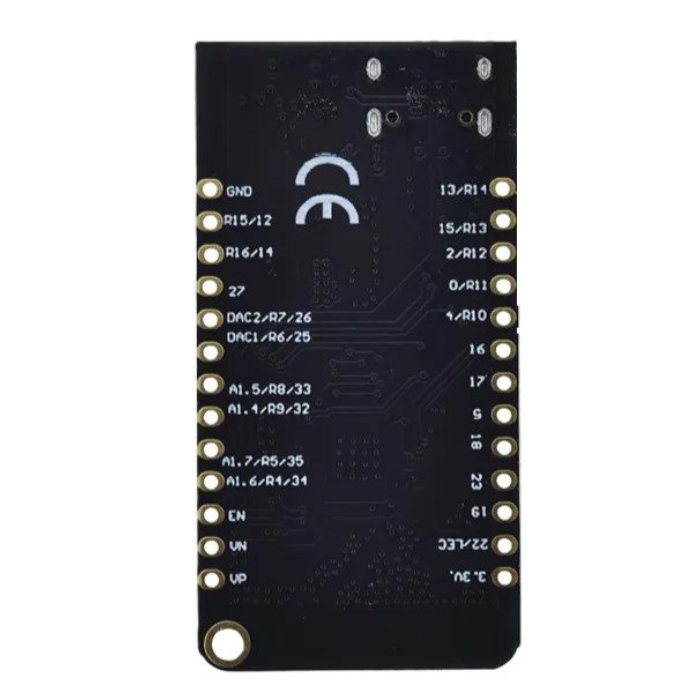
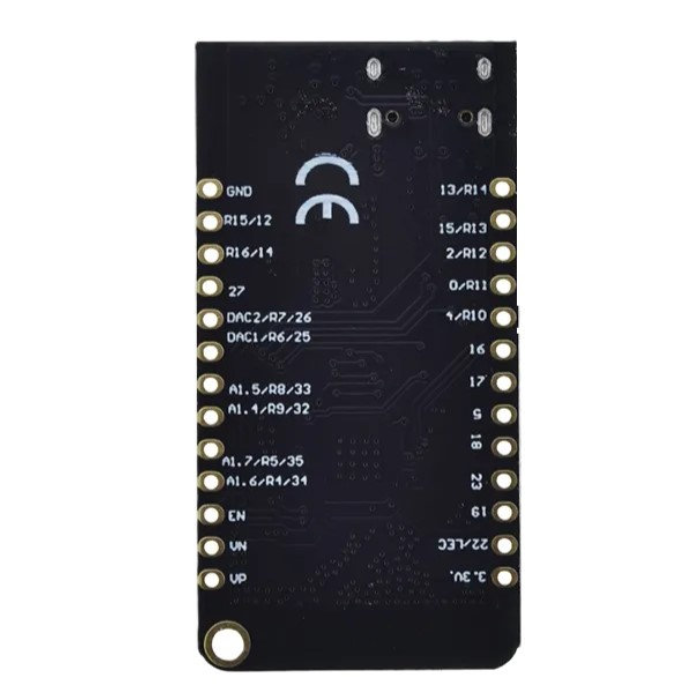
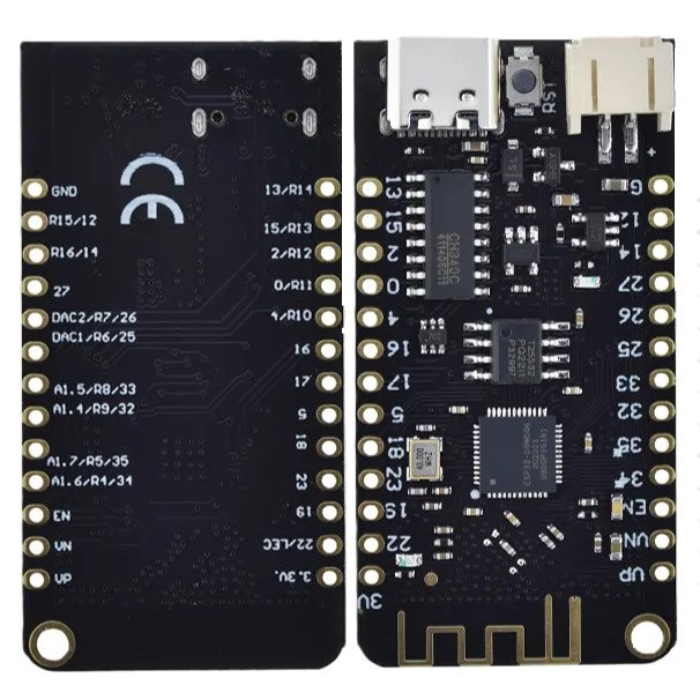
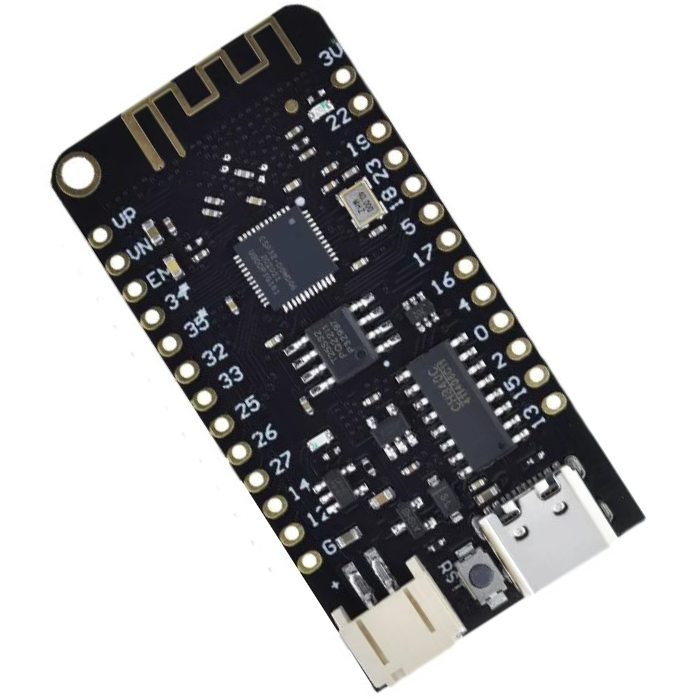
The D1 LOLIN32 ESP32 CP2102 Wireless Development Board is a small yet powerful device that improves the adaptability and effectiveness of your Internet of Things projects.
Based on the reliable ESP-32 chip, this board has 4MB of flash memory, built-in WiFi, and Bluetooth, providing you with all the connections you require straight out of the box.
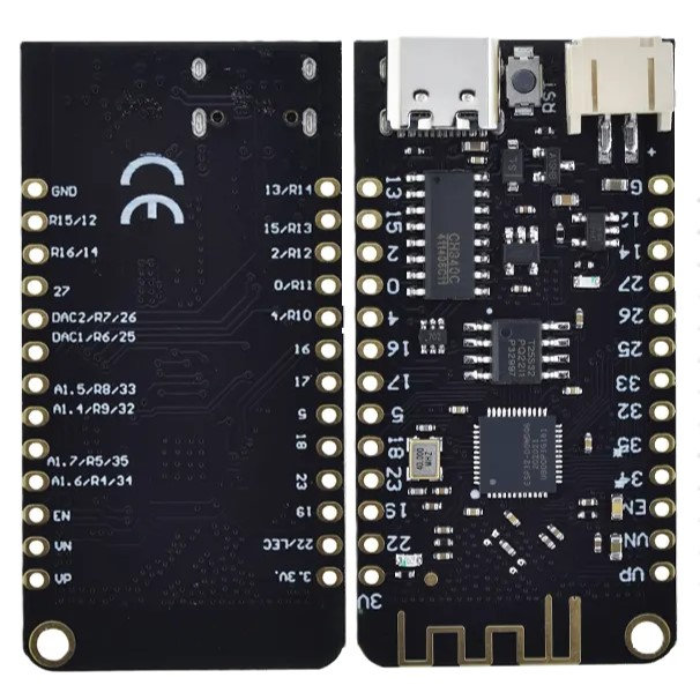
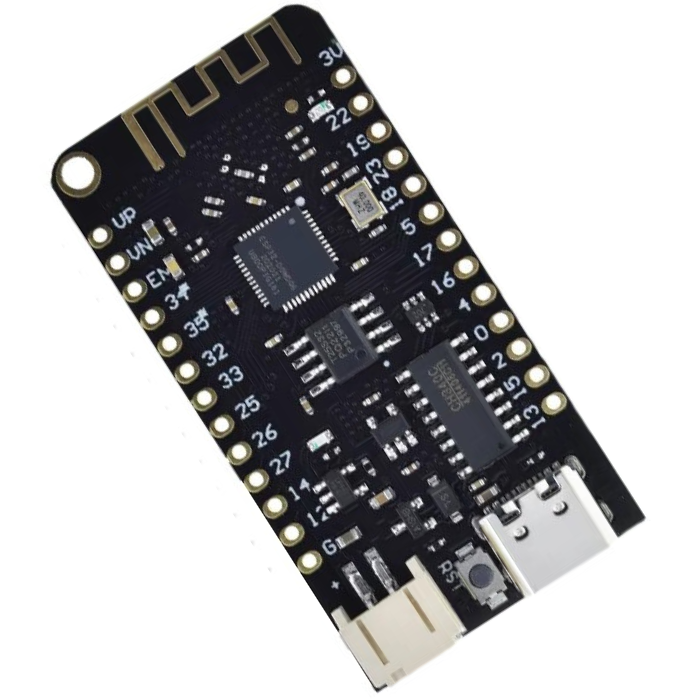
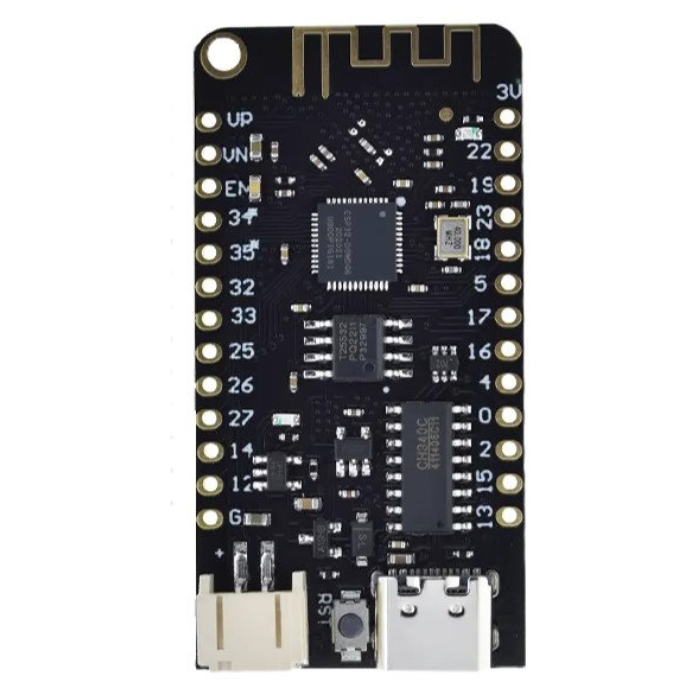
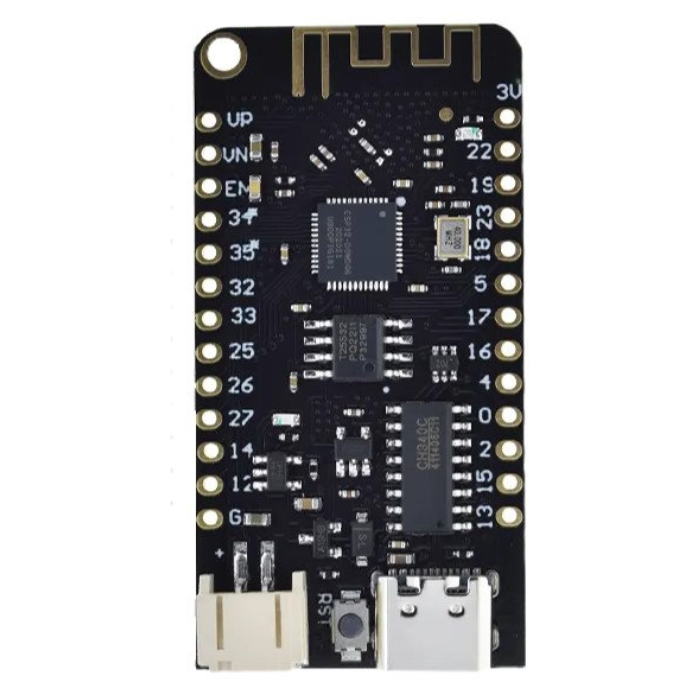
The integrated lithium battery interface of the LoLin32 is one of its most notable features. A LiPo battery can be connected directly and charged on the board, with a 500mA maximum charge current.
Now, you’ll notice this board has a streamlined design.
The manufacturer removes a few pins to make it lighter, but don’t worry—you still have access to all 21 I/O pins. The number of GND and 3V3 pins is reduced, but you’ll still have everything you need for most projects.
The JST connector for the battery is strategically placed next to the USB port, which is your go-to for programming (whether you’re using Arduino, Lua, or MicroPython) and charging.
The status LED and reset button have been thoughtfully relocated between the USB and battery connectors.
This board is engineered for those who need reliability, power, and convenience in one compact package.
₹485,16
Incl. GST (No Hidden Charges)
Out of Stock
MRP. ₹838,60
Incl. GST (No Hidden Charges)
ESP32 CP2102 Wireless Development Board D1 LOLIN32
ESP32 CP2102 Wireless Development Board D1 LOLIN32 The D1 LOLIN32 ESP32 CP2102 Wireless Development Board is a small yet powerful device that improves the adaptability and effectiveness of your Internet …
As low as
₹485,16
₹485,16
MRP. ₹838,60
Incl. GST (No Hidden Charges)
Out of Stock
