

Sort by
ATmega16
ATmega16
The
ATmega
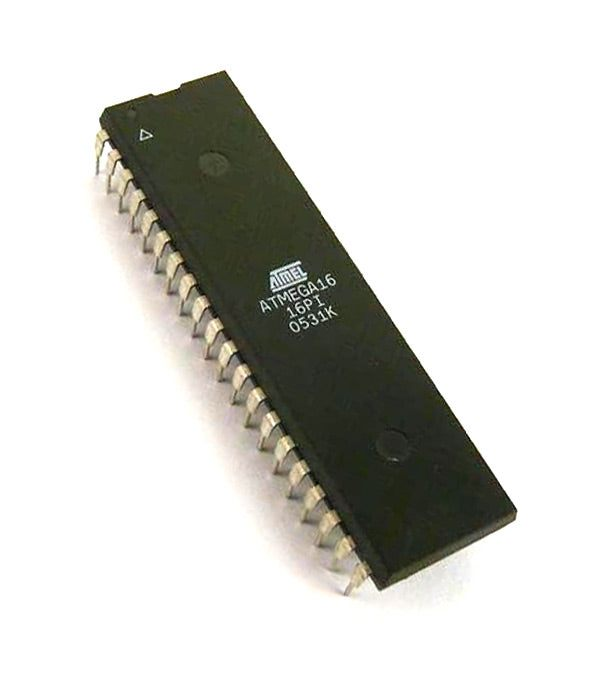
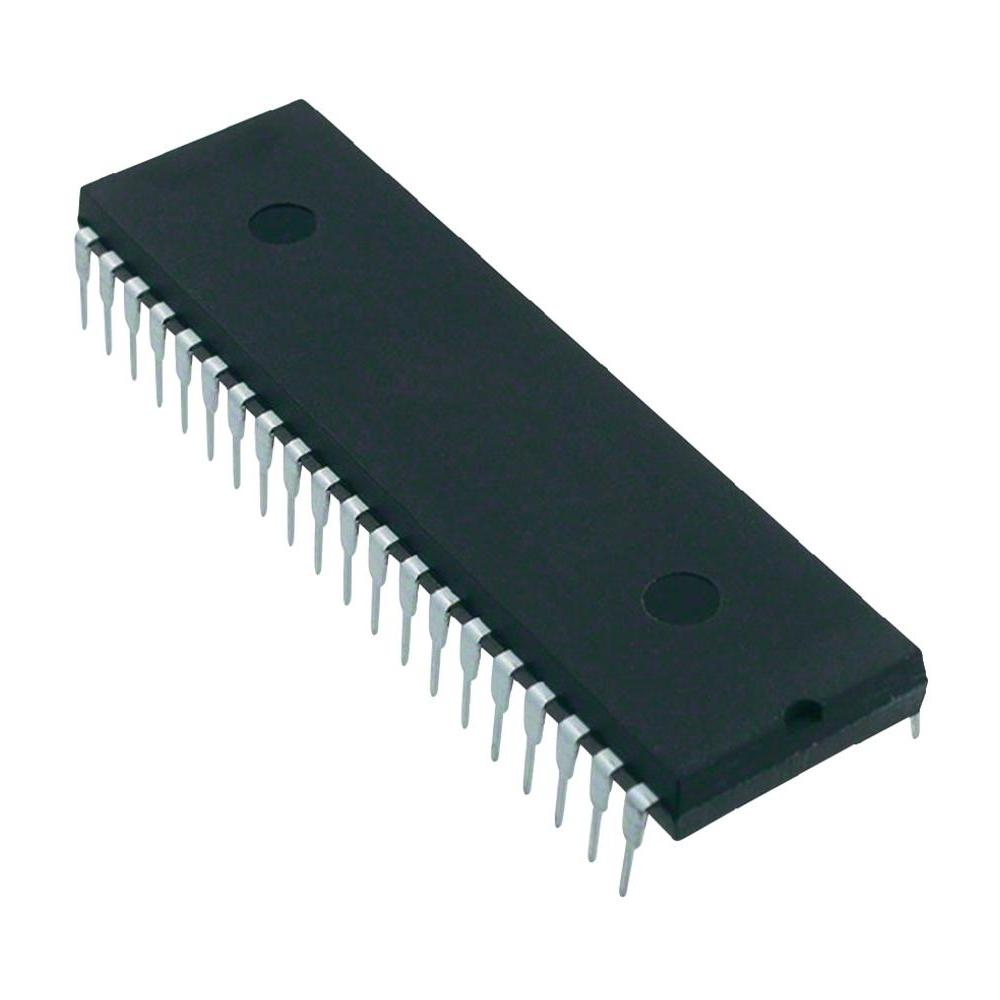
ATmega16 is a low-power CMOS 8-bit microcontroller based on the AVR enhanced RISC architecture. By executing powerful instructions in a single clock cycle, the ATmega16 achieves throughputs approaching 1 MIPS per MHz allowing the system designer to optimize power consumption versus processing speed.
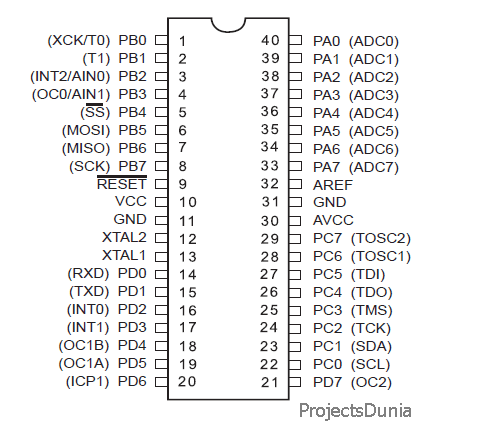
Pinout:
Pinout of ATmega16
1
PB0(XCK/T0)
Pin 0 of PORTB
T0( Timer0 External Counter Input)
XCK ( USART External Clock I/O)
2
PB1(T1)
Pin 1 of PORTB
T1(Timer1 External Counter Input)
3
PB2(INT2/AIN0)
Pin 2 of PORTB
AIN0(Internal Analog Comparator Positive Input)
INT2( External Interrupt 2 Input)
4
PB3(OC0/AIN1)
Pin 3 of PORTB
AIN1(Internal Analog Comparator Negative Input)
OC0 (Timer0 Output Compare Match Output) or PWM output
5
PB4(SS )
Pin 4 of PORTB
SS (SPI Slave Select Input). This pin is low when controller acts as slave.
[Serial Peripheral Interface (SPI) for programming]
6
PB5(MOSI)
Pin 5 of PORTB
MOSI (Master Output Slave Input). When controller acts as slave, the data is received by this pin.
[Serial Peripheral Interface (SPI) for programming]
7
PB6(MISO)
Pin 6 of PORTB
MISO (Master Input Slave Output). When controller acts as slave, the data is sent to master through this pin.
[Serial Peripheral Interface (SPI) for programming]
8
PB7(SCK)
Pin 7 of PORTB
SCK (SPI Bus Serial Clock). This is the clock shared between this controller and other system for accurate data transfer.
[Serial Peripheral Interface (SPI) for programming]
9
RESET
Reset Pin (Active Low Reset)
10
VCC
Connected to +5V
11
GND
Connected to GROUND
12
XTAL2
Connected to Crystal Oscillator
13
XTAL1
Connected to Crystal Oscillator
14
PD0(RXD)
Pin 0 of PORTD
RXD (USART Input Pin)
[USART Serial Communication Interface
can be used for programming]
15
PD1(TXD)
Pin 1 of PORTD
TXD (USART Output Pin)
[USART Serial Communication Interface
can be used for programming]
16
PD2(INT0)
Pin 2 of PORTD
External Interrupt INT0
17
PD3(INT1)
Pin 3 of PORTD
External Interrupt INT1
18
PD4(OC1B)
Pin 4 of PORTD
OC1B (Timer Output Compare Match Output) or PWM output
19
PD5(OC1A)
Pin 5 of PORTD
OC1A (Timer Output Compare Match Output) or PWM output
20
PD6(ICP)
Pin 6 of PORTD
Timer/Counter1 Input Capture Pin
21
PD7 (OC2)
Pin 7 of PORTD
Timer/Counter2 Output Compare Match Output
22
PC0 (SCL)
Pin 0 of PORTC
TWI Interface
23
PC1 (SDA)
Pin 1 of PORTC
TWI Interface
24
PC2 (TCK)
Pin 2 of PORTC
JTAG Interface
25
PC3 (TMS)
Pin 3 of PORTC
JTAG Interface
26
PC4 (TDO)
Pin 4 of PORTC
JTAG Interface
27
PC5 (TDI)
Pin 5 of PORTC
JTAG Interface
28
PC6 (TOSC1)
Pin 6 of PORTC
Timer Oscillator Pin 1
29
PC7 (TOSC2)
Pin 7 of PORTC
Timer Oscillator Pin 2
30
AVcc
Vcc for Internal ADC Converter
31
GND
GROUND
32
AREF
Analog Reference Pin for ADC
33
PA7 (ADC7)
Pin 7 of PORTA
ADC (Analog to Digital Converter) Channel 7
34
PA6 (ADC6)
Pin 6 of PORTA
ADC (Analog to Digital Converter) Channel 6
35
PA5 (ADC5)
Pin 5 of PORTA
ADC (Analog to Digital Converter) Channel 5
36
PA4 (ADC4)
Pin 4 of PORTA
ADC (Analog to Digital Converter) Channel 4
37
PA3 (ADC3)
Pin 3 of PORTA
ADC (Analog to Digital Converter) Channel 3
38
PA2 (ADC2)
Pin 2 of PORTA
ADC (Analog to Digital Converter) Channel 2
39
PA1 (ADC1)
Pin 1 of PORTA
ADC (Analog to Digital Converter) Channel 1
40
PA0 (ADC0)
Pin 0 of PORTA
ADC (Analog to Digital Converter) Channel 0
Applications:
Hobbyists applications
Engineers design
Temperature control systems
Analog signal measuring and manipulations.
Embedded systems like coffee machine, vending machine.
Motor control systems.
Digital signal processing.
Peripheral Interface system.
₹231.45
MRP. ₹490.00
Incl. GST (No Hidden Charges)
Incl. GST (No Hidden Charges)
ATmega16
ATmega16 The ATmega ATmega16 is a low-power CMOS 8-bit microcontroller based on the AVR enhanced RISC architecture. By executing powerful instructions in a single clock cycle, the ATmega16 achieves throughputs …
As low as
₹231.45
₹231.45
MRP. ₹490.00
Incl. GST (No Hidden Charges)
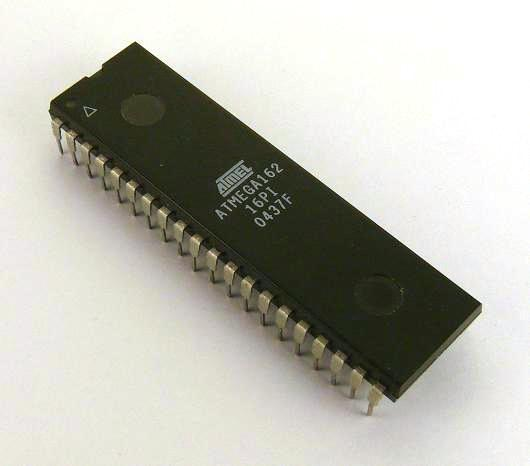
ATmega162
ATmega162
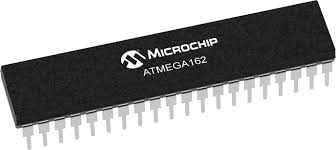
The ATmega162 is a low-power CMOS 8-bit microcontroller based on the AVR-enhanced RISC architecture. By executing powerful instructions in a single clock cycle, the
ATmega
achieves throughputs approaching 1 MIPS per MHz allowing the system designer to optimize power consumption versus processing speed.
The AVR core combines a rich instruction set with 32 general-purpose working registers. All 32 registers are directly connected to the Arithmetic Logic Unit (ALU), allowing two independent registers to be accessed in one single instruction executed in one clock cycle. The resulting architecture is more code efficient while achieving throughputs up to ten times faster than conventional CISC microcontrollers.
In order to maximize performance and parallelism, the AVR uses a Harvard architecture – with separate memories and buses for program and data. While one instruction is being executed, the next instruction is pre-fetched from the program memory. Program flow is provided by conditional and unconditional jump and call instructions, able to directly address the whole address space. Most AVR instructions have a single 16-bit word format. Every program memory address contains a 16- or 32-bit instruction.
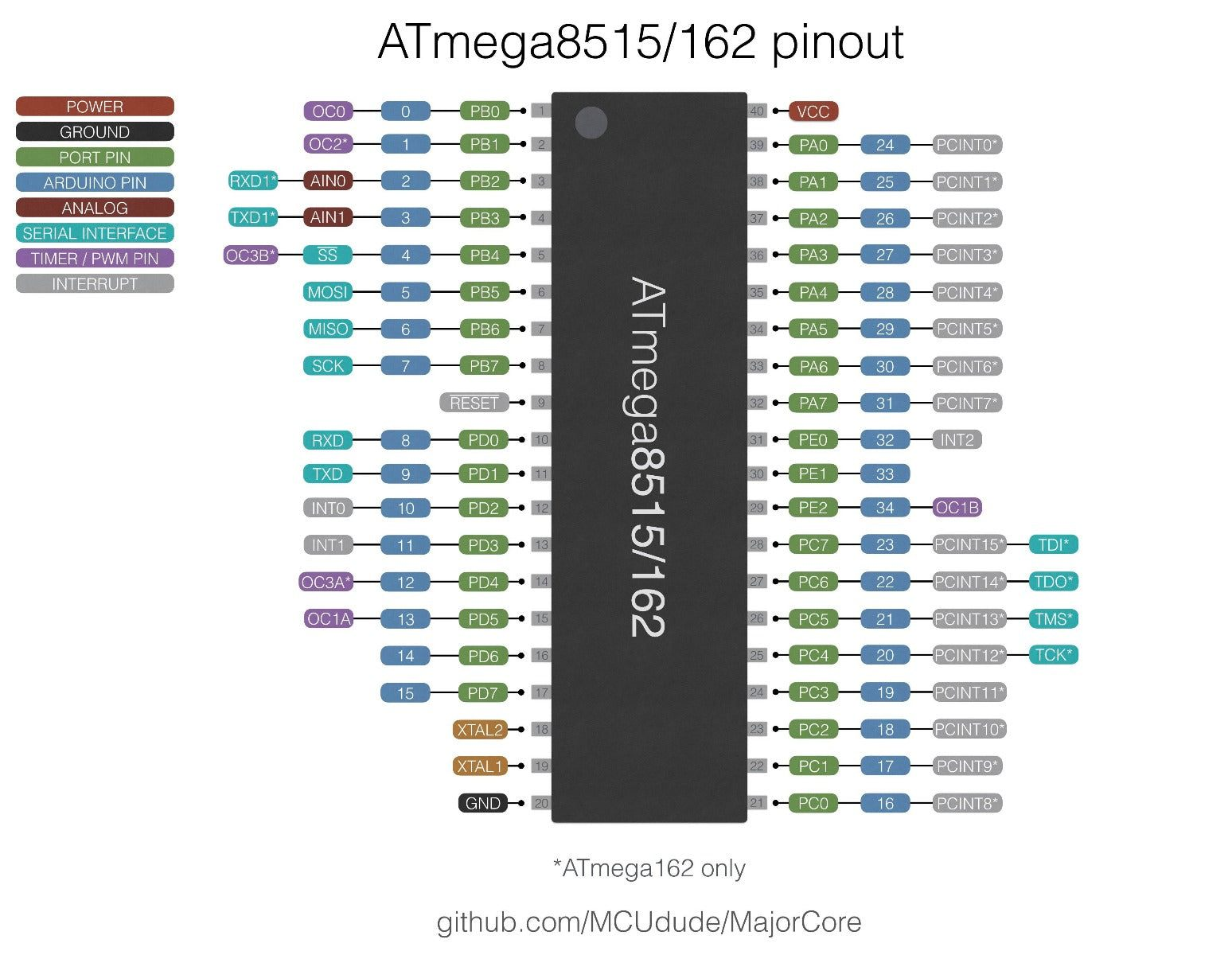
Pinout:
Pinout Of ATmega162
Applications:
Industrial Automation
Automotive Applications
Medical Devices
Consumer Electronics
Internet of Things (IoT)
₹839.00
Incl. GST (No Hidden Charges)
Out of Stock
MRP. ₹1117.20
Incl. GST (No Hidden Charges)
ATmega162
ATmega162 The ATmega162 is a low-power CMOS 8-bit microcontroller based on the AVR-enhanced RISC architecture. By executing powerful instructions in a single clock cycle, the ATmega achieves throughputs approaching 1 …
As low as
₹839.00
₹839.00
MRP. ₹1117.20
Incl. GST (No Hidden Charges)
Out of Stock
ATmega168
ATmega168
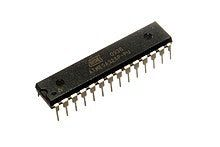
The
Atmel
ATmega168 is a low-power CMOS 8-bit microcontroller based on the AVR-enhanced RISC architecture. By executing powerful instructions in a single clock cycle, the ATmega168 achieves throughputs approaching 1 MIPS per MHz allowing the system designer to optimize power consumption versus processing speed.
The AVR core combines a rich instruction set with 32 general-purpose working registers. All 32 registers are directly connected to the Arithmetic Logic Unit (ALU), allowing two independent registers to be accessed in one single instruction executed in one clock cycle. The resulting architecture is more code efficient while achieving throughputs up to ten times faster than conventional CISC microcontrollers.
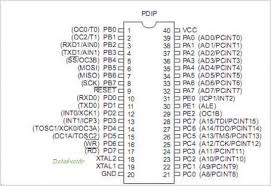
Pinout:
Pinout of ATmega168
Applications:
Multiple DIY projects.
Projects requiring more than logical control for devices.
Microcontroller applications for multiple device interface/Control.
₹338.27
Incl. GST (No Hidden Charges)
Out of Stock
MRP. ₹492.80
Incl. GST (No Hidden Charges)
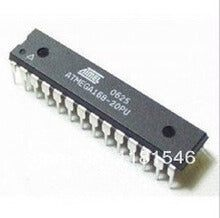
ATmega168
ATmega168 The Atmel ATmega168 is a low-power CMOS 8-bit microcontroller based on the AVR-enhanced RISC architecture. By executing powerful instructions in a single clock cycle, the ATmega168 achieves throughputs approaching …
As low as
₹338.27
₹338.27
MRP. ₹492.80
Incl. GST (No Hidden Charges)
Out of Stock
ATmega32
The high-performance, low-power Atmel 8-bit AVR RISC-based microcontroller combines 32KB of programmable flash memory, 2KB SRAM, 1KB EEPROM, an 8-channel 10-bit A/D converter, and a JTAG interface for on-chip debugging. The device supports a throughput of 16 MIPS at 16 MHz and operates between 4.5-5.5 volts.
By executing instructions in a single clock cycle, the device achieves throughputs approaching 1 MIPS per MHz, balancing power consumption and processing speed
₹349.40
MRP. ₹651.00
Incl. GST (No Hidden Charges)
Incl. GST (No Hidden Charges)
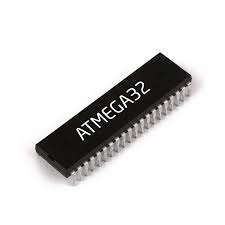
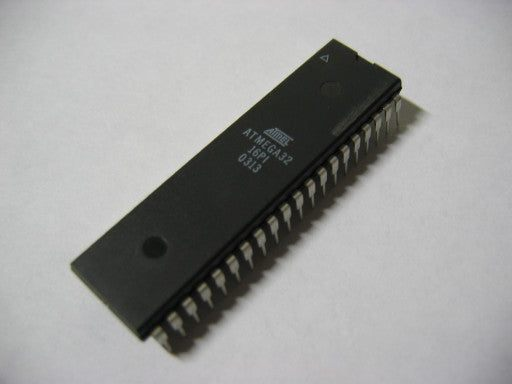
ATmega32
The high-performance, low-power Atmel 8-bit AVR RISC-based microcontroller combines 32KB of programmable flash memory, 2KB SRAM, 1KB EEPROM, an 8-channel 10-bit A/D converter, and a JTAG interface for on-chip debugging. …
As low as
₹349.40
₹349.40
MRP. ₹651.00
Incl. GST (No Hidden Charges)
ATmega328P-U PDIP-28 8 BIT Mi…
ATmega328P-U PDIP-28 8 BIT Microcontroller IC
The
Atmel
ATmega328 IC is a 32K 8-bit microcontroller based on the AVR architecture. Many instructions are executed in a single clock cycle providing a throughput of almost 20 MIPS at 20MHz. The ATMEGA328P-U comes in an PDIP 28 pin package and is suitable for use on our
28 pin AVR Development Board
.
The ATmega328P-U AVR is supported with a full suite of program and system development tools including C Compilers, Macro Assemblers, Program Debugger/Simulators, In-Circuit Emulators, and Evaluation Kits.
Applications:
Industrial control systems
Switched-mode power supply (SMPS) and power regulation systems
Digital data processing
Analog signal measuring and manipulation
Embedded systems like coffee machines, vending machines
Motor control systems
Display units
Key Features:
Additional Features Features
Internal calibrated oscillator
Power on reset and programmable brown out detection
External and internal interrupts
6 sleep modes including idle, ADC noise reduction, power save, power down, standby, and extended standby
I/O and Package
23 programmable I/O lines
28 pin PDIP package
Speed Grades:
0-4 MHz at 1.8-5.5V
0-10 MHz at 2.7-5.5V
0-20 MHz at 4.5-5.5V
Low power consumption mode at 1.8V, 1 MHz and 25°C:
Active Mode: 0.3 mA
Power-down Mode: 0.1 ?A
Power-save Mode: 0.8 ?A (Including 32 kHz RTC)
Pinout:
₹310.46
MRP. ₹628.60
Incl. GST (No Hidden Charges)
Incl. GST (No Hidden Charges)
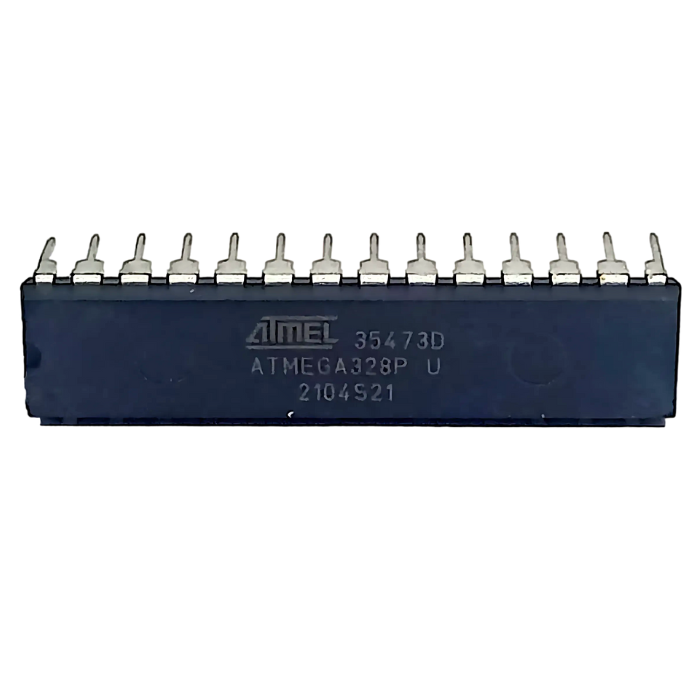
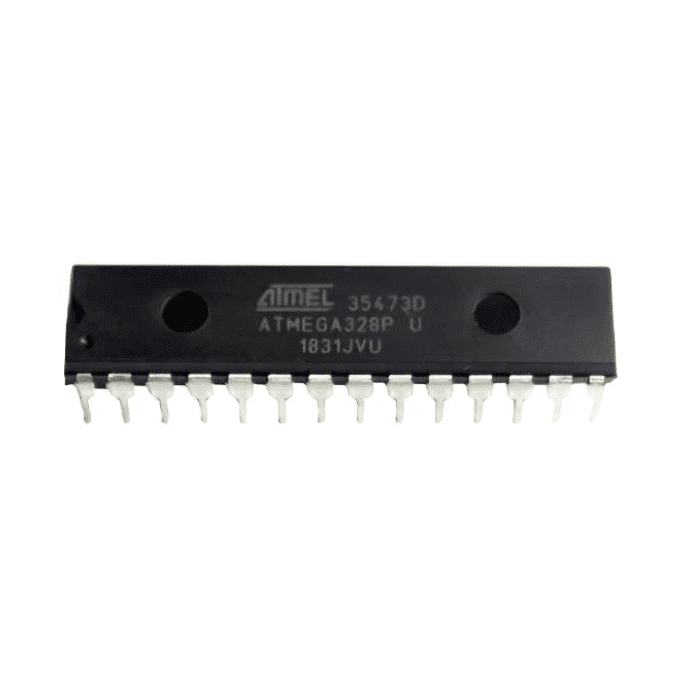
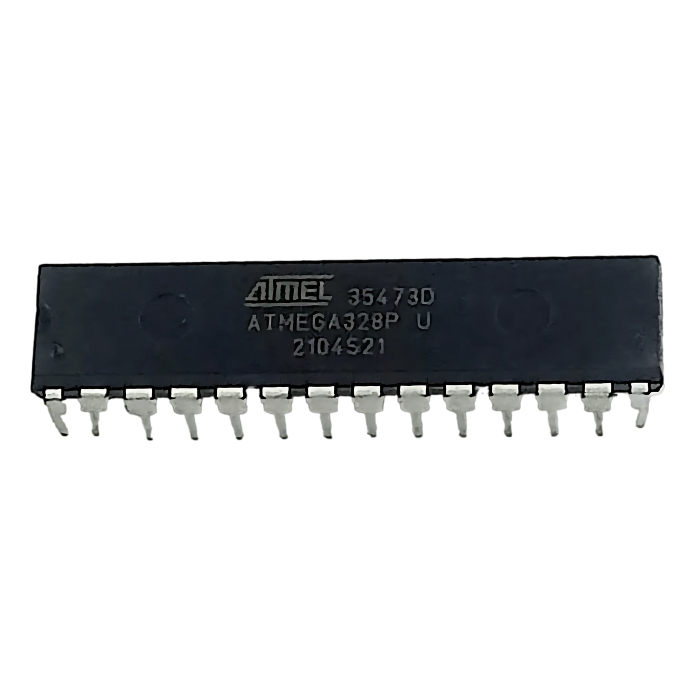
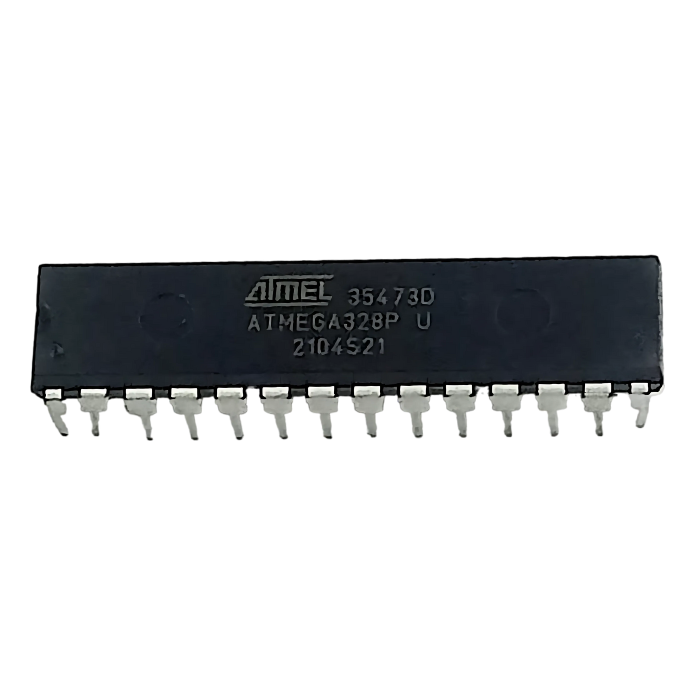
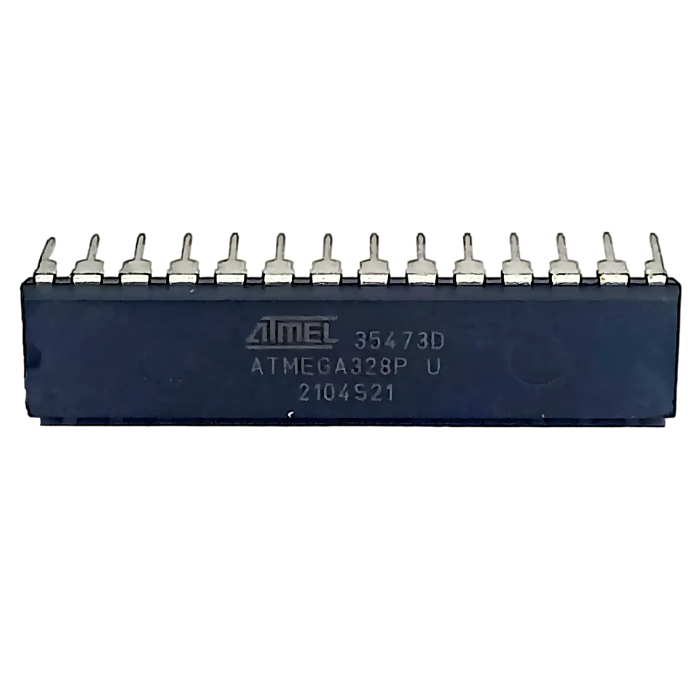
ATmega328P-U PDIP-28 8 BIT Microcontroller IC
ATmega328P-U PDIP-28 8 BIT Microcontroller IC The Atmel ATmega328 IC is a 32K 8-bit microcontroller based on the AVR architecture. Many instructions are executed in a single clock cycle providing …
As low as
₹310.46
₹310.46
MRP. ₹628.60
Incl. GST (No Hidden Charges)
ATmega8
ATmega8
The ATmega8A IC is a low-power CMOS 8-bit microcontroller based on the AVR RISC architecture. By executing powerful instructions in a single clock cycle, the ATmega8A achieves throughputs approaching 1 MIPS per MHz, allowing the system designer to optimize power consumption versus processing speed. The
ATmega
has 16 KB programmable flash memory, static RAM of 1 KB and EEPROM of 512 Bytes. The endurance cycle of flash memory and EEPROM is 10,000 and 100,000, respectively.
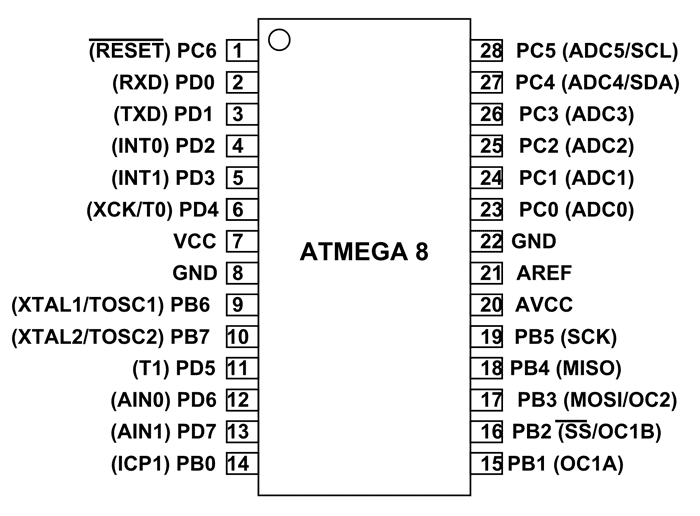
Pinout:
Pinout of ATmega8A
Applications:
Home automation
Industrial automation
Robotics
Automotive
Medical devices
Communication devices
Also check
ATmega32
, a high-performance, low-power 8-bit AVR RISC-based microcontroller by Atmel. It features 32KB of programmable flash memory, 2KB SRAM, 1KB EEPROM, an 8-channel 10-bit A/D converter, and a JTAG interface for on-chip debugging. The device supports a throughput of 16 MIPS at 16 MHz and operates between 4.5-5.5 volts.
Package Include:
1 x ATmega8 IC
₹203.63
MRP. ₹422.80
Incl. GST (No Hidden Charges)
Incl. GST (No Hidden Charges)
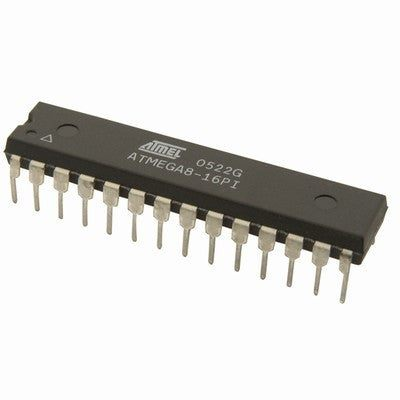
ATmega8
ATmega8 The ATmega8A IC is a low-power CMOS 8-bit microcontroller based on the AVR RISC architecture. By executing powerful instructions in a single clock cycle, the ATmega8A achieves throughputs approaching …
As low as
₹203.63
₹203.63
MRP. ₹422.80
Incl. GST (No Hidden Charges)
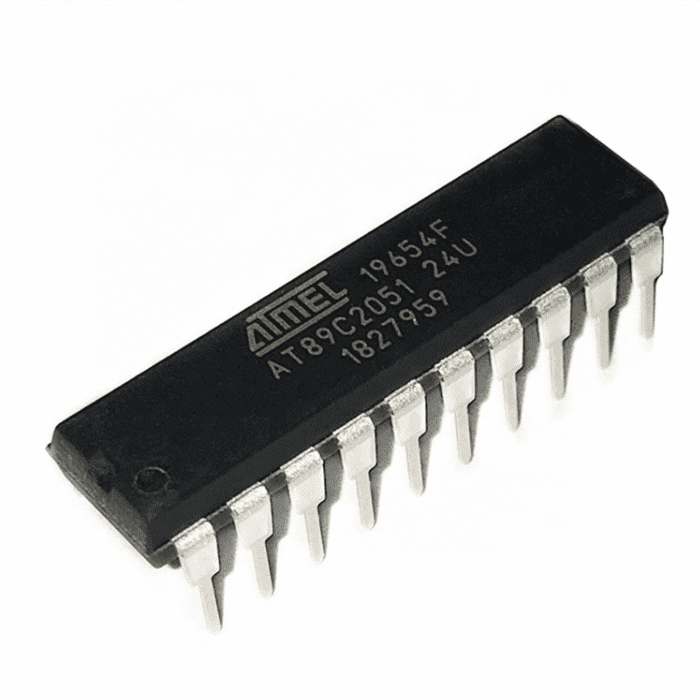
ATMEL 89C2051 IC
ATMEL 89C2051 IC
The
Atmel
AT89C2051 IC is a low-voltage, high-performance CMOS 8-bit microcomputer with 2K bytes of Flash programmable and erasable read-only memory (PEROM). The device is manufactured using Atmel’s high-density nonvolatile memory technology and is compatible with the industry-standard MCS-51 instruction set. By combining a versatile 8-bit CPU with Flash on a monolithic chip, the Atmel AT89C2051 is a powerful microcomputer which provides a highly-flexible and cost-effective solution to many embedded control applications.
The AT89C2051 provides standard features like 2K bytes of Flash, 128 bytes of RAM, 15 I/O lines, two 16-bit timer/counters, a five vector two-level interrupt architecture, a full duplex serial port, a precision analog comparator, on-chip oscillator and clock circuitry. In addition, the AT89C2051 is designed with static logic for operation down to zero frequency and supports two software selectable power saving modes. The Idle Mode stops the CPU while allowing the RAM, timer/counters, serial port and interrupt system to continue functioning. The power-down mode saves the RAM contents but freezes the oscillator disabling all other chip functions until the next hardware reset.
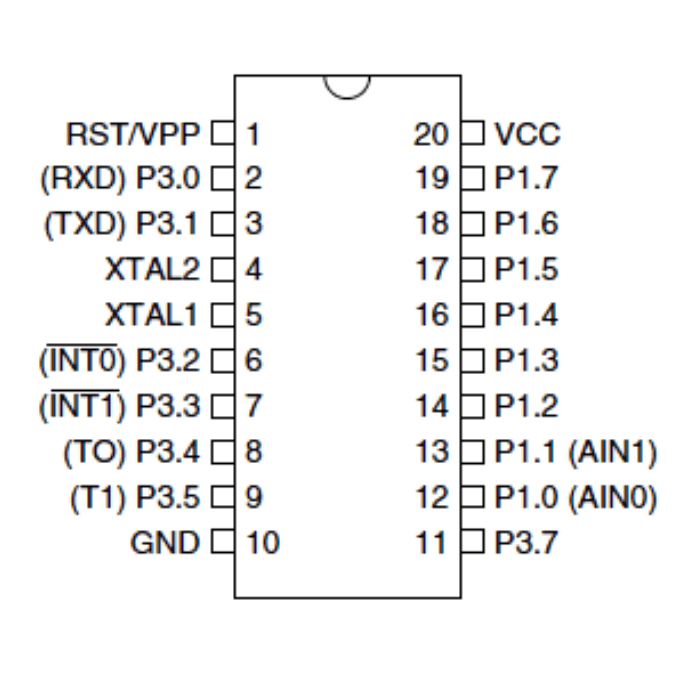
Pinout:
Pinout Of ATMEL AT89C2051 IC Pinout
Applications:
Electronic Timers
Temperature Control Systems
Home Automation
Robotics
Automotive Applications
₹87.91
MRP. ₹173.60
Incl. GST (No Hidden Charges)
Incl. GST (No Hidden Charges)
ATMEL 89C2051 IC
ATMEL 89C2051 IC The Atmel AT89C2051 IC is a low-voltage, high-performance CMOS 8-bit microcomputer with 2K bytes of Flash programmable and erasable read-only memory (PEROM). The device is manufactured using …
As low as
₹87.91
₹87.91
MRP. ₹173.60
Incl. GST (No Hidden Charges)
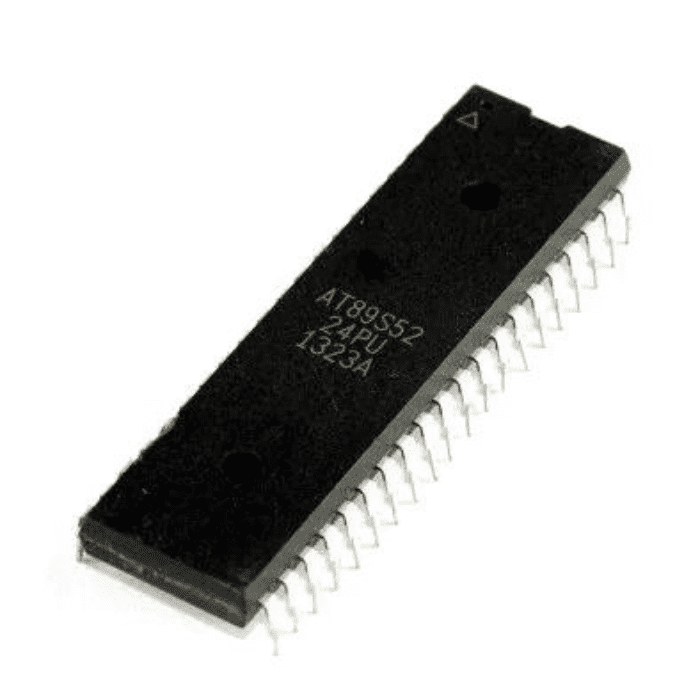
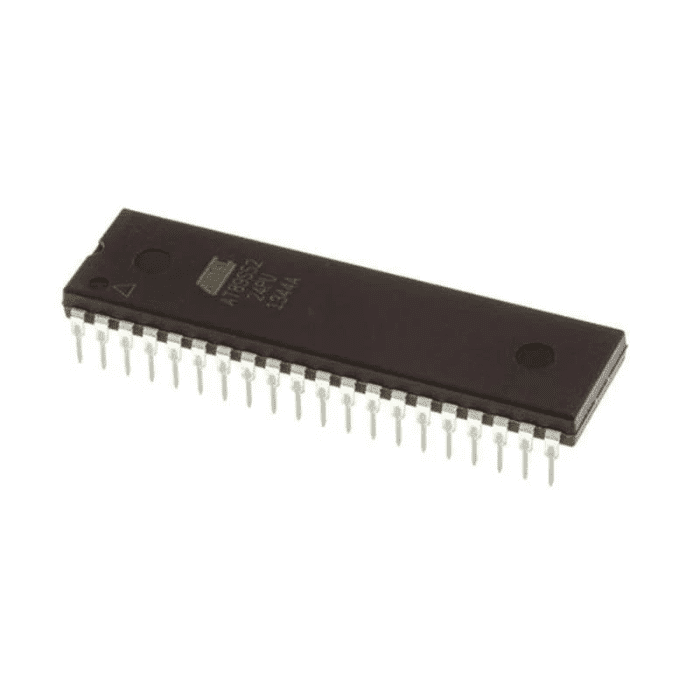
Atmel 89S52
Atmel 89S52
The
Atmel
AT89S52 is a low-power, high-performance CMOS 8-bit microcontroller with 8K bytes of in-system programmable Flash memory. The device is manufactured using Atmel’s high-density nonvolatile memory technology and is compatible with the industry-standard 80C51 instruction set and pin out. The on-chip Flash allows the program memory to be reprogrammed in-system or by a conventional nonvolatile memory programmer. By combining a versatile 8-bit CPU with in-system programmable Flash on a monolithic chip, the Atmel AT89S52 is a powerful micro controller which provides a highly-flexible and cost-effective solution to many embedded control applications.
The AT89S52 provides the following standard features like 8K bytes of Flash, 256 bytes of RAM, 32 I/O lines, Watchdog timer, two data pointers, three 16-bit timer/counters, a six-vector two-level interrupt architecture, a full duplex serial port, on-chip oscillator, and clock circuitry. In addition, the AT89S52 is designed with static logic for operation down to zero frequency and supports two software selectable power saving modes.
The Idle Mode stops the CPU while allowing the RAM, timer/counters, serial port, and interrupt system to continue functioning.
Pinout:
Pinout Of Atmel 89S52
1
P1.0 (T2)
Timer/Counter or 0th GPIO pin of PORT 1
2
P1.1 (T2.EX)
Timer/Counter/External Counter or 1st GPIO pin of PORT 1
3
P1.2
2nd GPIO pin of PORT 1
4
P1.3
3rd GPIO pin of PORT 1
5
P1.4
4th GPIO pin of PORT 1
6
P1.5 (MOSI)
MOSI for in System Programming or 5th GPIO pin of PORT 1
7
P1.6 (MISO)
MISO for in System Programming or 6th GPIO pin of PORT 1
8
P1.7 (SCK)
SCK for in System Programming or 7th GPIO pin of PORT 1
9
RST
Making this pin high will reset the Microcontroller
10
P3.0 (RXD)
RXD Serial Input or 0th GPIO pin of PORT 3
11
P3.1 (TXD)
TXD Serial Output or 1st GPIO pin of PORT 3
12
P3.2 (INT0’)
External Interrupt 0 or 2nd GPIO pin of PORT 3
13
P3.3 (INT1’)
External Interrupt 1 or 3rd GPIO pin of PORT 3
14
P3.4 (T0)
Timer 0 or 4th GPIO pin of PORT 3
15
P3.5 (T1)
Timer 1 or 5th GPIO pin of PORT 3
16
P3.6 (WR’)
Memory Write or 6th GPIO pin of PORT 3
17
P3.7 (RD’)
Memory Read or 7th GPIO pin of PORT 3
18
XTAL2
External Oscillator Output
19
XTAL1
External Oscillator Input
20
GND
Ground pin of MCU
21
P2.0(A8)
0th GPIO pin of PORT 2
22
P2.1 (A9)
1st GPIO pin of PORT 2
23
P2.2 (A10)
2nd GPIO pin of PORT 2
24
P2.3 (A11)
3rd GPIO pin of PORT 2
25
P2.4 (A12)
4th GPIO pin of PORT 2
26
P2.5 (A13)
5th GPIO pin of PORT 2
27
P2.6 (A14)
6th GPIO pin of PORT 2
28
P2.7 (A15)
7th GPIO pin of PORT 2
29
PSEN’
Program store Enable used to read external program memory
30
ALE / PROG’
Address Latch Enable / Program Pulse Input
31
EA’ / VPP
External Access Enable / Programming enable Voltage
32
P0.7 (AD7)
Address / Data pin 7 or 7th GPIO pin of PORT 0
33
P0.6 (AD6)
Address / Data pin 6 or 6th GPIO pin of PORT 0
34
P0.5 (AD5)
Address / Data pin 5 or 5th GPIO pin of PORT 0
35
P0.4 (AD4)
Address / Data pin 4 or 4th GPIO pin of PORT 0
36
P0.3 (AD3)
Address / Data pin 3 or 3rd GPIO pin of PORT 0
37
P0.2 (AD2)
Address / Data pin 2 or 2nd GPIO pin of PORT 0
38
P0.1 (AD1)
Address / Data pin 1 or 1st GPIO pin of PORT 0
39
P0.0 (AD0)
Address / Data pin 0 or 0th GPIO pin of PORT 0
40
VCC
Positive pin of MCU (+5V)
Applications:
Home automation
Industrial automation
Robotics
Automotive
Medical devices
Communication devices
₹86.79
Incl. GST (No Hidden Charges)
Out of Stock
MRP. ₹166.60
Incl. GST (No Hidden Charges)
Atmel 89S52
Atmel 89S52 The Atmel AT89S52 is a low-power, high-performance CMOS 8-bit microcontroller with 8K bytes of in-system programmable Flash memory. The device is manufactured using Atmel’s high-density nonvolatile memory technology …
As low as
₹86.79
₹86.79
MRP. ₹166.60
Incl. GST (No Hidden Charges)
Out of Stock
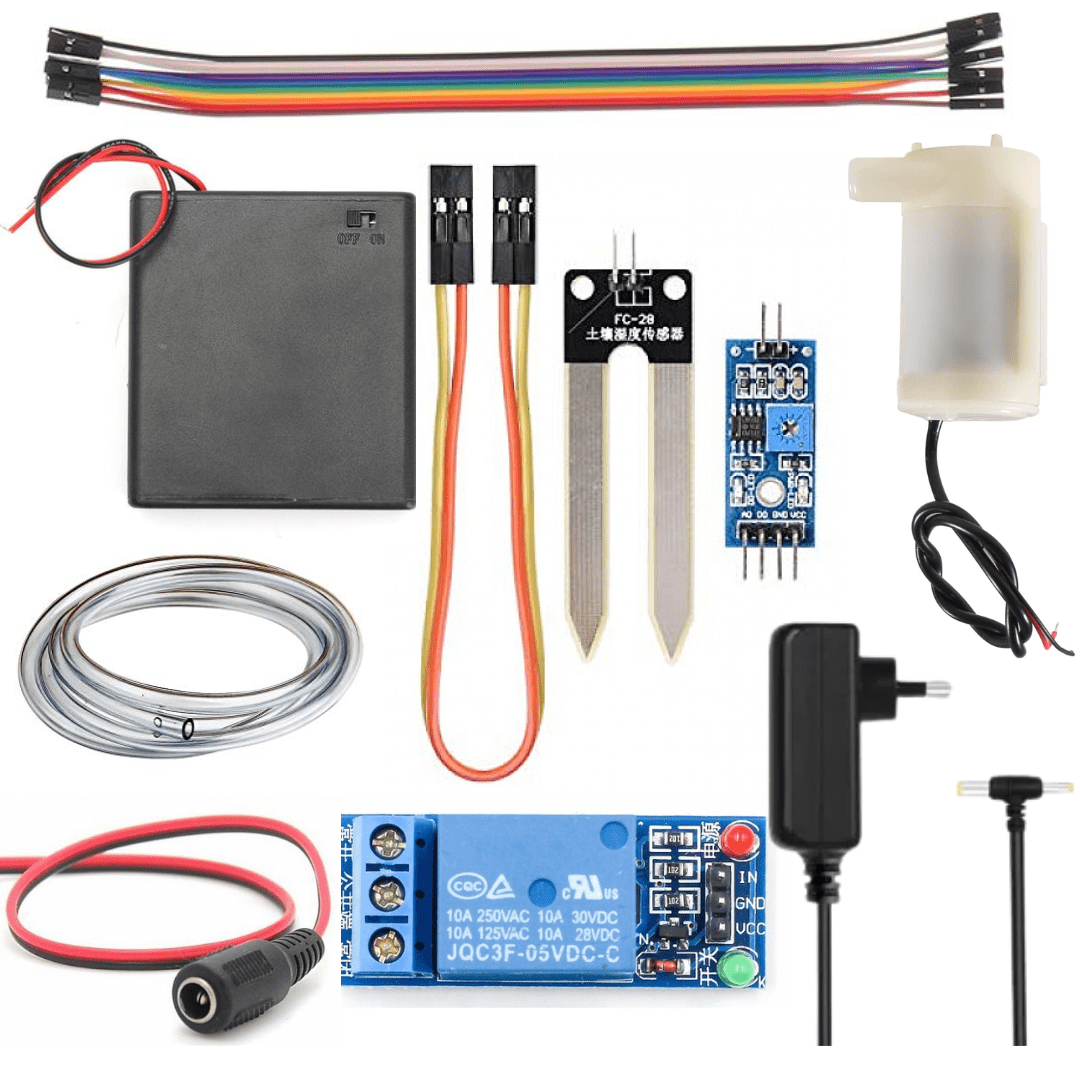
Automatic Plant Watering Syst…
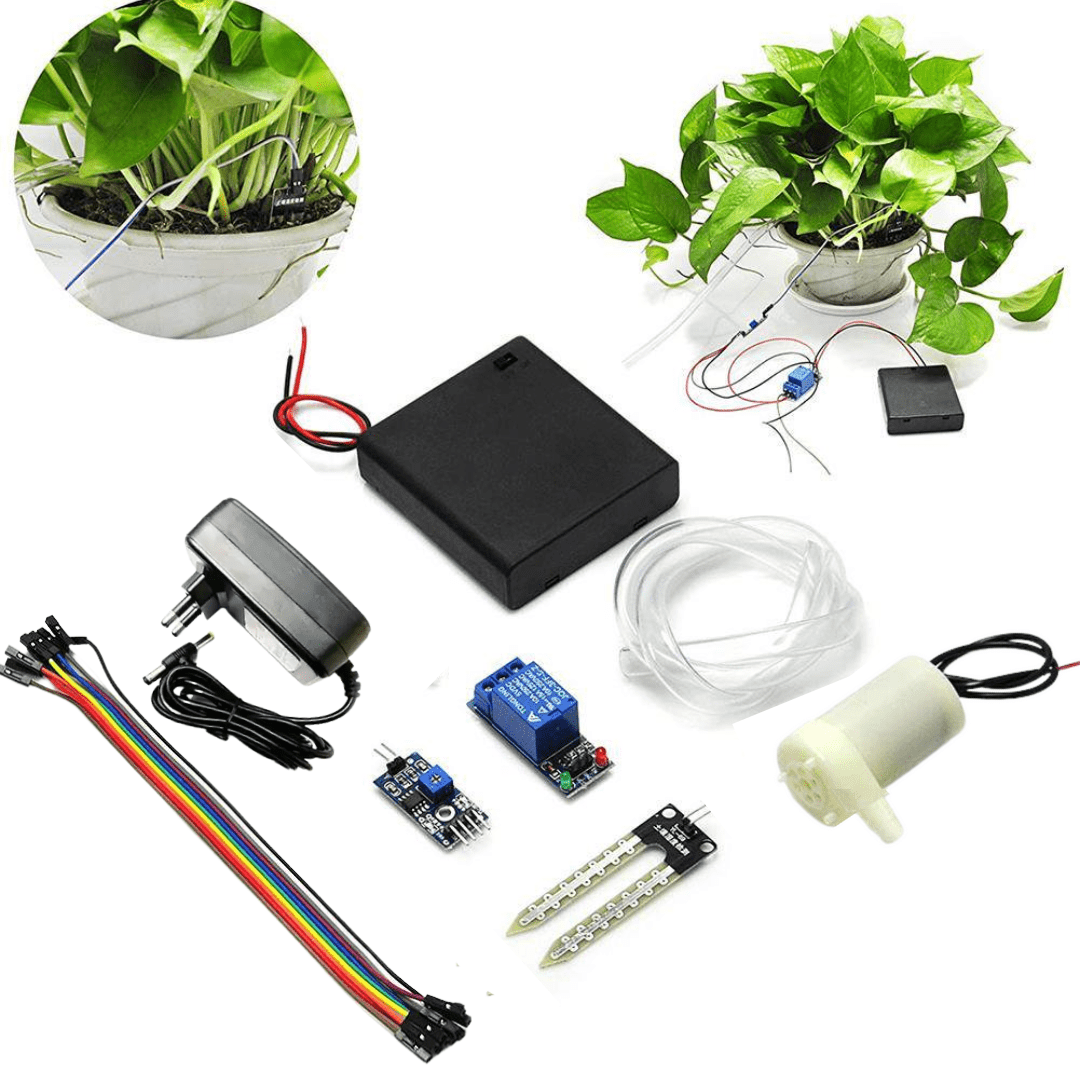
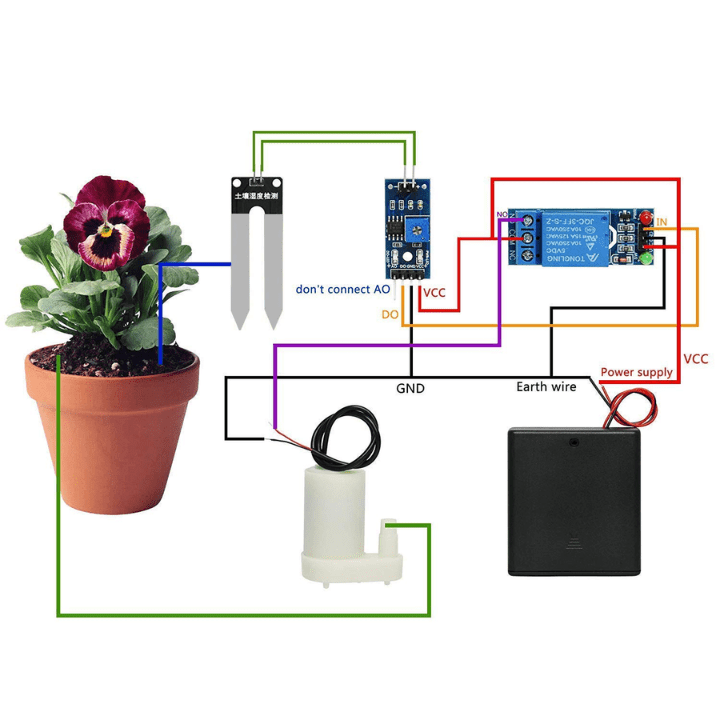
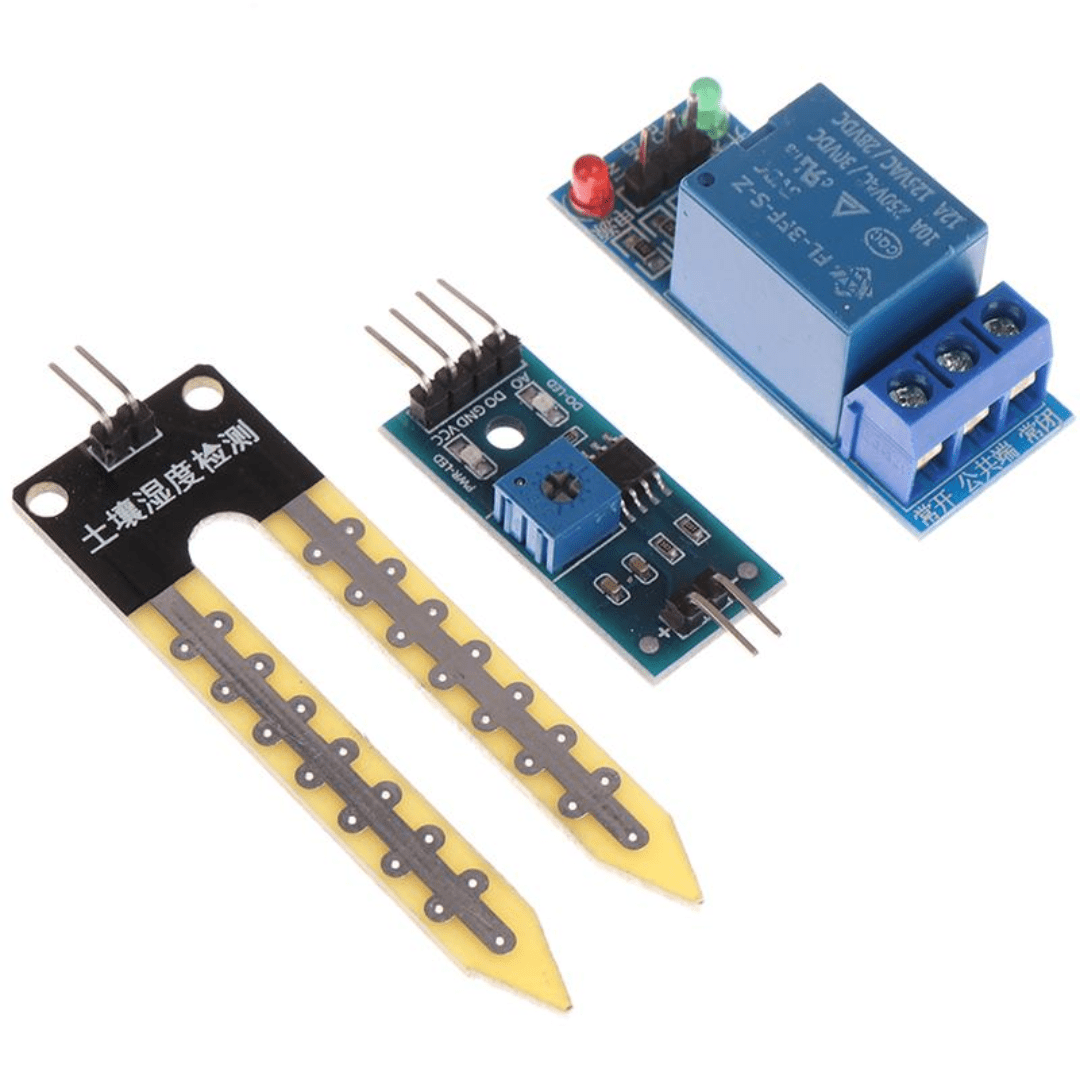
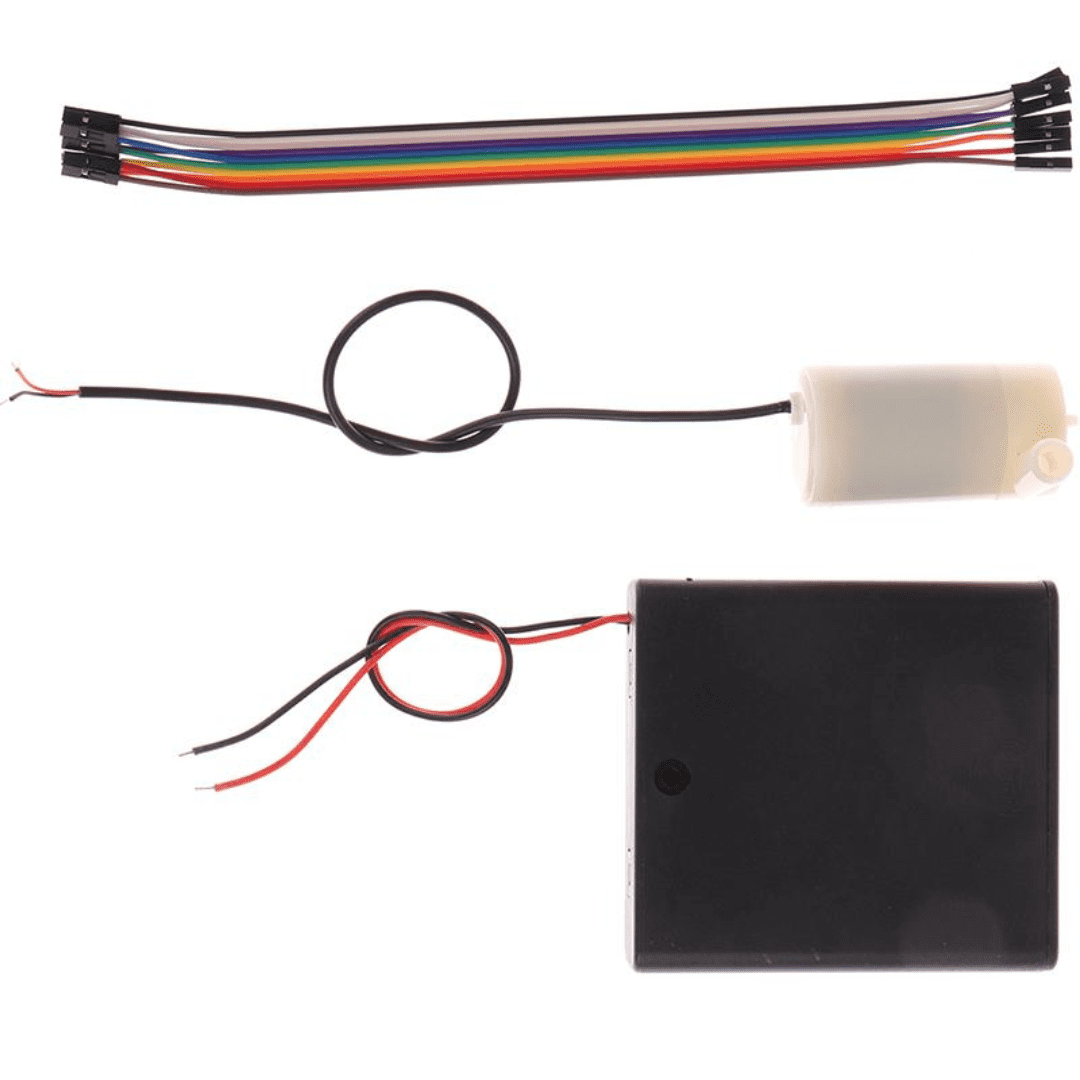
Automatic Plant Watering System Kit
This is a must have tool for a connected garden! It will be helpful to remind you to water your indoor plants or to monitor the soil moisture in your garden. Through adjusting the potentiometer to control the soil humidity threshold, can automatic watering the vegetable garden, garden, control the flower pot soil moisture. Particularly suitable for people who travel frequently!
Note:
Water should not be poured directly on the Soil moisture sensor probe.
Also, read our blog on
Smart Plant Monitoring System
detailing the plant moisture monitoring system, discussing their purpose, components, working, advantages over traditional systems, and other important aspects of this emerging technology.
₹477.37
Incl. GST (No Hidden Charges)
Out of Stock
MRP. ₹698.60
Incl. GST (No Hidden Charges)
Automatic Plant Watering System Kit
Automatic Plant Watering System Kit This is a must have tool for a connected garden! It will be helpful to remind you to water your indoor plants or to monitor …
As low as
₹477.37
₹477.37
MRP. ₹698.60
Incl. GST (No Hidden Charges)
Out of Stock
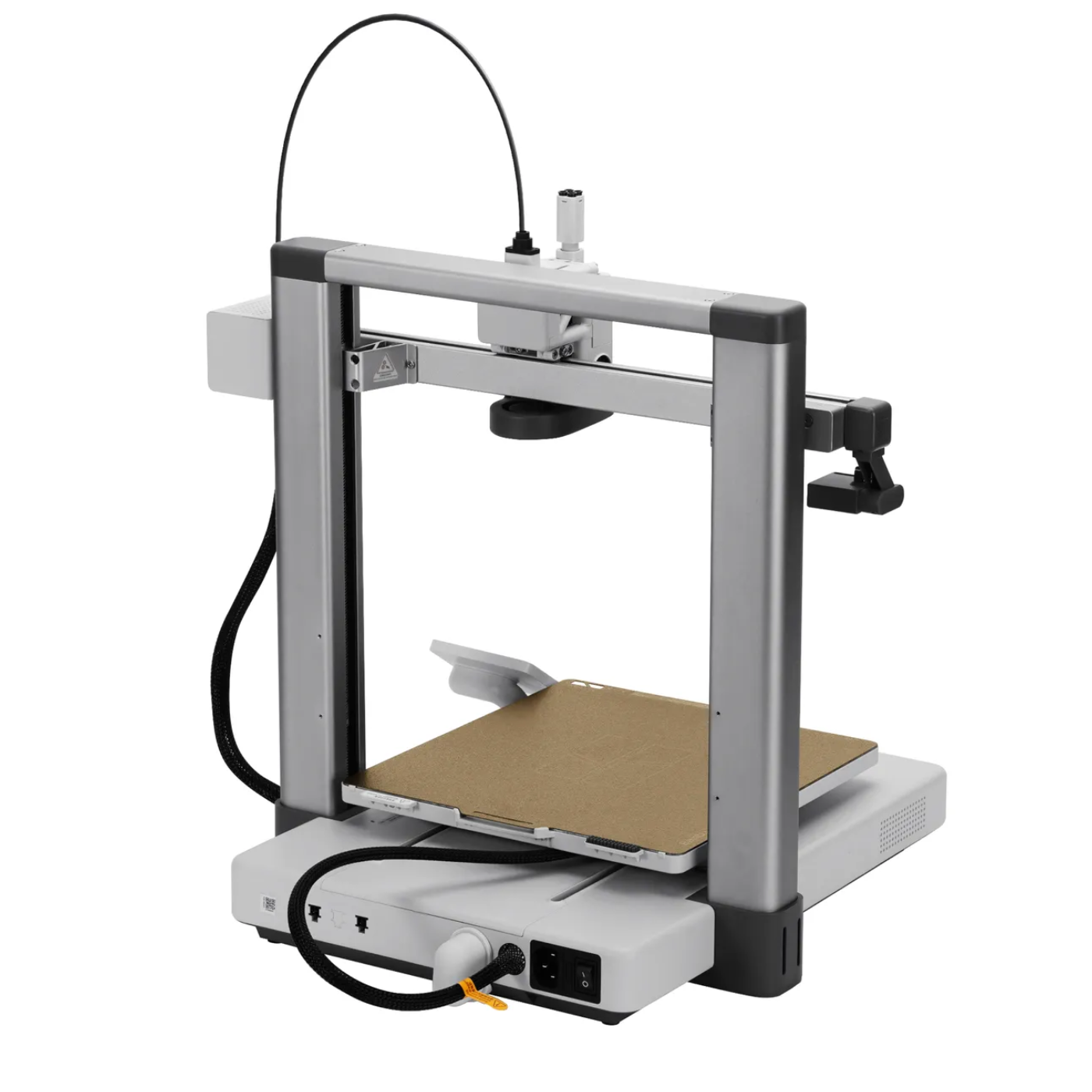
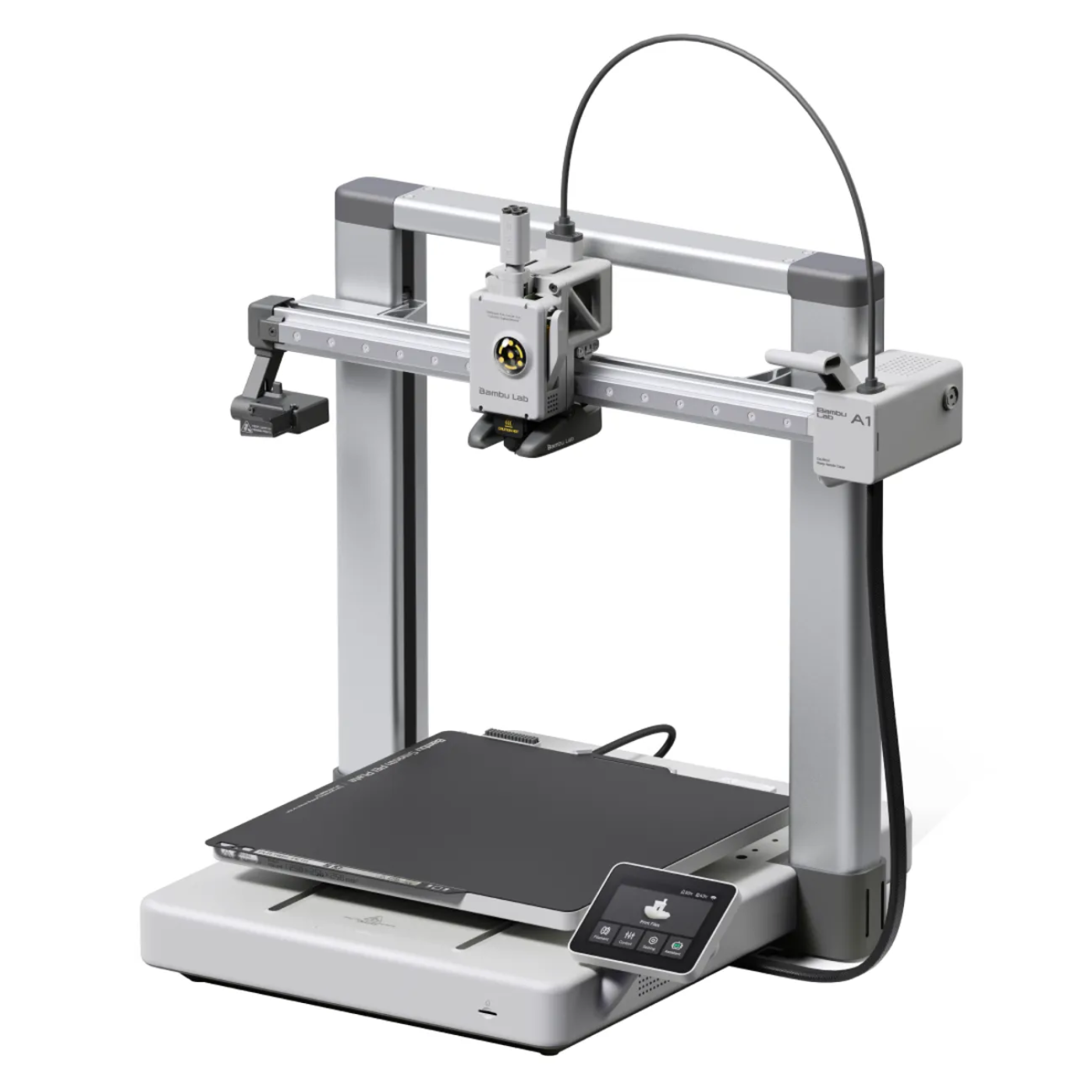
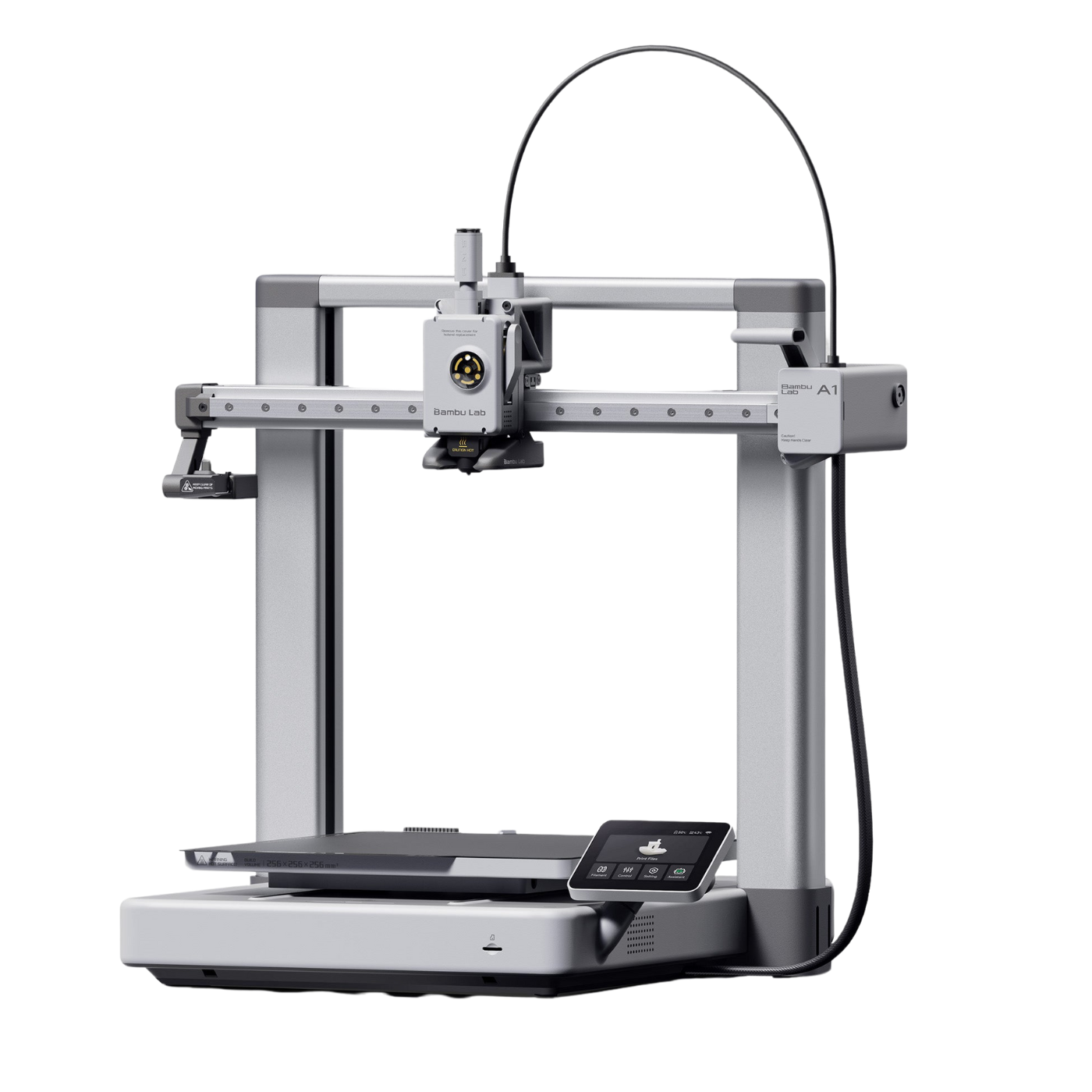
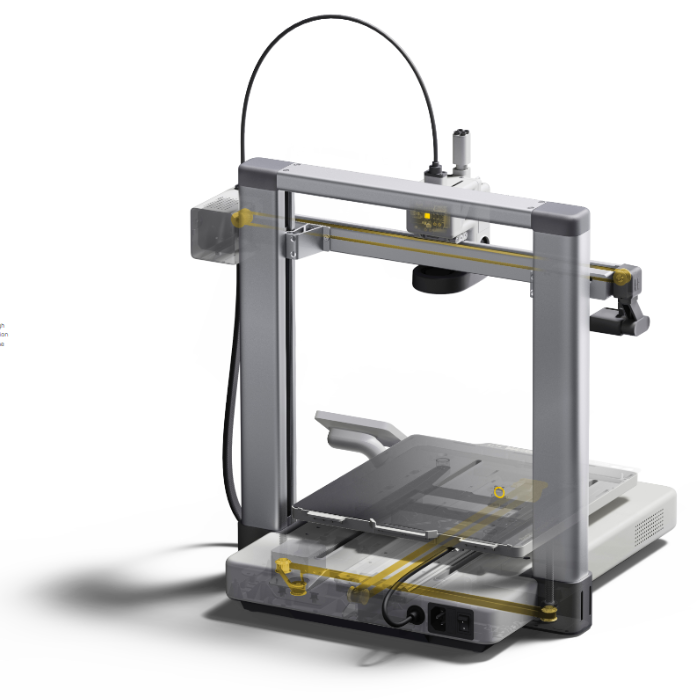
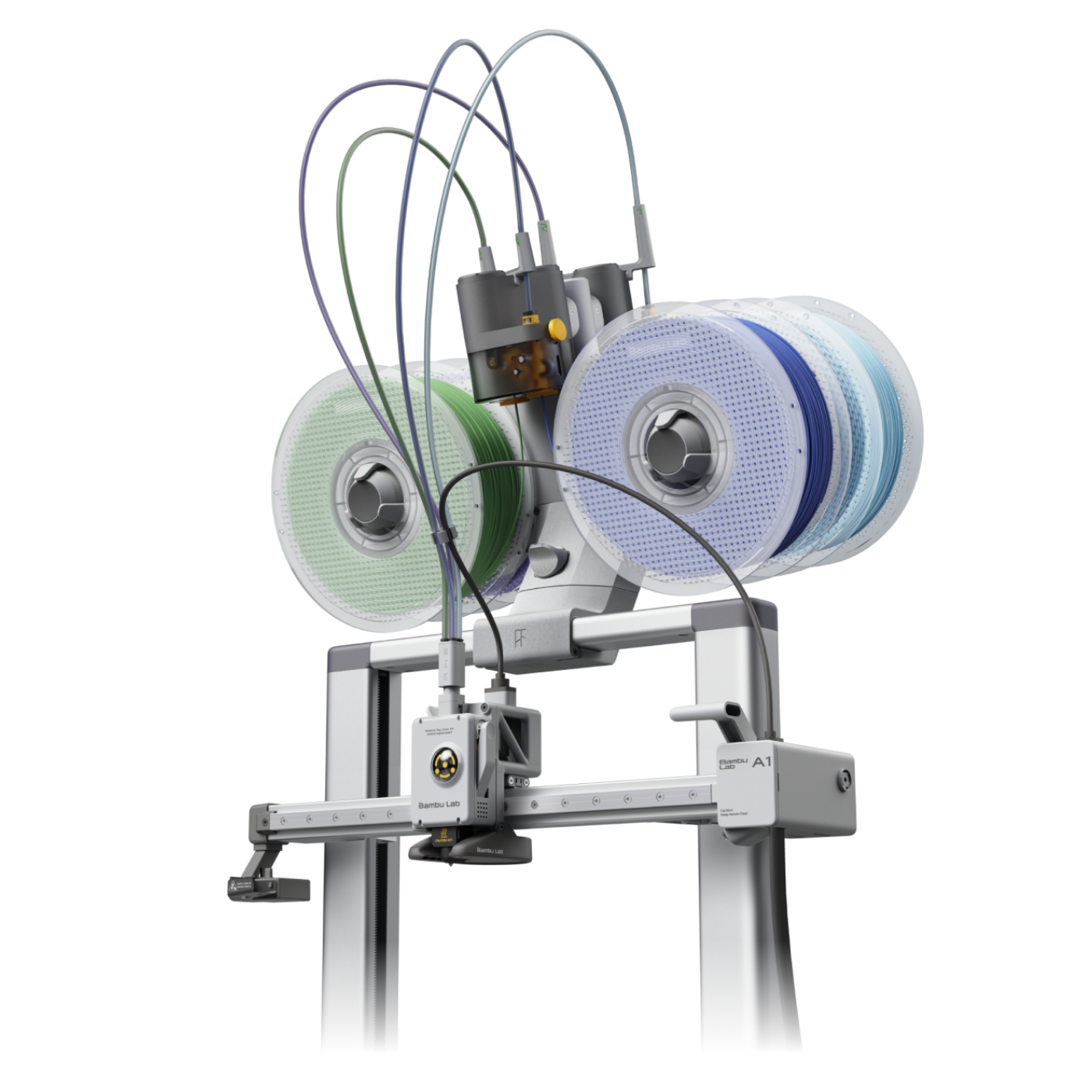
Bambu Lab A1 3D Printer
Bambu Lab A1 3D Printer
The Bambu Lab A1 3D Printer combines advanced technology with a user-friendly design, making it an excellent choice for both professionals and hobbyists. Built with a compact yet sturdy frame, it ensures stability and precision during every print. The A1
3D printer
machine features high-performance
stepper motors
that deliver outstanding detail and accuracy, along with an intuitive touchscreen interface for easy setup, calibration, and operation. With its spacious build volume and compatibility with a range of
filament
materials such as PLA, ABS, and PETG, the A1 printer is designed to handle a wide variety of creative and functional projects with ease.
Features
Dynamic Motor Noise Suppression
The A1 is one of the quietest 3D printers available, using advanced Active Motor Noise Cancelling and Silent Mode to keep noise levels below 48 dB—allowing you to print peacefully, even during quiet hours.
Quick-Swap Nozzle for Easy Maintenance
Featuring a clever quick-swap nozzle design, the A1
3D printer
allows you to replace the hotend with just a single clip, making maintenance fast and hassle-free.
Camera Lens Cover for Privacy Protection
Protect your privacy easily with the built-in camera lens cover. No stickers needed—simply slide the cover to block the camera when not in use.
User-Friendly Touchscreen Interface
The
Bambu Lab
A1 offers an intuitive, smartphone-like touchscreen that makes 3D printing simple and accessible for users of all levels.
High-Speed, High-Quality Printing
Built with full-metal rails, a rigid frame, nozzle pressure sensors, accelerometers, and a powerful MCU, the A1 3D printer delivers fast, precise prints—capable of producing a high-quality Benchy in just 14 minutes right out of the box.
Advanced Flow Rate Compensation
A high-frequency eddy current sensor enables the printer to automatically adjust the flow rate during printing, ensuring smooth, accurate extrusion for clean results on every print.
MakerWorld & One-Click Printing
Enjoy effortless printing with MakerWorld, Bambu Lab’s next-gen 3D model platform that supports one-click printing through the
Bambu Handy App
. You can also manage and monitor prints anytime via
Bambu Studio
or the Handy App.
₹34382.56
MRP. ₹53198.60
Incl. GST (No Hidden Charges)
Incl. GST (No Hidden Charges)

Bambu Lab A1 3D Printer
Bambu Lab A1 3D Printer The Bambu Lab A1 3D Printer combines advanced technology with a user-friendly design, making it an excellent choice for both professionals and hobbyists. Built with …
As low as
₹34382.56
₹34382.56
MRP. ₹53198.60
Incl. GST (No Hidden Charges)
