

Sort by
DIY Mini Battery Powered 4 Wh…
DIY Mini Battery Powered 4 Wheel Drive Car
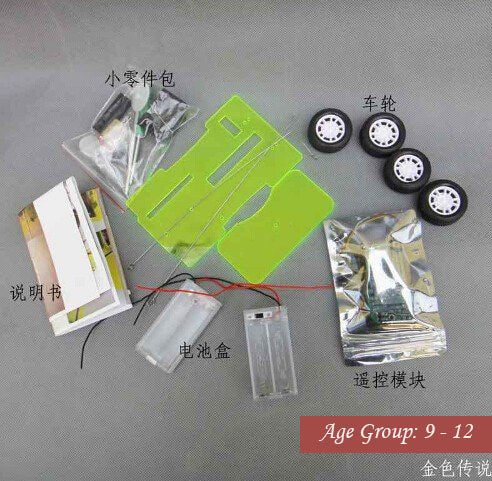
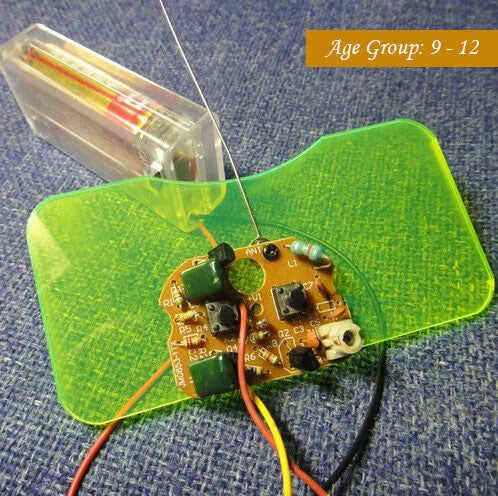
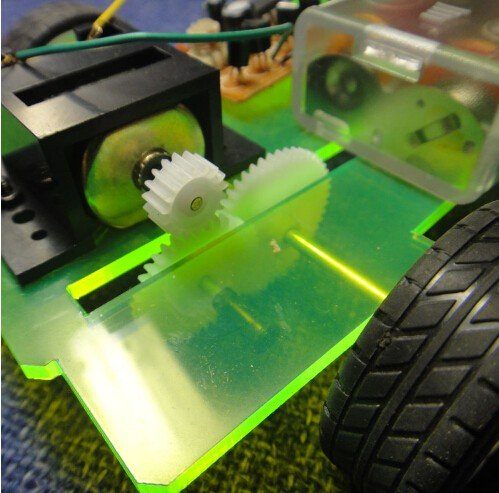
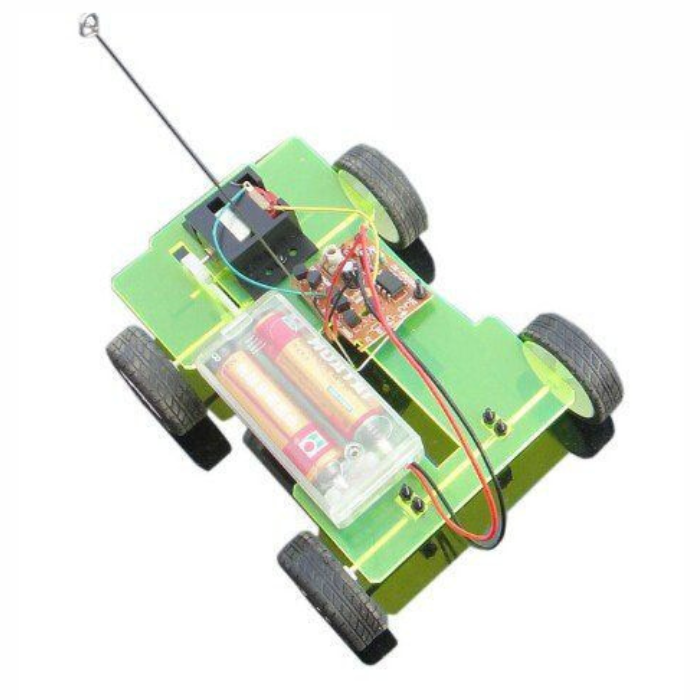
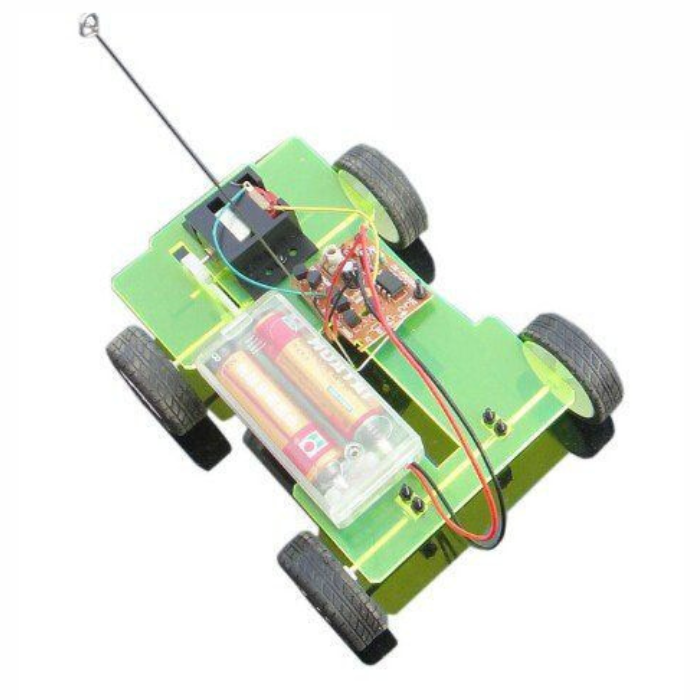
Don't just buy your kids remote controlled cars, help them build one. This kit will develop skills like assembling the parts, wireless communication, and interfacing of transmitter/Receiver Board. The kids will learn about RF technology and its collaboration with modern mechanical elements to produce a perfect hybrid!
Features:
Do It Yourself Mini Battery Powered 4 Wheel Drive Car Kit
Simple and yet educational , Develop intelligence, cultivate confidence, and improve mental quality to create new thinking.
Moveable car
Learn about
RF technology and electric motor
₹443.99
MRP. ₹838.60
Incl. GST (No Hidden Charges)
Incl. GST (No Hidden Charges)
DIY Mini Battery Powered 4 Wheel Drive Car
DIY Mini Battery Powered 4 Wheel Drive Car Don't just buy your kids remote controlled cars, help them build one. This kit will develop skills like assembling the parts, wireless …
As low as
₹443.99
₹443.99
MRP. ₹838.60
Incl. GST (No Hidden Charges)
DIY Mini Cat Tracking Robot
DIY Mini Cat Tracking Robot
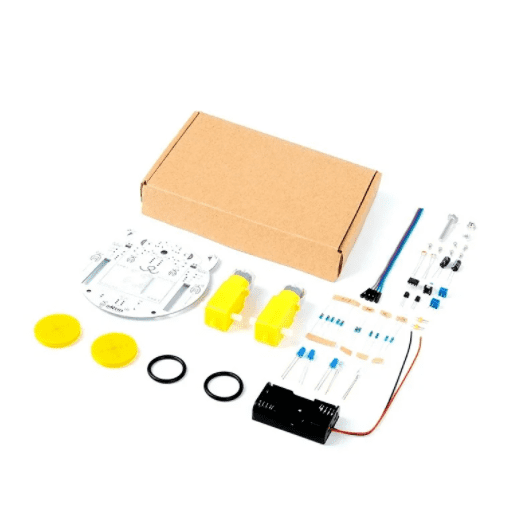
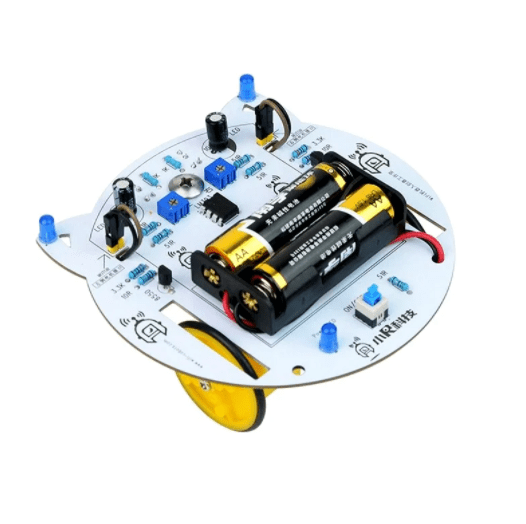
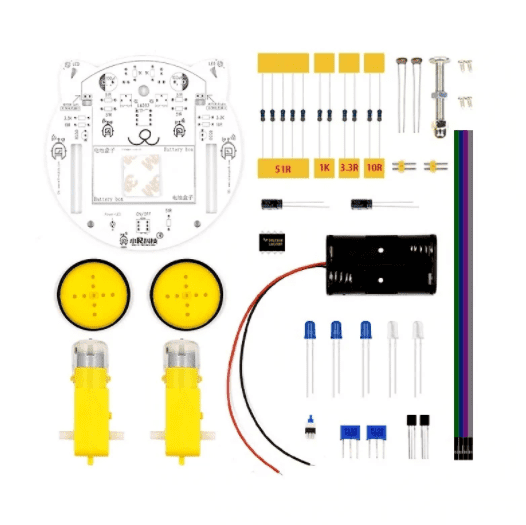
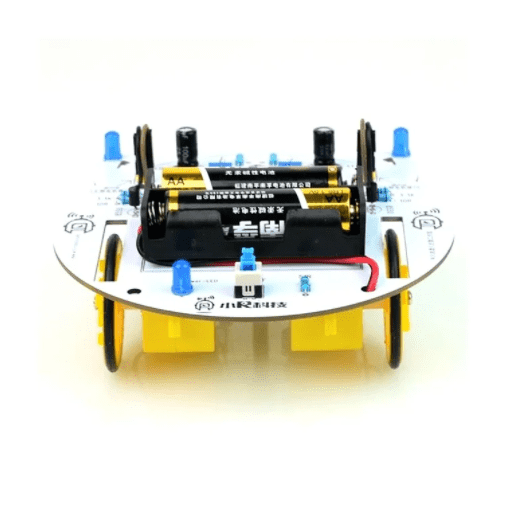
Build your DIY Mini Cat Tracking Robot. This mini Cat face-shaped robot setup comes with a line follower map as all required Assembly guide to build the robot. This robot runs on a 3V DC supply which can be taken from two AA batteries. The user manual inside the box will guide you through all stepwise procedures as well as all essential parameters to assemble the bot, all you need is basic soldering knowledge and soldering and fitting tools.
This smart tracking car kit is designed with a fashionable CAT face PCB board. It will help you to understand the basic principles and technical components of automatic control. It is hoped that you can learn basic component knowledge, circuit knowledge, and soldering skill by using this robot.
Also check out our
robotics kit
collection, which features a variety of DIY robotic kits available for purchase.
Note:
The kit doesn't come with a battery
₹639.82
MRP. ₹1208.20
Incl. GST (No Hidden Charges)
Incl. GST (No Hidden Charges)
DIY Mini Cat Tracking Robot
DIY Mini Cat Tracking Robot Build your DIY Mini Cat Tracking Robot. This mini Cat face-shaped robot setup comes with a line follower map as all required Assembly guide to …
As low as
₹639.82
₹639.82
MRP. ₹1208.20
Incl. GST (No Hidden Charges)
DIY Mini Solar Car Kit 4 Whee…
DIY Mini Solar Car Kit 4 Wheel Drive (Green Chassis)
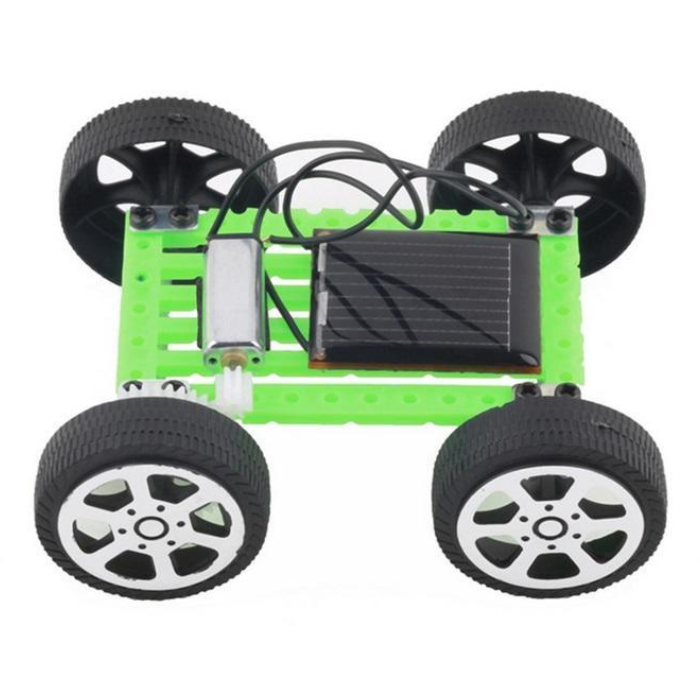
Let your kid discover the power of the sun. This cool DIY kit is solar powered and is complete fun to build. While there is a lot to learn about solar energy, this car also helps the kids understand the basic components of an automobile. The gear mechanisms exhibit conversion of one form of energy into another. The wheel sizes teach the kids about ground clearance, wheel bases and track widths, imparting a curiosity towards elementary engineering.
It's time to make your own toy! Better yet, a solar-powered mini car, We all know Some kids really like to play outside, doing outdoor activities. So why not we give some support and let them play while learning! Get this kit to keep your kids occupied with hands-on activities while enjoying the "robot" moving around that is powered by green energy, renewable energy - Solar Power. This DIY kit is simple enough to be built by 4 years old children, with parents' help. And children 6 years old and above can build it by themself! Let them explore solar power and how it can help to save the earth by utilizing it! You can also let your kids understand how solar panel works and electric motor works. Awesome!
Note:
The solar panel is meant for OUTDOOR actual sunlight, indoor lighting will NOT generate sufficient energy to drive the car.
Features:
Do It Yourself Mini Solar Car Kit
Simple and yet educational , Develop intelligence, cultivate confidence, and improve mental quality to create new thinking.
Suitable for age 4 years old and above
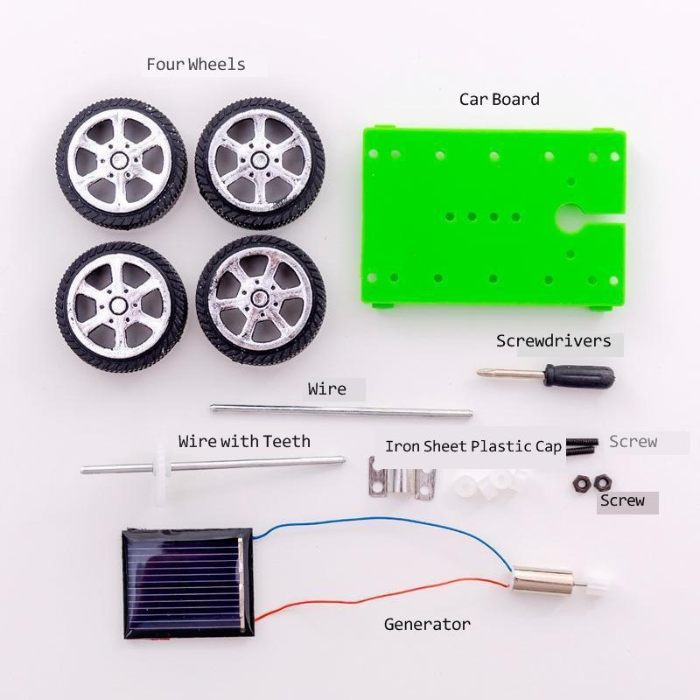
Come with everything needed to assemble as a solar-powered moving car.
No soldering is needed
Moveable car
Learn about renewable energy, solar power, and electric motor :)
₹173.59
MRP. ₹278.60
Incl. GST (No Hidden Charges)
Incl. GST (No Hidden Charges)
DIY Mini Solar Car Kit 4 Wheel Drive (Green Chassis)
DIY Mini Solar Car Kit 4 Wheel Drive (Green Chassis) Let your kid discover the power of the sun. This cool DIY kit is solar powered and is complete fun …
As low as
₹173.59
₹173.59
MRP. ₹278.60
Incl. GST (No Hidden Charges)
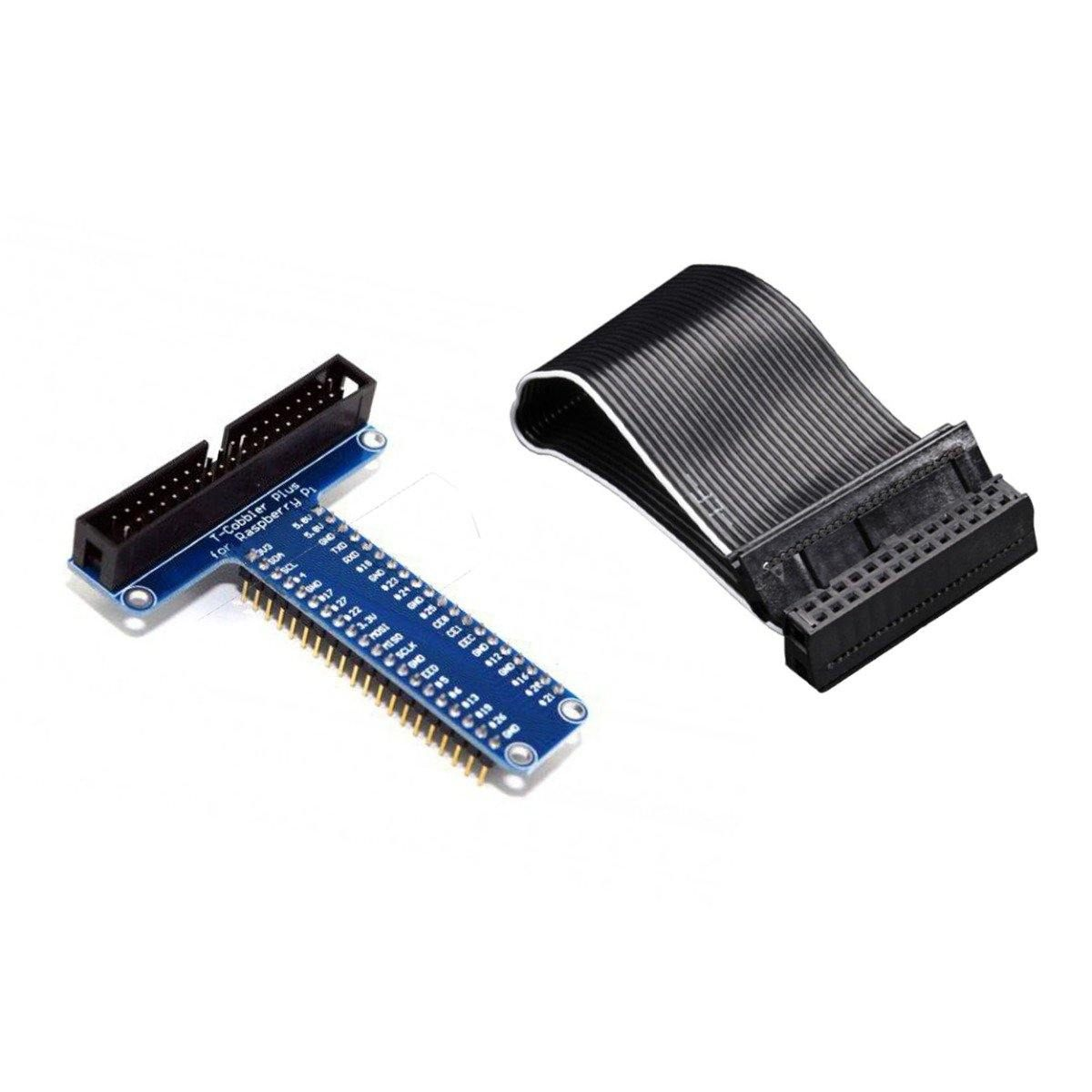
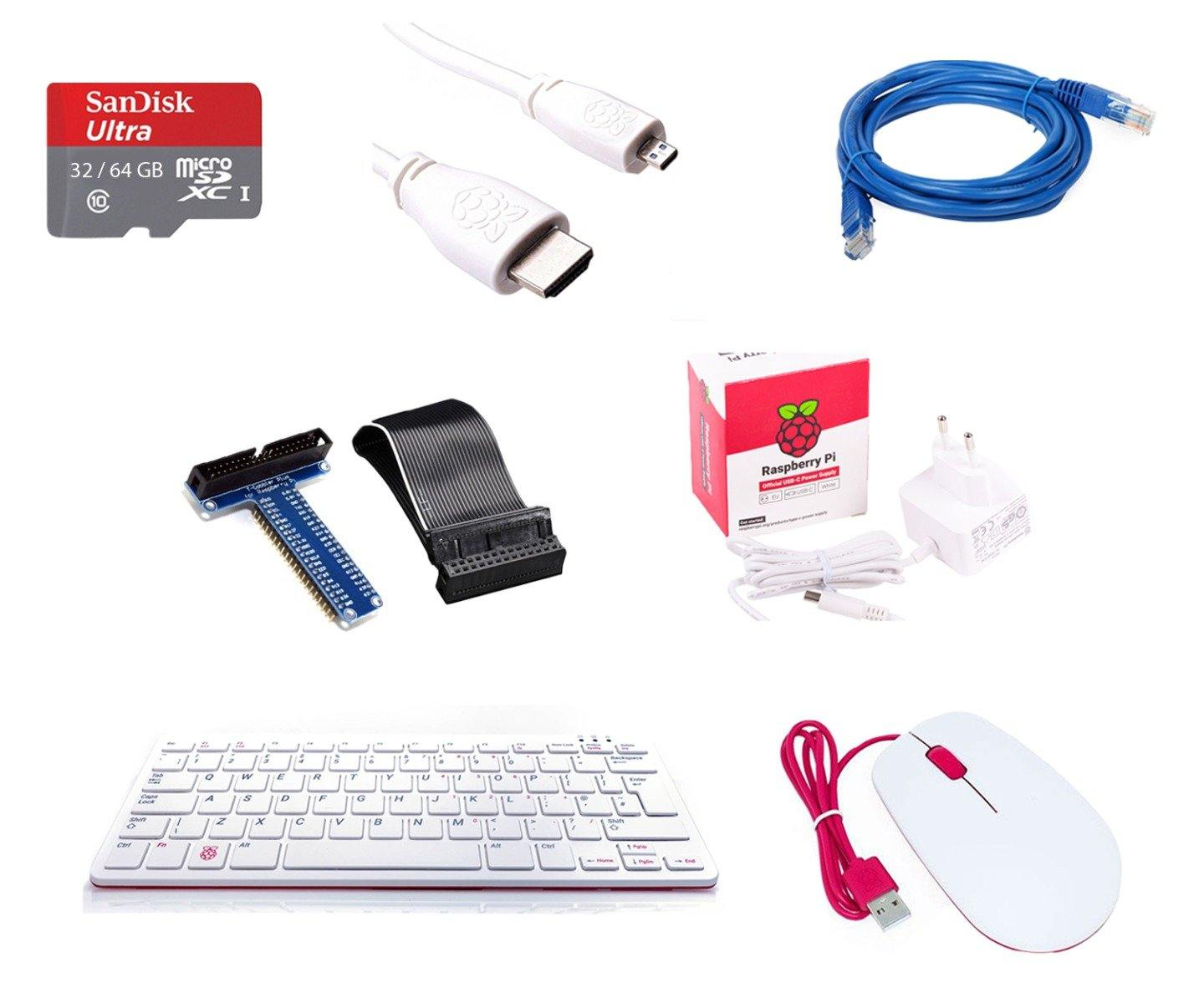
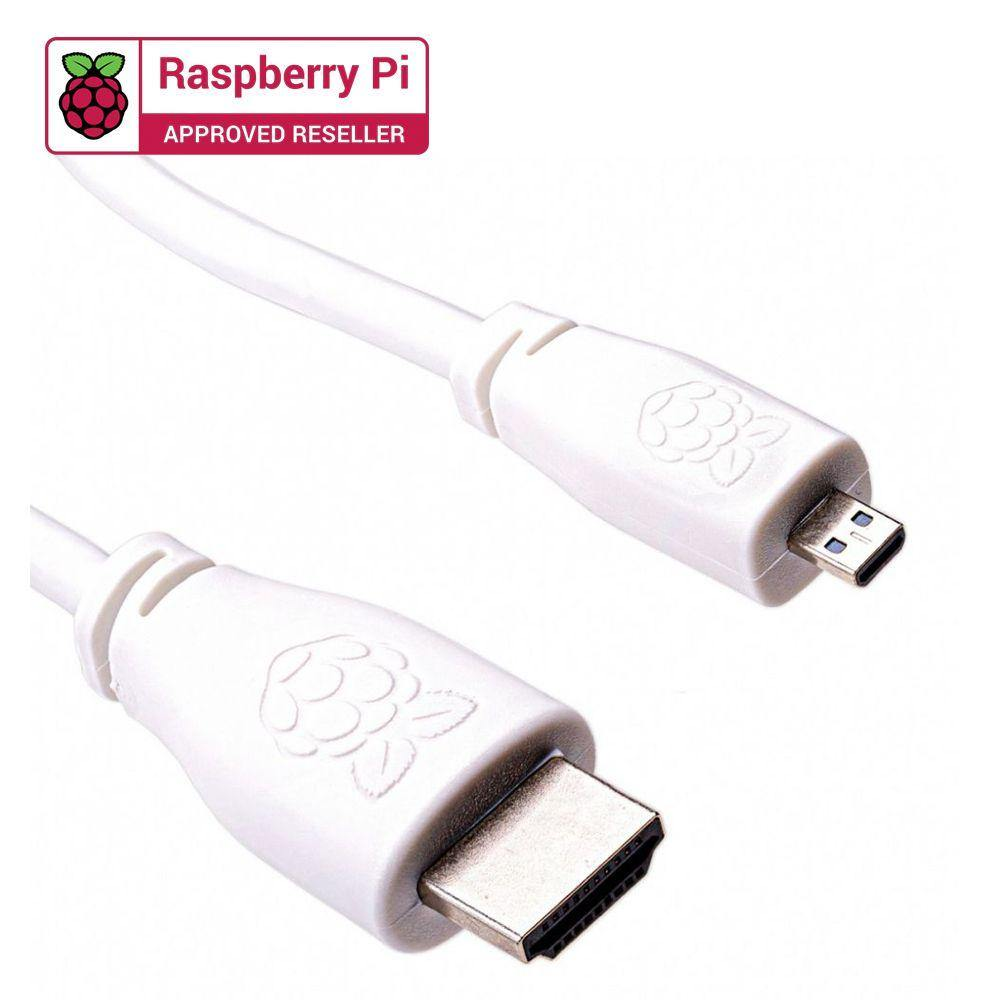
DIY Raspberry Pi 400 Kit
DIY Raspberry Pi 400 Kit
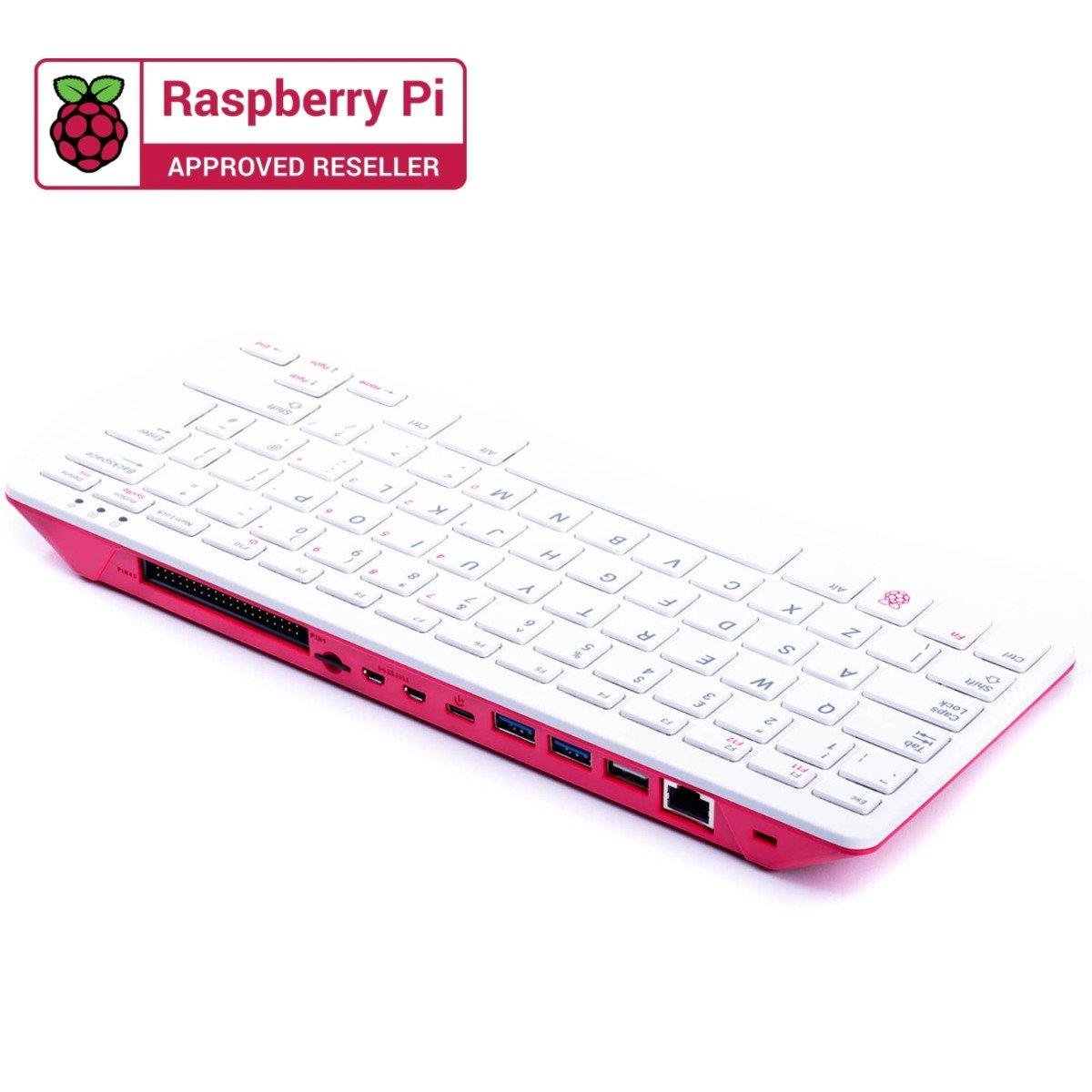
The Raspberry Pi 400 is the latest addition to the Raspberry Pi Family. It is developed with an innovative design that combines the integration of the Raspberry Pi 4 Model B with the Raspberry Pi Keyboard. Therefore this design helps users to directly plug the Raspberry Pi 400 and operate.
Note:
Iotcart is the authorized seller of Raspberry Pi products in India. Therefore even if you are in Bangalore, Hyderabad, Kerala, Mumbai, or Pune, you can buy DIY Raspberry Pi 400 Kit online from Iotcart at the comfort of your homes.
₹11126.29
Incl. GST (No Hidden Charges)
Out of Stock
MRP. ₹18198.60
Incl. GST (No Hidden Charges)
DIY Raspberry Pi 400 Kit
DIY Raspberry Pi 400 Kit The Raspberry Pi 400 is the latest addition to the Raspberry Pi Family. It is developed with an innovative design that combines the integration of …
As low as
₹11126.29
₹11126.29
MRP. ₹18198.60
Incl. GST (No Hidden Charges)
Out of Stock
DIY RC Boat Kit
DIY RC Boat Kit
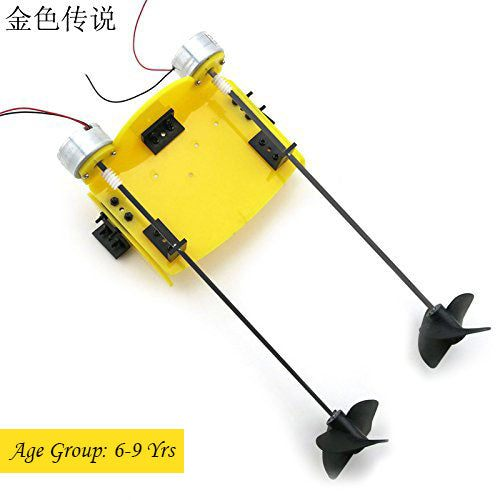
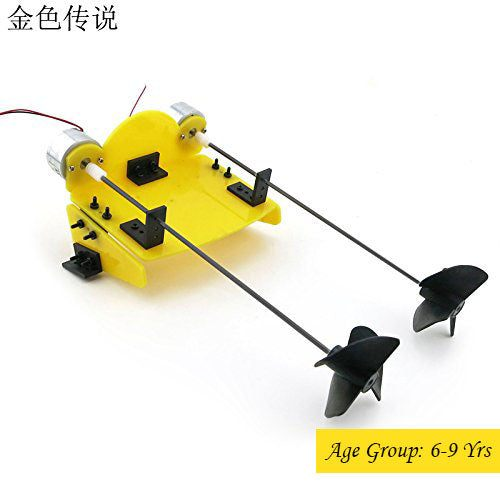
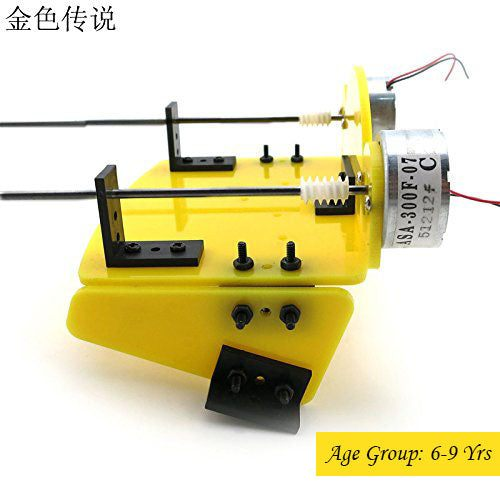
Don't let your kid's curiosity be limited to paper boats! Get him the Boat Ship kit which will build his assemblage skills and increase his knowledge about motors, propellers and basic information about water transport. Fix this engine on your designed ship/hovercraft and let it glide through the water!
Play , Learn and Grow with our motorboat DIY kit for children (4 yrs onwards). This motorboat is a very fascinating & fun thing to make. It floats and moves on the water. One can even use a bucket or a bathtub to have fun with this project. It’s a very simple to assemble project for children, very engaging and educative. Our products do not require soldering & are plug and play. It is great to introduce simple circuitry to children. This is a must-have kit.
Method of use:
Using the foam board (hull of other materials as well), making a hull, use this module installed on the hull (Fixed in various ways such as using screws or adhesive tape), to ensure that all or part of the propeller in the water, after the power it can be used
Key Features:
Made of premium material, Durable and reliable.
Easy for assemble, cultivate kids hands-on ability and learn science knowledge.
Wireless RC car, remote control forward and back without turn function
Premium electronic components and accessories with stable performance, safe play.
₹610.90
Incl. GST (No Hidden Charges)
Out of Stock
MRP. ₹1118.60
Incl. GST (No Hidden Charges)

DIY RC Boat Kit
DIY RC Boat Kit Don't let your kid's curiosity be limited to paper boats! Get him the Boat Ship kit which will build his assemblage skills and increase his knowledge …
As low as
₹610.90
₹610.90
MRP. ₹1118.60
Incl. GST (No Hidden Charges)
Out of Stock
DIY Robotic Arm Mechanic Kit …
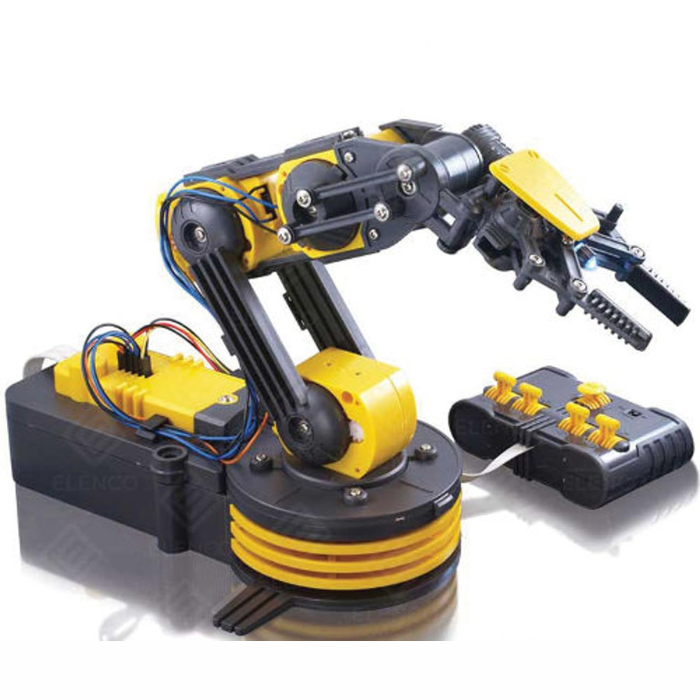
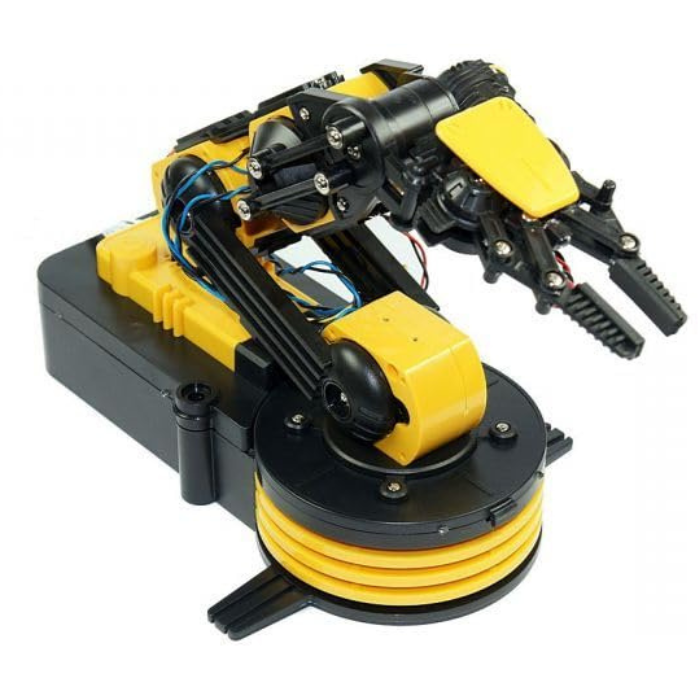
DIY Robotic Arm Mechanic Kit for Kids and Adults
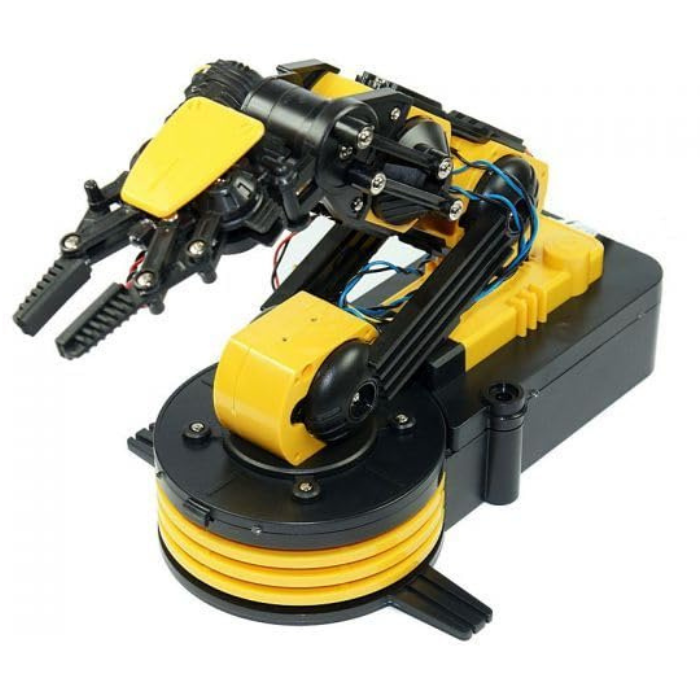
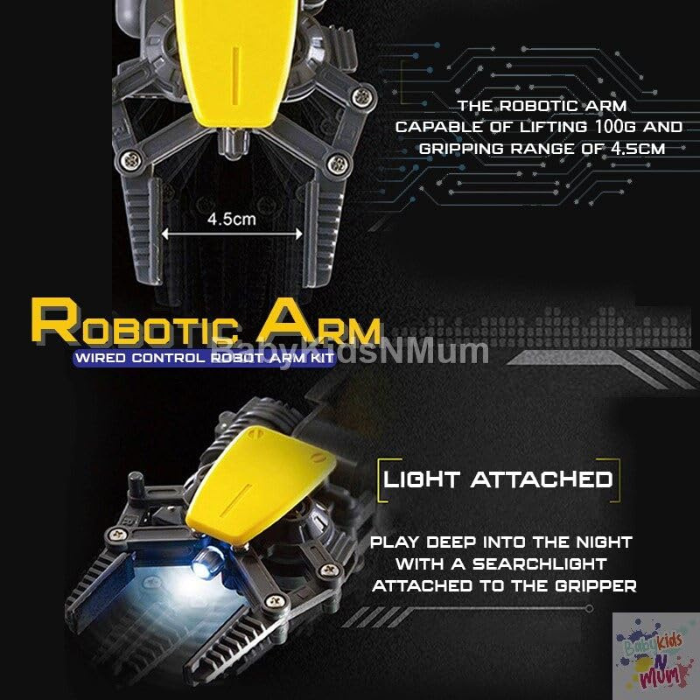
The DIY Robotic Arm Mechanic Kit is a fun project for both kids and adults. It lets you build your own robotic arm from scratch, helping you learn about how machines work. As you put together the pieces, you'll improve your problem-solving skills and learn new things about mechanics. Once built, you can control the arm to grab objects and do other tasks. This kit isn’t just a toy – it’s an educational experience that encourages creativity and helps you explore robotics and engineering. Get ready to build and discover something amazing!
Features
Hands-on Learning: Build your own robotic arm and enjoy a fun, educational experience.
Comprehensive Kit: Includes all components, servos, screws, and clear instructions for easy assembly.
Customizable Design: Customize the arm’s movements and program its functions to fit your needs.
Educational Value: Develop problem-solving, critical thinking, and STEM skills while learning about robotics.
Durable Construction: Made from high-quality materials for long-lasting use and hours of learning fun.
₹3381.62
Incl. GST (No Hidden Charges)
Out of Stock
MRP. ₹8398.60
Incl. GST (No Hidden Charges)
DIY Robotic Arm Mechanic Kit for Kids and Adults
DIY Robotic Arm Mechanic Kit for Kids and Adults The DIY Robotic Arm Mechanic Kit is a fun project for both kids and adults. It lets you build your own …
As low as
₹3381.62
₹3381.62
MRP. ₹8398.60
Incl. GST (No Hidden Charges)
Out of Stock
DIY Robotic Arm Mechanic Kit …
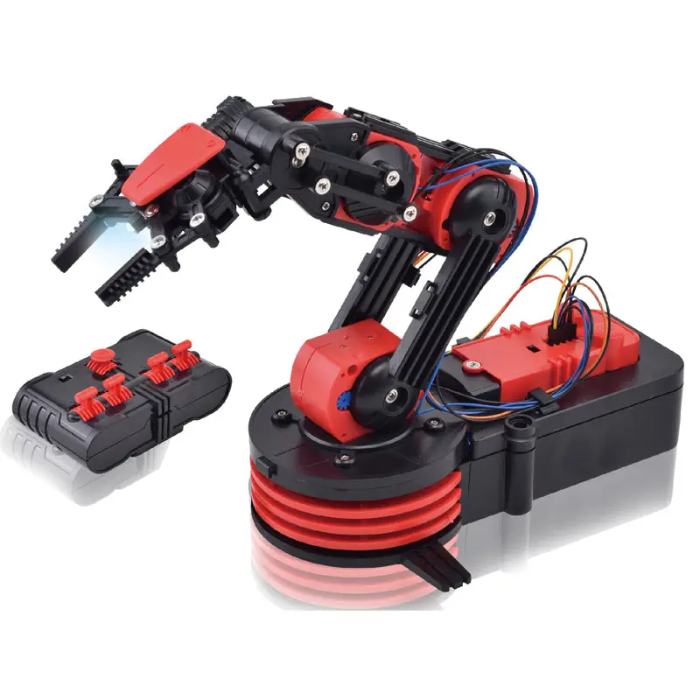
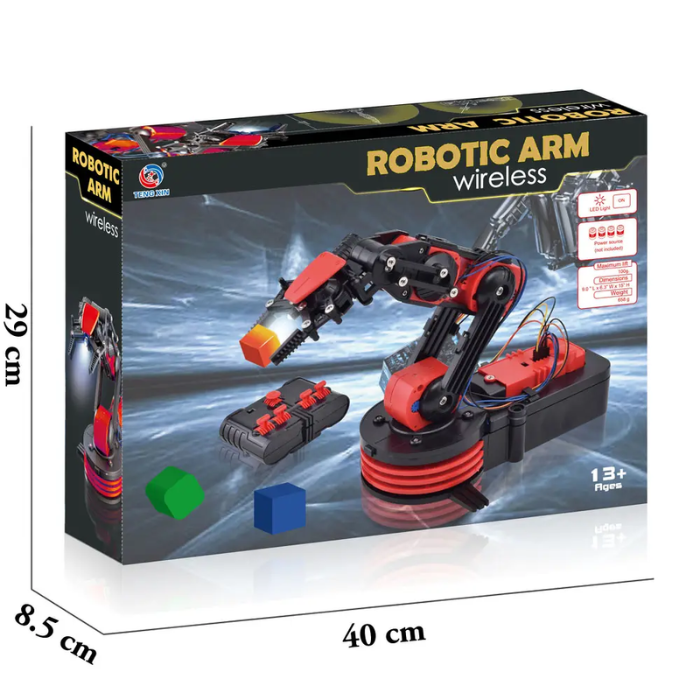
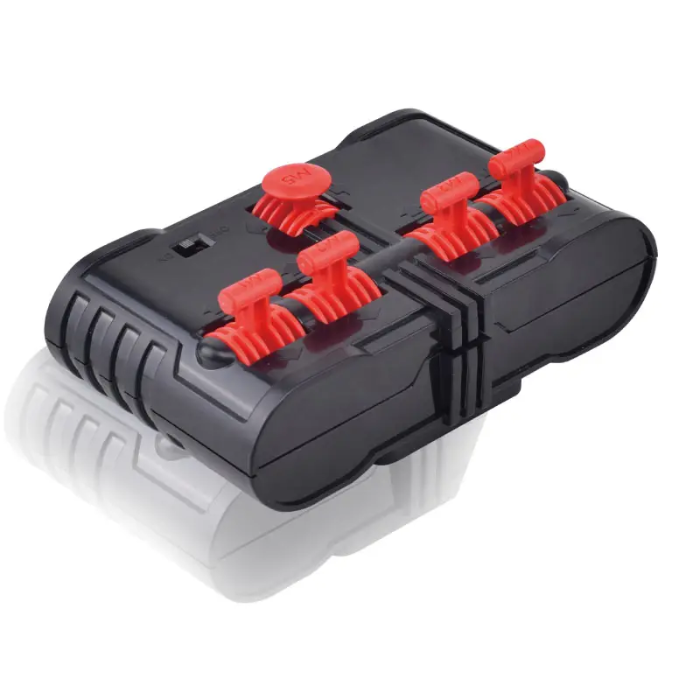
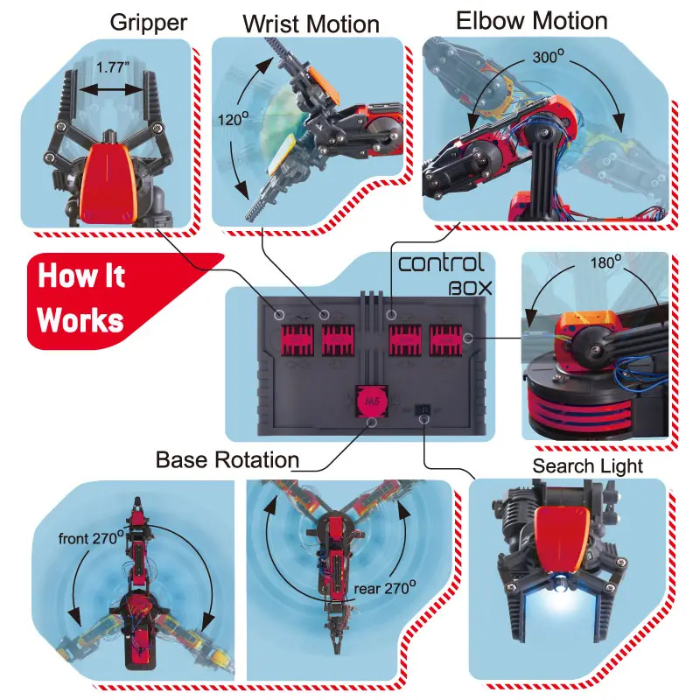
DIY Robotic Arm Mechanic Kit for Kids and Adults (Wireless)
The DIY Robotic Arm Mechanic Kit (wireless) is an enjoyable project for both children and adults. It allows you to create your own robotic arm from scratch, teaching you about how machines work.
As you put the parts together, you'll develop your problem-solving abilities and learn more about mechanics. Once built, you can use the arm to pick up objects and perform other tasks.
This kit is more than just a toy; it is an educational experience that fosters creativity and allows you to study robotics and engineering. Prepare to build and uncover something extraordinary!
Features:
Hands-on Learning:
Create your own robotic arm and have a fun educational experience.
Comprehensive Kit:
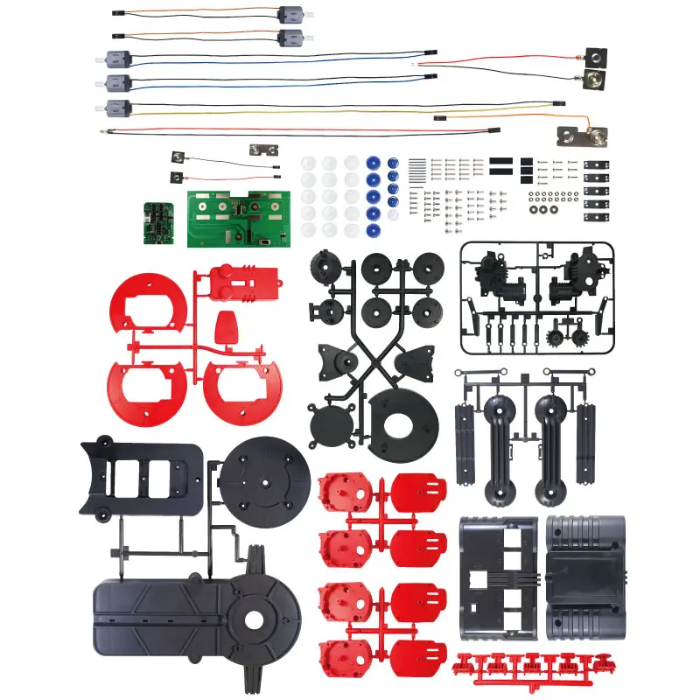
Includes all components, servos, screws, and easy-to-follow assembly instructions.
Customizable Design:
The arm's movements and functionalities can be programmed to meet your specific requirements.
Educational Value:
Learning about robots helps you develop problem-solving, critical thinking, and STEM abilities.
Durable Construction:
High-quality materials provide long-term use and hours of enjoyable learning.
Package Imcludes:
1 x DIY Robotic Arm Mechanic Kit
₹3540.74
MRP. ₹6564.60
Incl. GST (No Hidden Charges)
Incl. GST (No Hidden Charges)
DIY Robotic Arm Mechanic Kit for Kids and Adults (Wireless)
DIY Robotic Arm Mechanic Kit for Kids and Adults (Wireless) The DIY Robotic Arm Mechanic Kit (wireless) is an enjoyable project for both children and adults. It allows you to …
As low as
₹3540.74
₹3540.74
MRP. ₹6564.60
Incl. GST (No Hidden Charges)
DIY Sanitizer Dispenser Kit w…
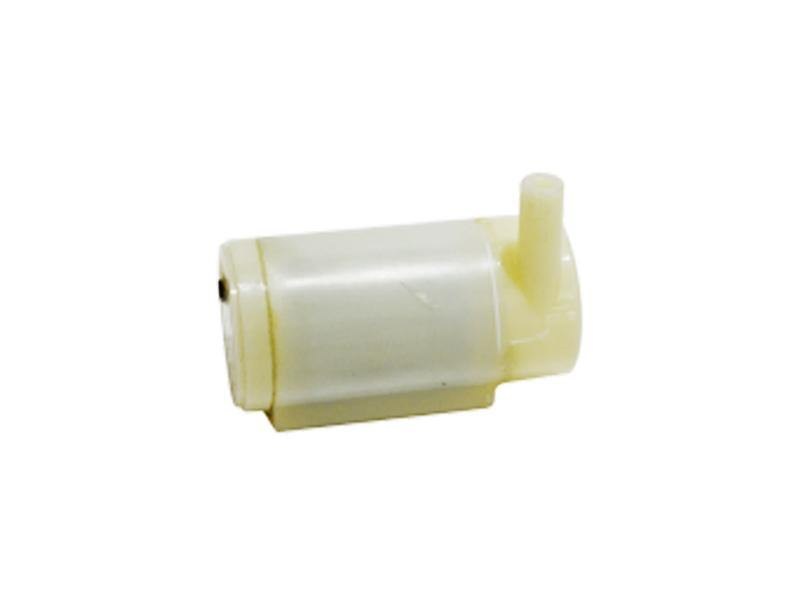
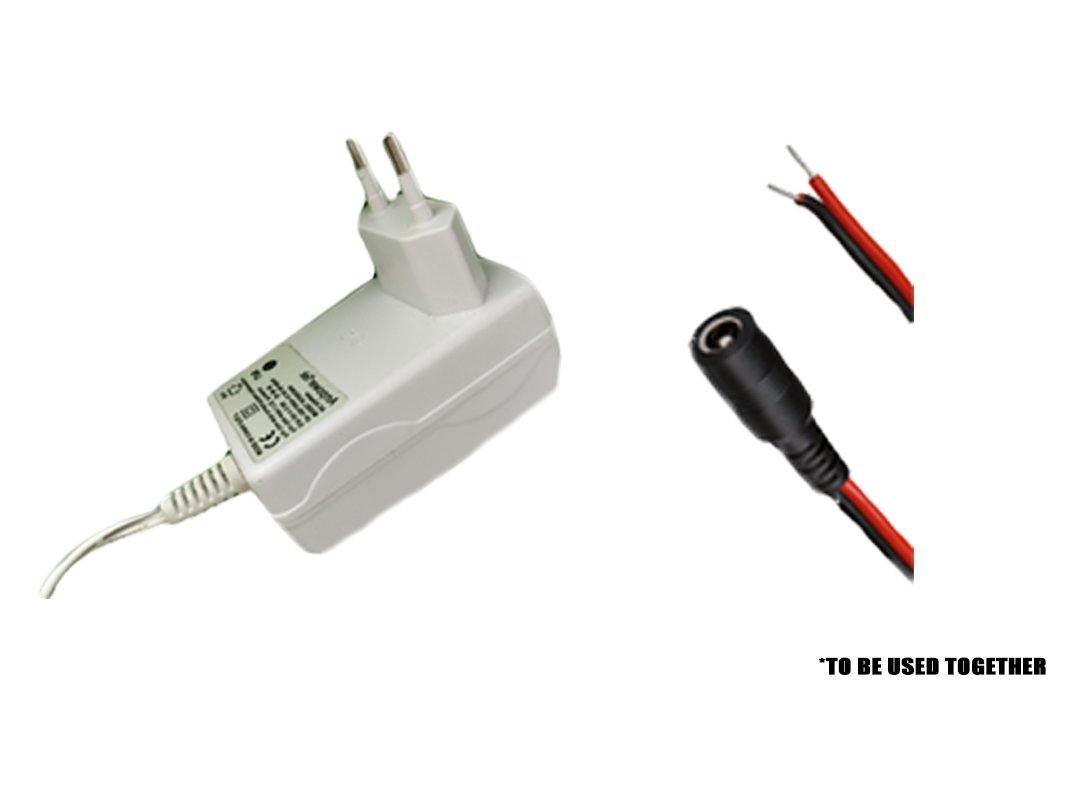
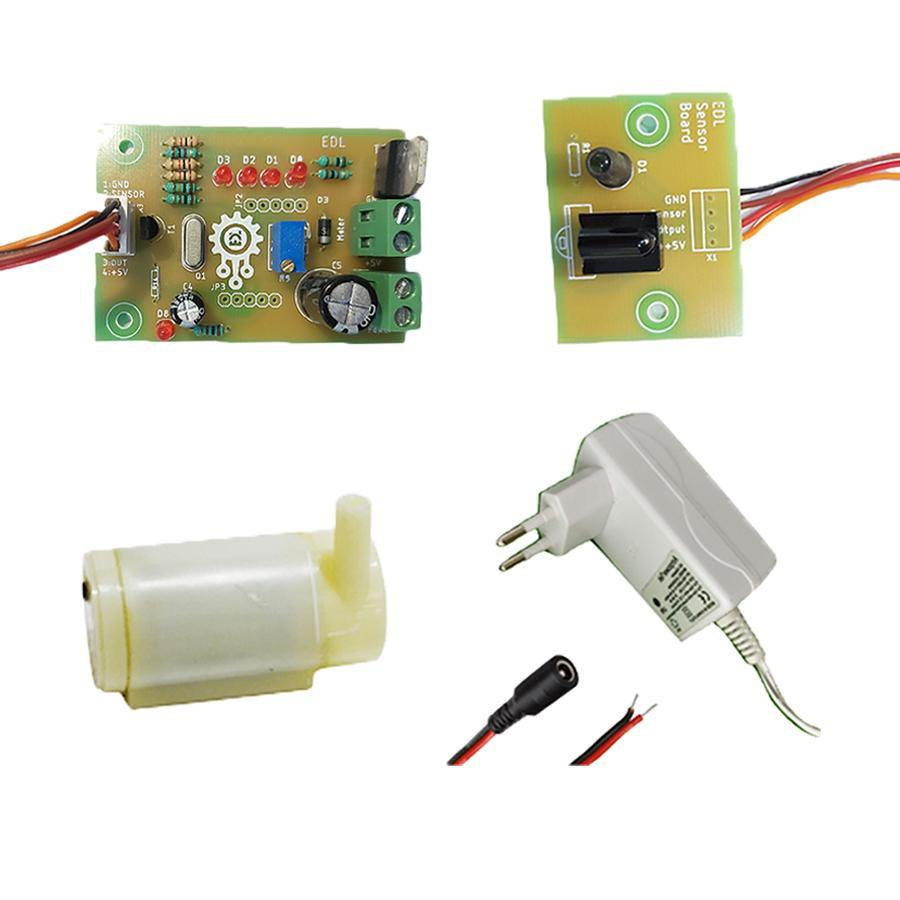
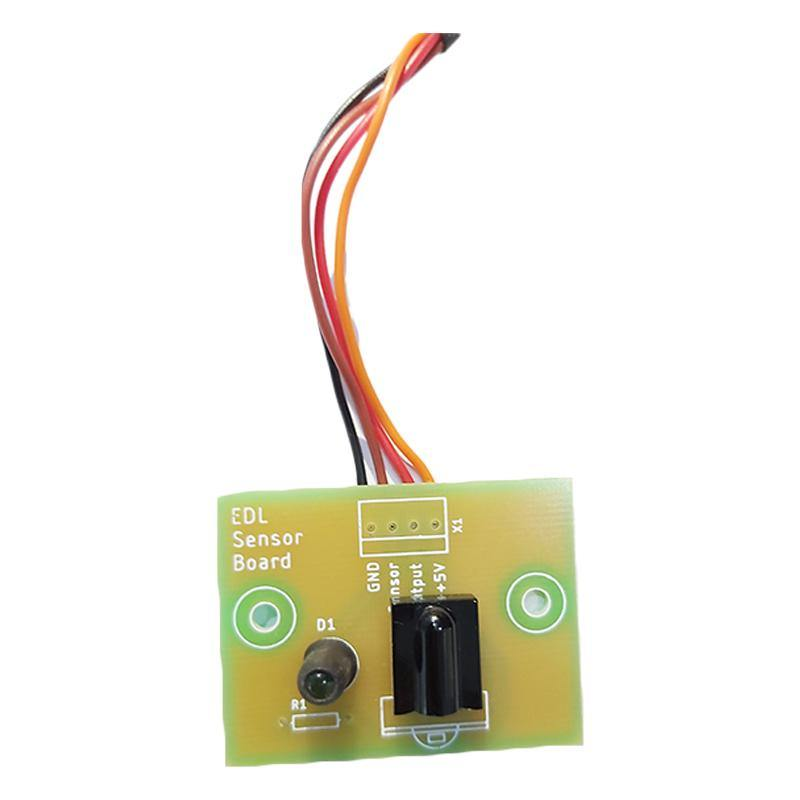
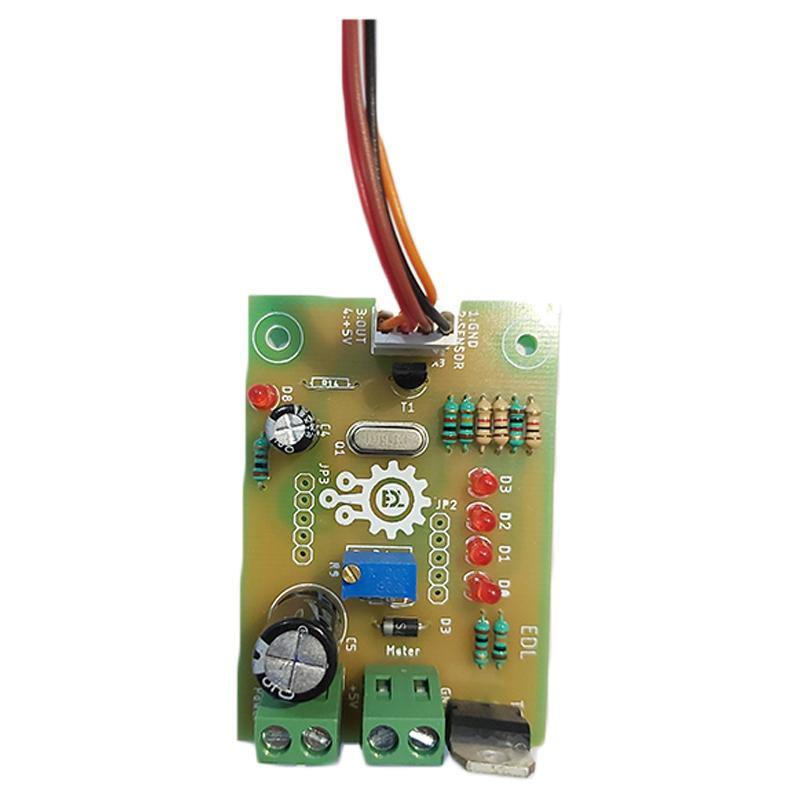
This DIY sanitizer kit along with the timer helps you build your own Sanitizer Dispenser at home to protect yourself. This DIY Sanitizer dispenser kit includes;
Control board
with sensor and timer, mini pump, 12V Adapter and DC Jack Breakout. During the pandemic of COVID-19, it is very important to santizer your hands regularly. Building a Sanitizer Dispenser using this kit will help you avoid physical contact and cross infections.
Applications of this Kit
Touchless DIY Sanitizer Dispenser
₹644.28
Incl. GST (No Hidden Charges)
Out of Stock
MRP. ₹1075.20
Incl. GST (No Hidden Charges)
DIY Sanitizer Dispenser Kit with Timer
This DIY sanitizer kit along with the timer helps you build your own Sanitizer Dispenser at home to protect yourself. This DIY Sanitizer dispenser kit includes; Control board with sensor …
As low as
₹644.28
₹644.28
MRP. ₹1075.20
Incl. GST (No Hidden Charges)
Out of Stock
DIY Science Experiment Slide …
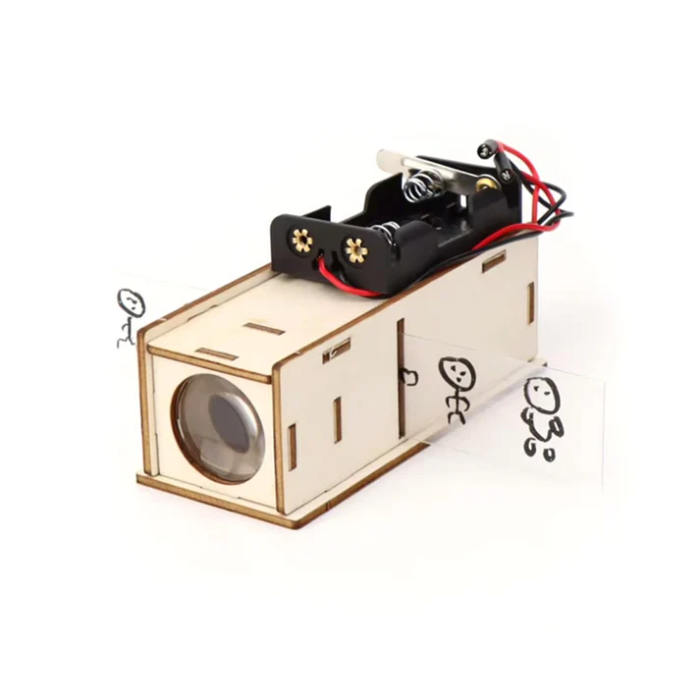
DIY Science Experiment Slide Projector STEM Kit for Kids
The DIY Science Experiment Slide Projector STEM Kit for Kids is designed to inspire young minds through hands-on play and discovery.
This engaging kit allows children to assemble their very own functional slide projector, helping them understand the basics of light, projection, and optics.
Perfect for nurturing curiosity and scientific thinking, the kit not only entertains but also builds essential STEM skills, including creativity, logical reasoning, and problem-solving.
Whether at home or in the classroom, this DIY projector kit provides a screen-free, educational activity that makes learning fun and memorable. An excellent choice for parents and educators who want to combine playtime with meaningful learning!
Features:
Encourages hands-on learning through assembly and experimentation
Develops logical thinking, creativity, and problem-solving skills
Promotes interest in science, technology, engineering, and mathematics (STEM)
Fun and educational alternative to screen time
Easy-to-follow instructions, suitable for home or classroom use
Ideal for kids to explore light, projection, and optics concepts
₹317.14
Incl. GST (No Hidden Charges)
Out of Stock
MRP. ₹488.60
Incl. GST (No Hidden Charges)
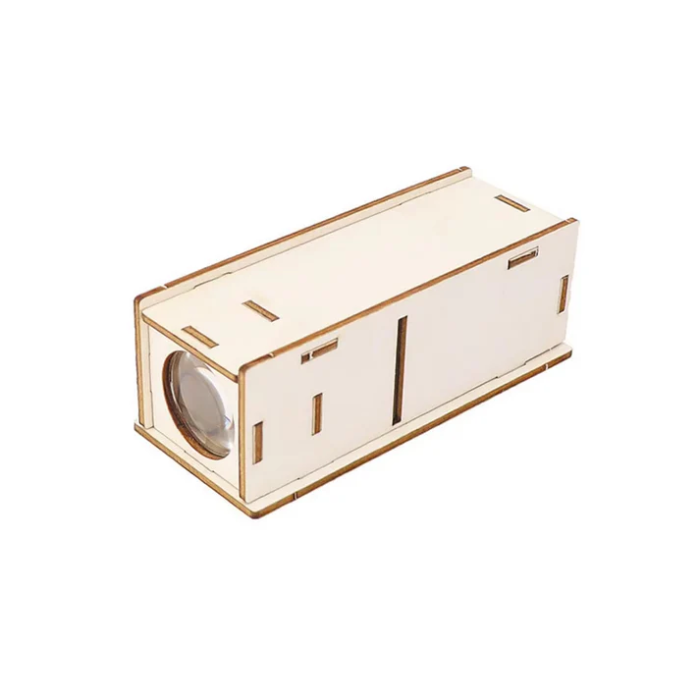
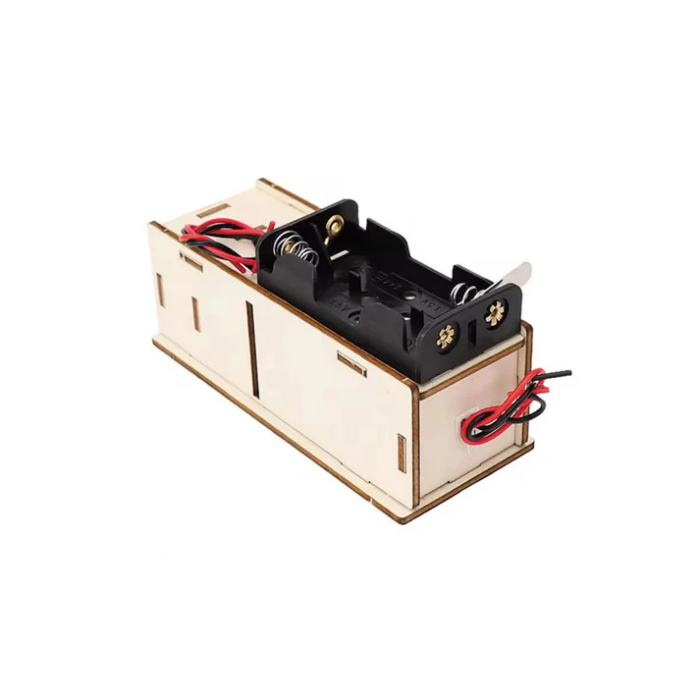
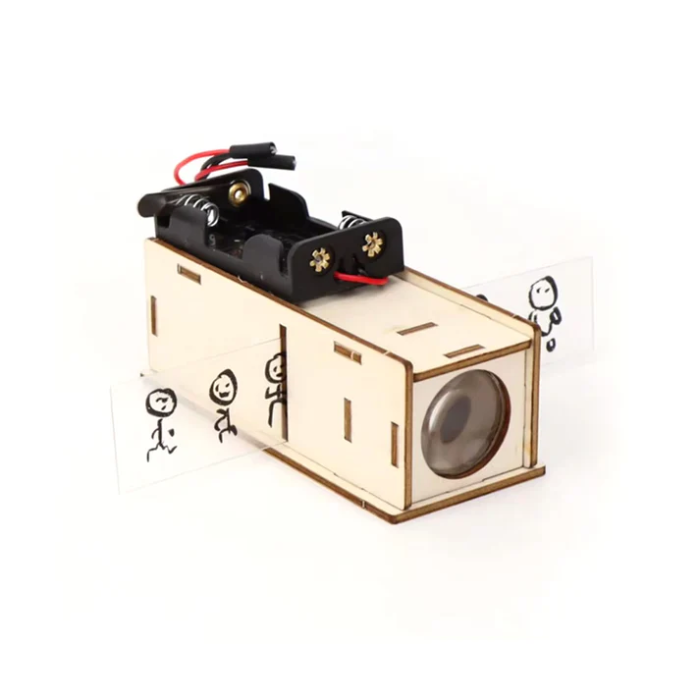
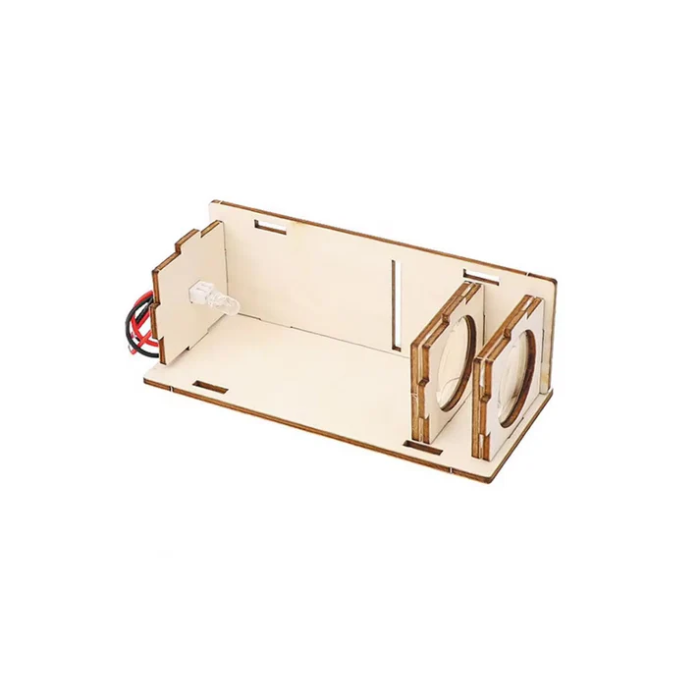
DIY Science Experiment Slide Projector STEM Kit for Kids
DIY Science Experiment Slide Projector STEM Kit for Kids The DIY Science Experiment Slide Projector STEM Kit for Kids is designed to inspire young minds through hands-on play and discovery. …
As low as
₹317.14
₹317.14
MRP. ₹488.60
Incl. GST (No Hidden Charges)
Out of Stock
DIY Small Inventions Student …
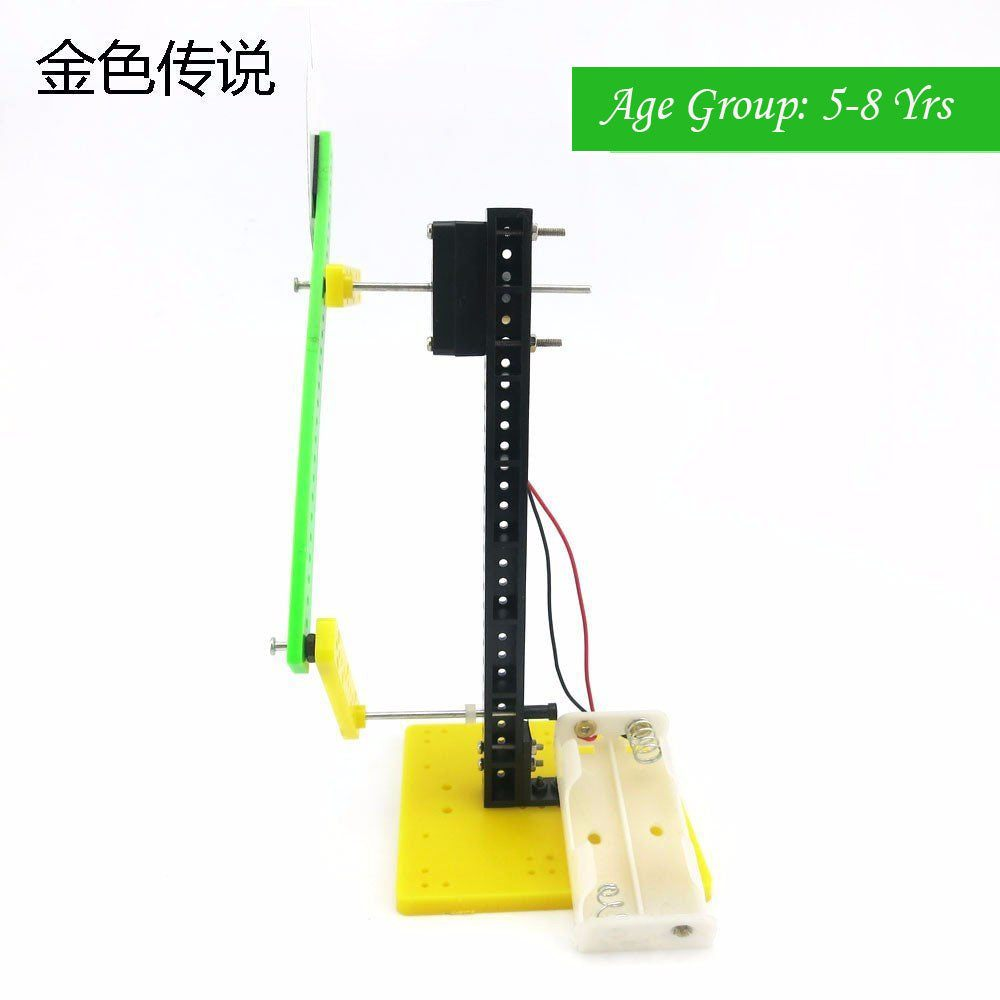
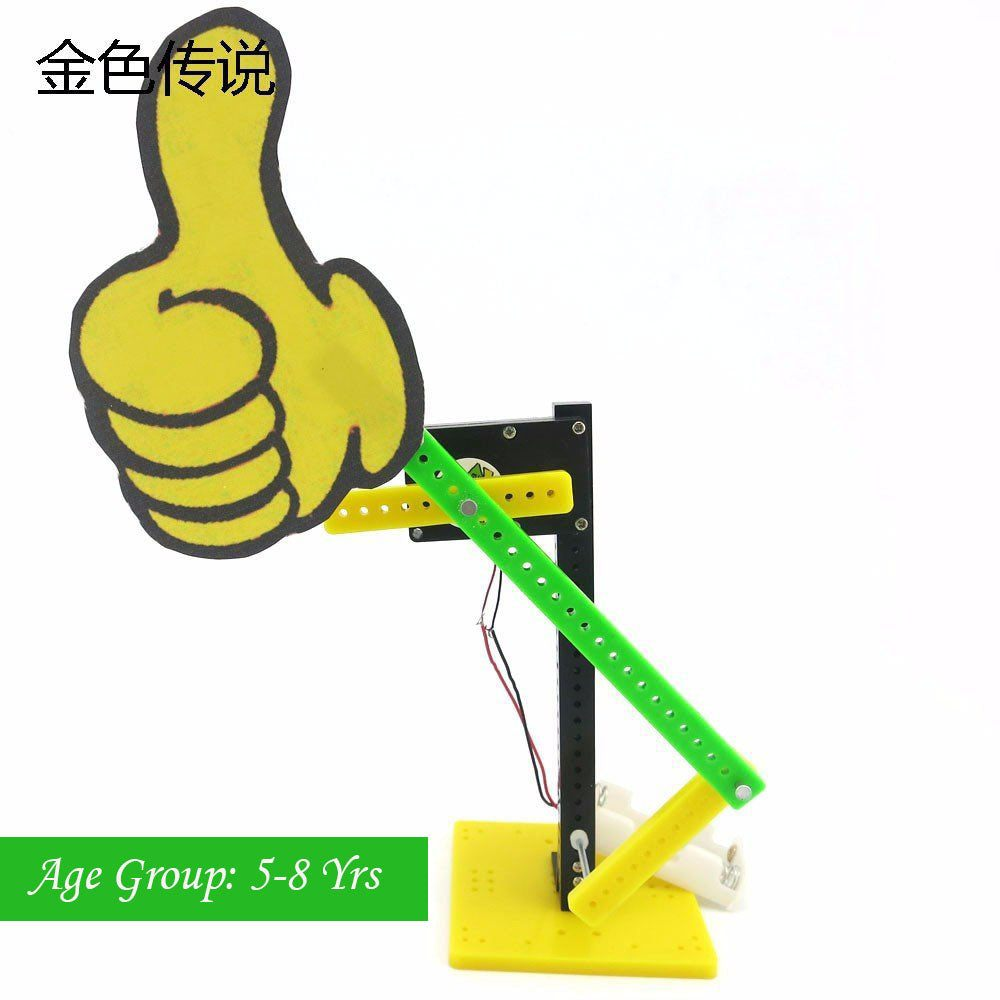
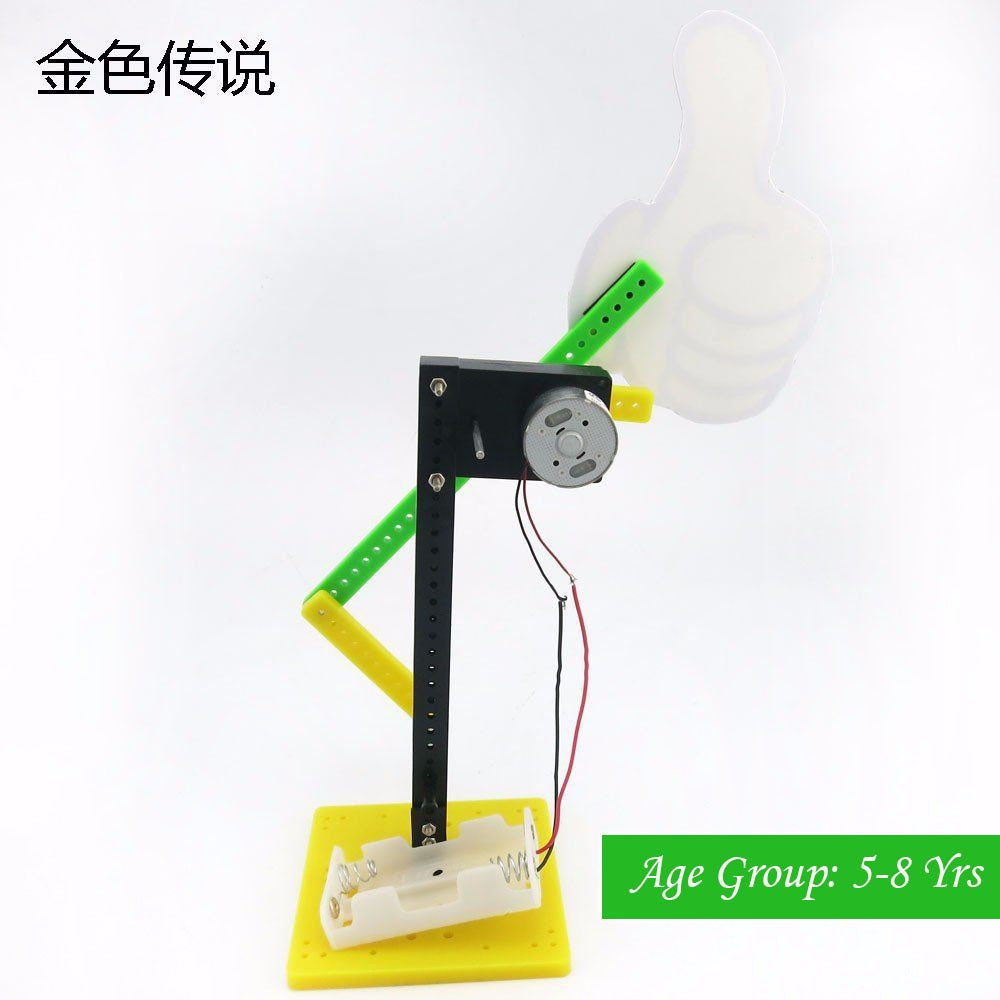
DIY Small Inventions Student Science Experiment Creative Gift
A great gift for your kid to explore his creative side and learn about the concept of assembling and batteries in this awesome kit. This is a display of conversion of motion within a system through a simplified mechanism.
This is suitable for students to assemble themselves and cultivate students' motivation.
Exercise hands-on ability, understand simple circuit and mechanical transmission.
Note:
This kit does not comes with Batteries
₹316.02
MRP. ₹488.60
Incl. GST (No Hidden Charges)
Incl. GST (No Hidden Charges)
DIY Small Inventions Student Science Experiment Creative Gift
DIY Small Inventions Student Science Experiment Creative Gift A great gift for your kid to explore his creative side and learn about the concept of assembling and batteries in this …
As low as
₹316.02
₹316.02
MRP. ₹488.60
Incl. GST (No Hidden Charges)
