

Sort by
L293D Motor Driver IC Module …
L293D Motor Driver IC Module Board
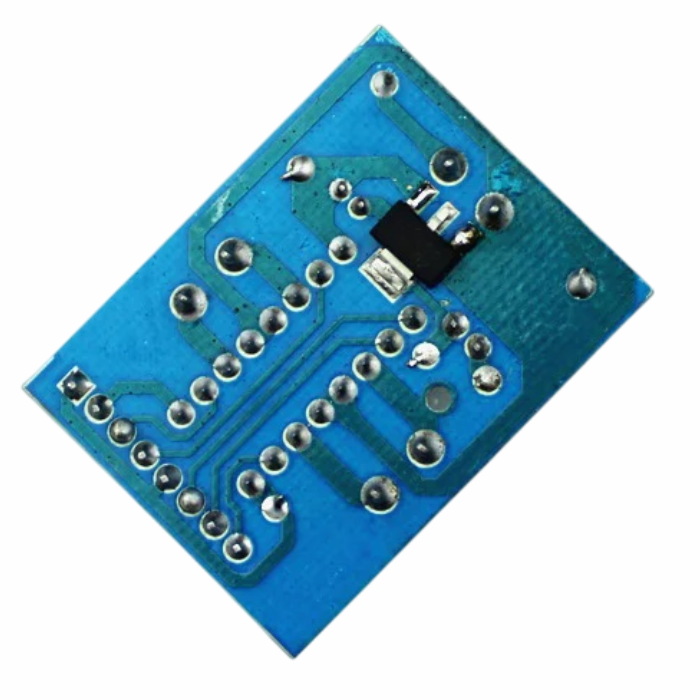
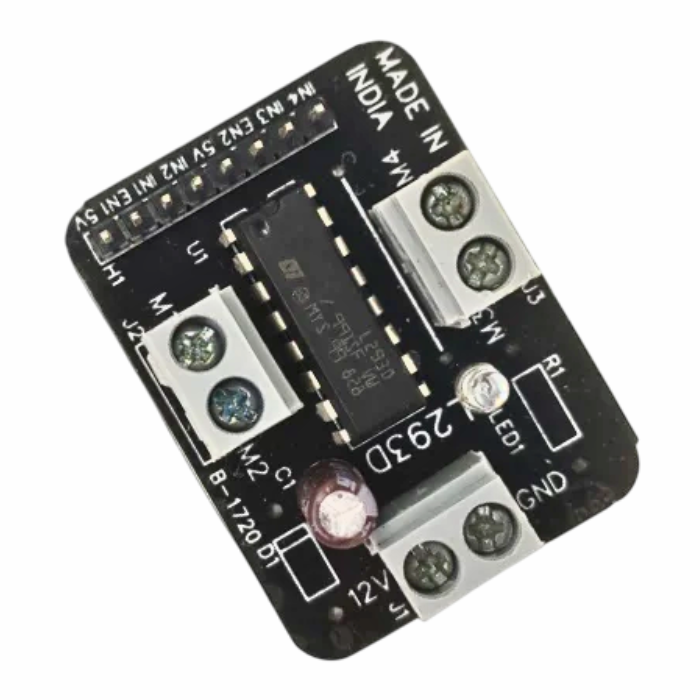
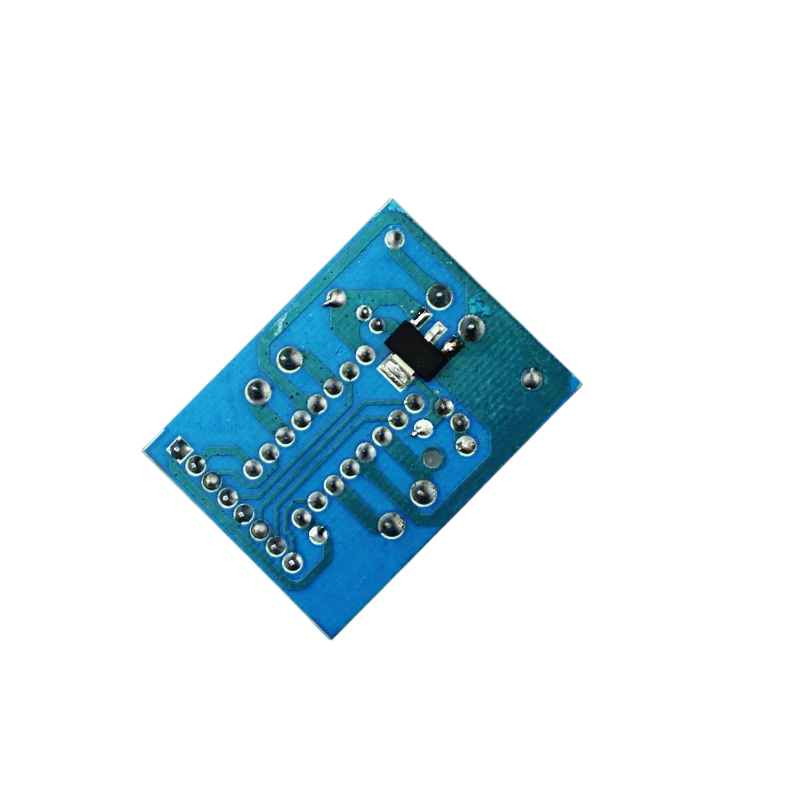
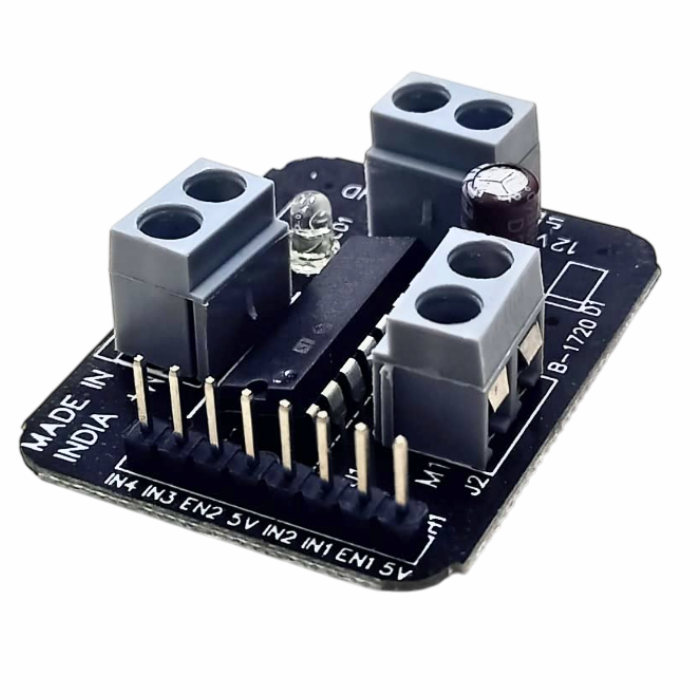
The L293D Motor Driver IC Module Board is a simple and useful tool for controlling motors in projects like robots and other machines. It uses the L293D IC, which can control two DC motors or stepper motors at the same time. You can control the direction of each motor separately or turn up to four motors on and off.
This module works with motor voltages from 5V to 36V and can handle a current of up to 600mA. It is easy to connect with devices like Arduino, Raspberry Pi, or 555 Timer circuits, making it great for beginners and experts.
This motor driver is a reliable choice for building a robot arm, a line-following robot, or a remote-controlled car.
₹79.00
Incl. GST (No Hidden Charges)
Out of Stock
MRP. ₹117.60
Incl. GST (No Hidden Charges)
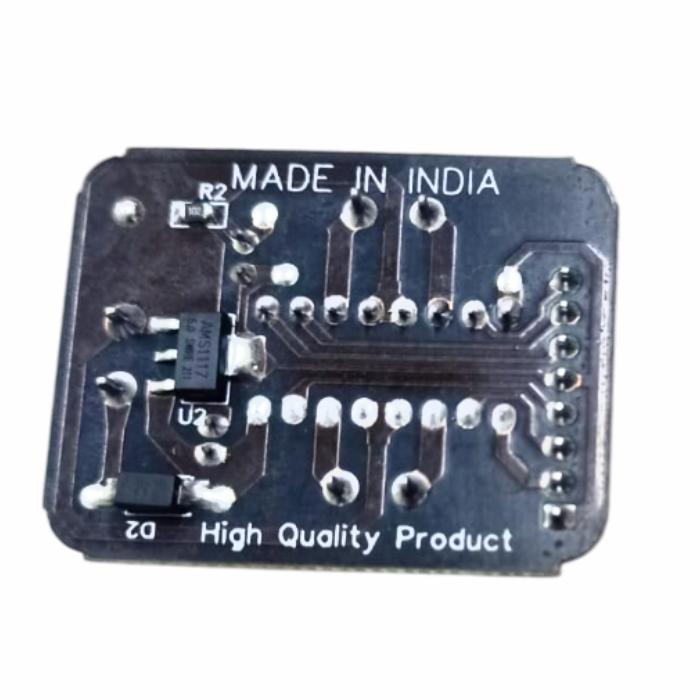
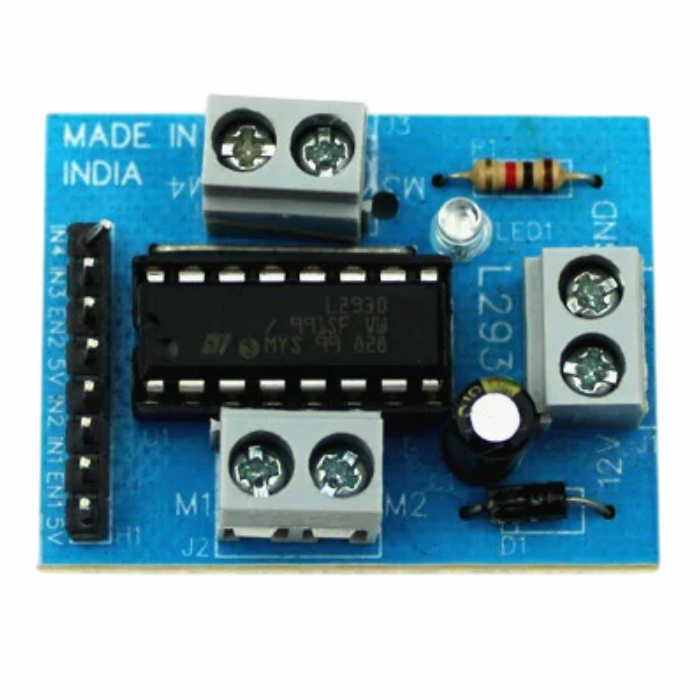
L293D Motor Driver IC Module Board (Made in India)
L293D Motor Driver IC Module Board The L293D Motor Driver IC Module Board is a simple and useful tool for controlling motors in projects like robots and other machines. It …
As low as
₹79.00
₹79.00
MRP. ₹117.60
Incl. GST (No Hidden Charges)
Out of Stock
L298N Motor Driver IC
L298N Motor Driver IC
The L298
Motor Driver IC
is an integrated monolithic circuit in a 15-lead Multiwatt and PowerSO20 packages. It is a high voltage, a high current dual full-bridge driver designed to accept standard TTL logic levels and drive inductive loads such as relays, solenoids, DC and stepping motors.
Two enable inputs are provided to enable or disable the device independently of the input signals. The emitters of the lower transistors of each bridge are connected together and the corresponding external terminal can be used for the connection of an external sensing resistor. An additional supply input is provided so that the logic works at a lower voltage.
The sense output voltage can be used to control the current amplitude by chopping the inputs or to provide over-current protection by switching low the enabled input. The brake function (Fast motor stop) requires that the Absolute Maximum Rating of 2 Amps must never be overcome. When the repetitive peak current needed from the load is higher than 2 Amps, a paralleled configuration can be chosen. An external bridge of diodes are required when inductive loads are driven and when the inputs of the IC are chopped; Schottky diodes would be preferred.
POWER OUTPUT STAGE
The L298 integrates two power output stages (A; B). The power output stage is a bridge configuration and its outputs can drive an inductive load in common or differential mode, depending on the state of the inputs. The current that flows through the load comes out from the bridge at the sensor output, an external resistor (RSA; RSB.) allows detection of the intensity of this current.
INPUT STAGE
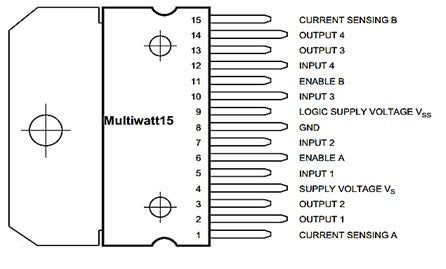
Each bridge is driven by means of four gates the input of which are In1; In2; EnA and In3; In4; EnB. The In inputs set the bridge state when The En input is high; a low state of the En input inhibits the bridge. All the inputs are TTL compatible.
Pinout:
Pinout of L298N Motor Driver IC
₹154.67
Incl. GST (No Hidden Charges)
Out of Stock
MRP. ₹288.40
Incl. GST (No Hidden Charges)
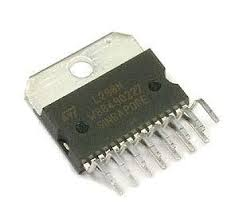
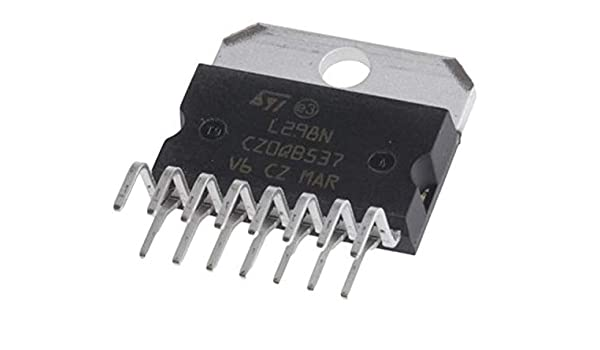
L298N Motor Driver IC
L298N Motor Driver IC The L298 Motor Driver IC is an integrated monolithic circuit in a 15-lead Multiwatt and PowerSO20 packages. It is a high voltage, a high current dual …
As low as
₹154.67
₹154.67
MRP. ₹288.40
Incl. GST (No Hidden Charges)
Out of Stock
L80 GPS Shield
L80 GPS Shield
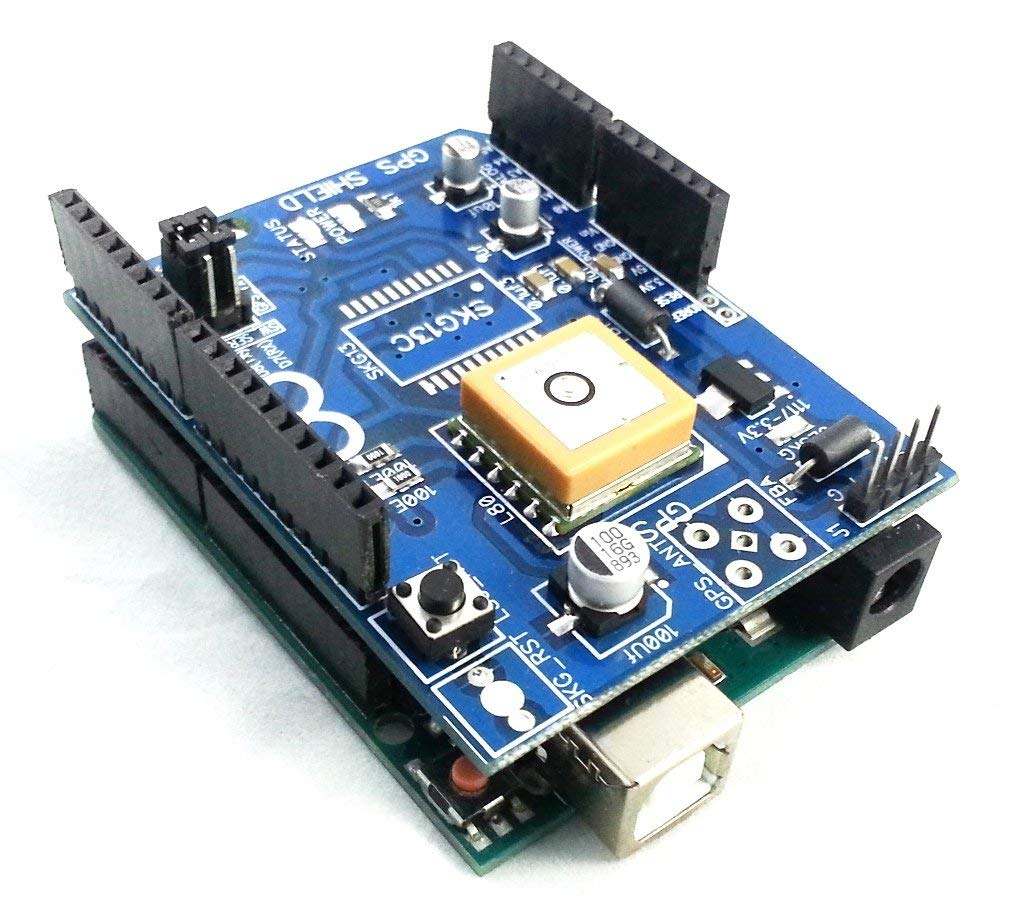
The shield features new generation GlobalTop GPS chipset and SIM800 Quad-band GSM/GPRS engine that works on 850/ 900/ 1800/ 1900 MHz. With GPS technology the shield supports satellite navigation along with cellular connectivity and that makes most of what you need for your robotics projects.
GSM/GPRS connectivity is controlled via AT commands, while the GPS functionality follows NMEA protocol. The shield also offers data storage on microSD card. The design of this shield allows you to drive the GSM module directly with the computer as well as with your Arduino Board. The package includes duck type SMA antenna for cellular network connectivity and an active external antenna for GPS functionality. GPS U2P module offers a high sensitivity, incredibly low power consumption while searching with -165dBm high sensitivity and 10Hz maximum update rate. Featuring an industry-standard interface and GPS function, the combination of both technologies on a single shield allows items, vehicles and people to be tracked seamlessly at any location and anytime with signal coverage.
The shield design is compatible with the older Arduino footprint as well as the new R3 footprint, which means that this shield is totally compatible with most of the Arduino Boards. That includes most popular Uno to the veteran Duemilanove. It also supports 3V3 boards such as Arduino Due, with onboard level shifting buffer gates. The shield can also used with Arduino Mega and Leonardo but the serial communication feature via software pins wont be available for these two boards, still that wont affect the functionality of the GSM module as it can be communicated over the hardware serial pins.
Tracking shield uses separate modules for cellular connectivity and location tracking, thereby the shield guarantees reliable GPS data and cellular connectivity simultaneously. These shields are manufactured with Automatic Pick and Place Machine for high quality standard. The shield itself is high quality PTH PCB with professionally designed circuitry. The onboard low dropout 3A power supply allows you to connect wide range unregulated power supply (7V-12V), also withstands the peak current draw that occurs during network scanning. The onboard level shifting circuitry is designed using buffer gates for added reliability. We have also considered optional customization as per users convenience, for which the design includes onboard PCB jumpers.
₹1143.89
Incl. GST (No Hidden Charges)
Out of Stock
MRP. ₹2167.20
Incl. GST (No Hidden Charges)
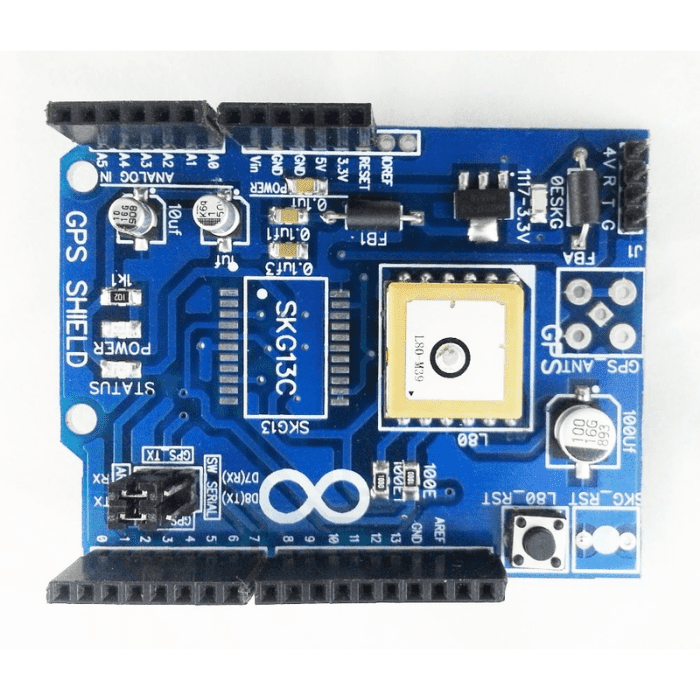
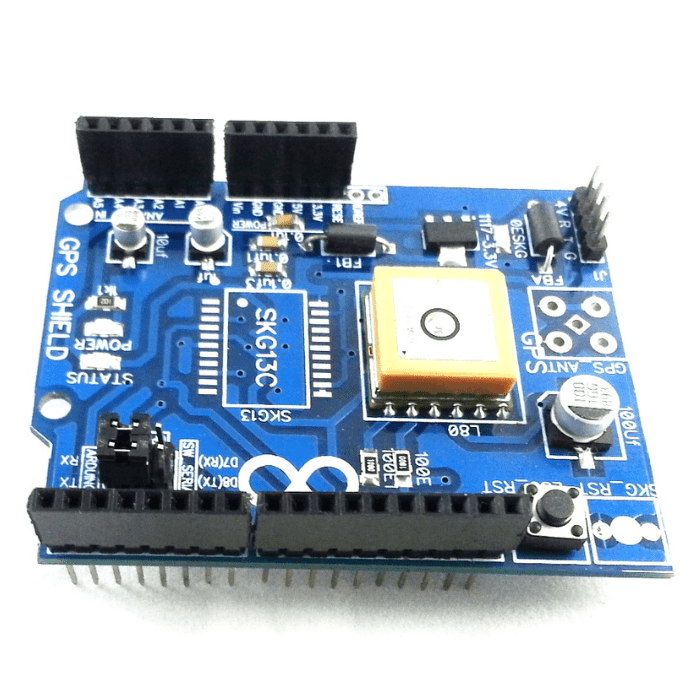
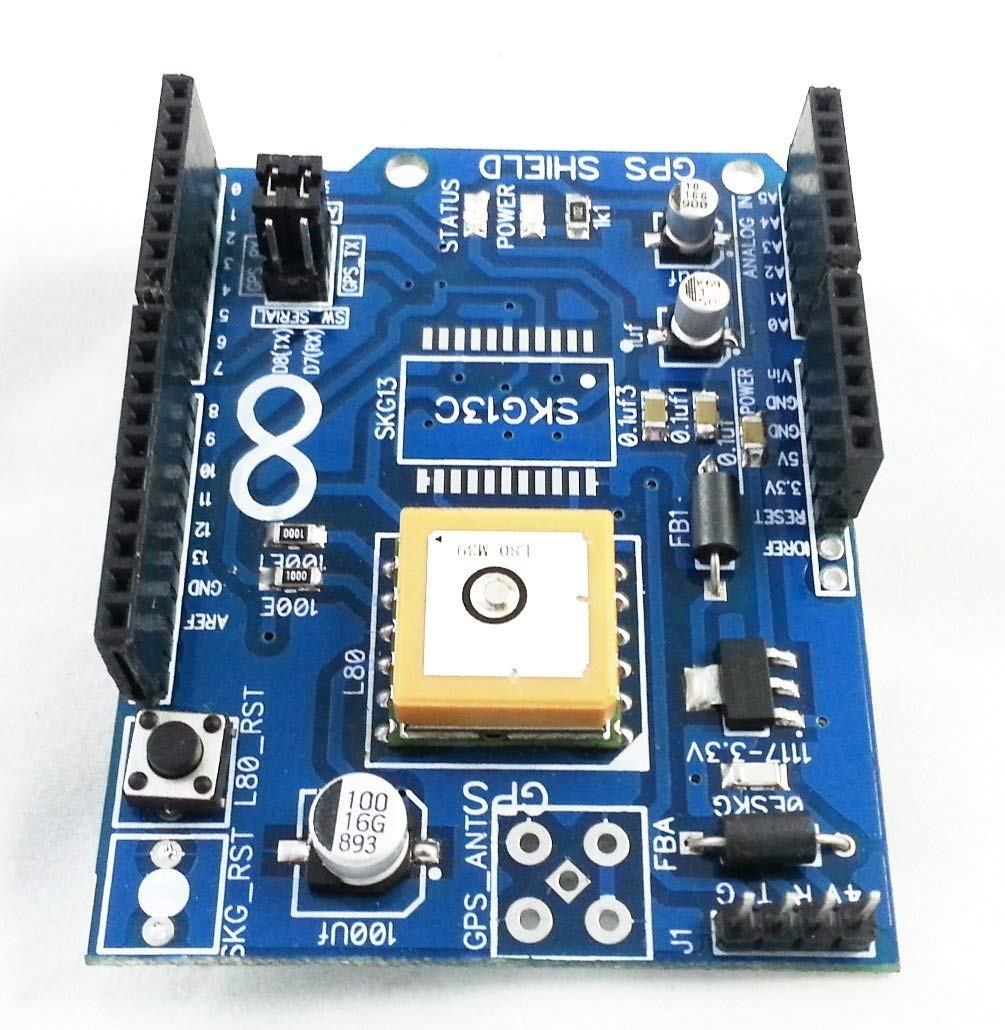
L80 GPS Shield
L80 GPS Shield The shield features new generation GlobalTop GPS chipset and SIM800 Quad-band GSM/GPRS engine that works on 850/ 900/ 1800/ 1900 MHz. With GPS technology the shield supports …
As low as
₹1143.89
₹1143.89
MRP. ₹2167.20
Incl. GST (No Hidden Charges)
Out of Stock
L86-M33 GPS GNSS Breakout Mod…
L86-M33 GPS GNSS Breakout Module -7Semi
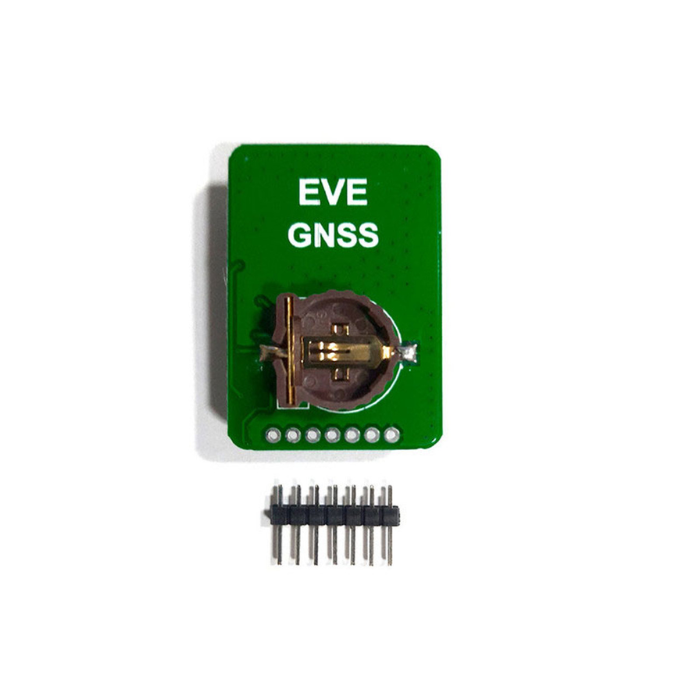
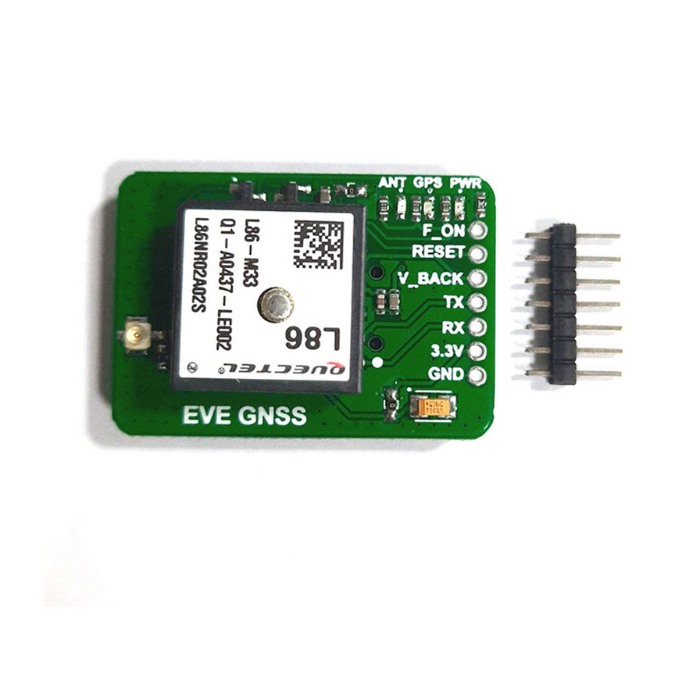
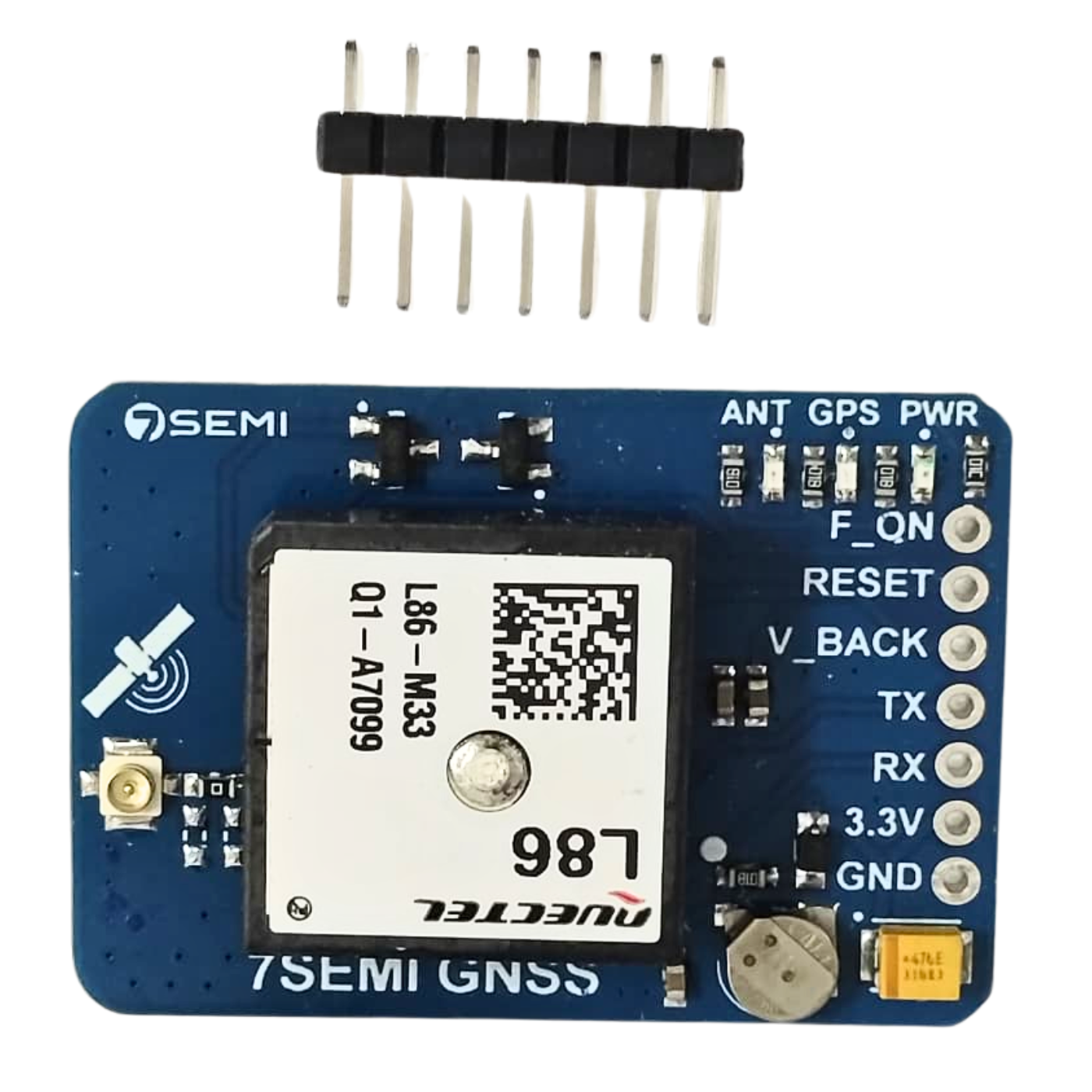
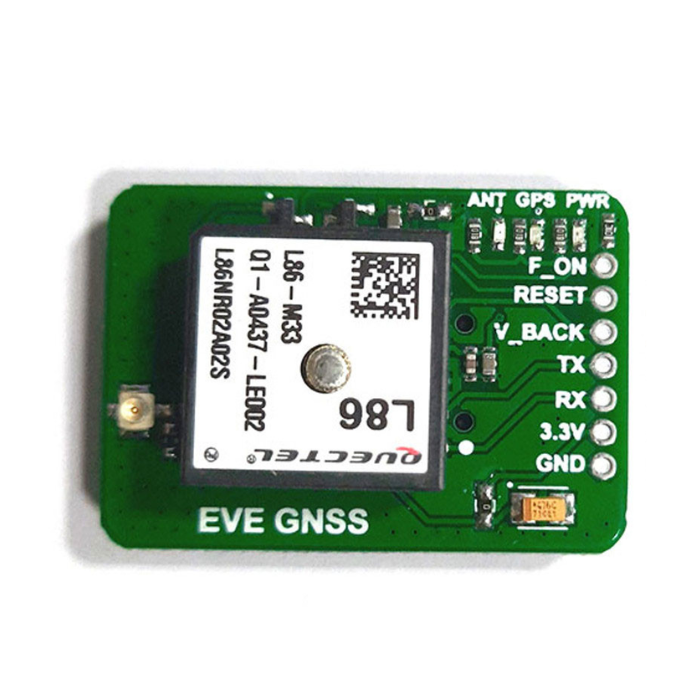
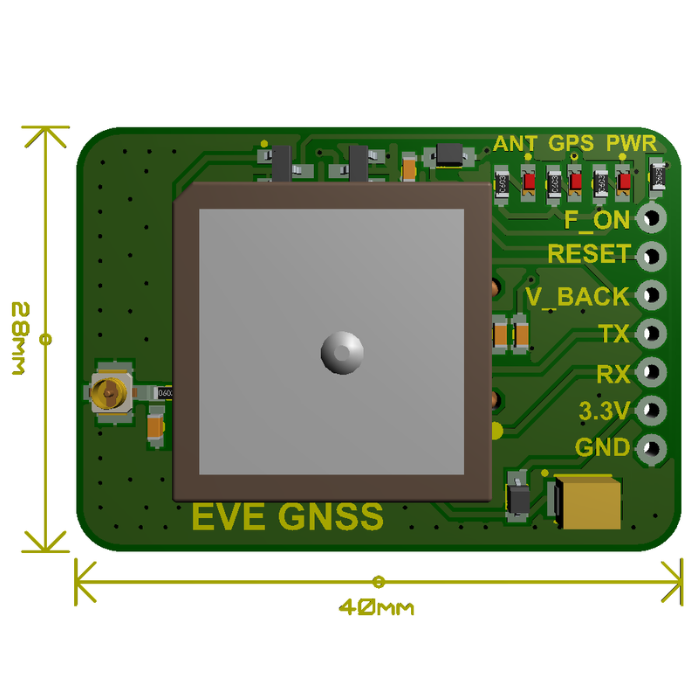
The L86-M33 GPS GNSS Breakout Module by 7Semi is an advanced and compact positioning solution designed for precise and reliable location tracking across a wide range of applications.
Featuring Quectel’s ultra-compact L86 GNSS module with an integrated patch antenna and an option for an external active antenna, this breakout board leverages the power-efficient MediaTek MT3333 chip.
It operates at 3.3V and communicates via UART, making it highly compatible with various microcontrollers. The module’s AGPS EASY orbit prediction technology enables fast and low-power satellite acquisition, even under weak indoor signals, while the AlwaysLocate technology intelligently adjusts positioning time to minimize power consumption without compromising accuracy.
Additionally, the L86 supports automatic antenna switching with plug-in detection and built-in short-circuit protection, ensuring uninterrupted GNSS reception. Perfect for professional and hobbyist use alike, this module is well-suited for drones, robotics, automotive tracking, industrial devices, and personal navigation systems.
Features:
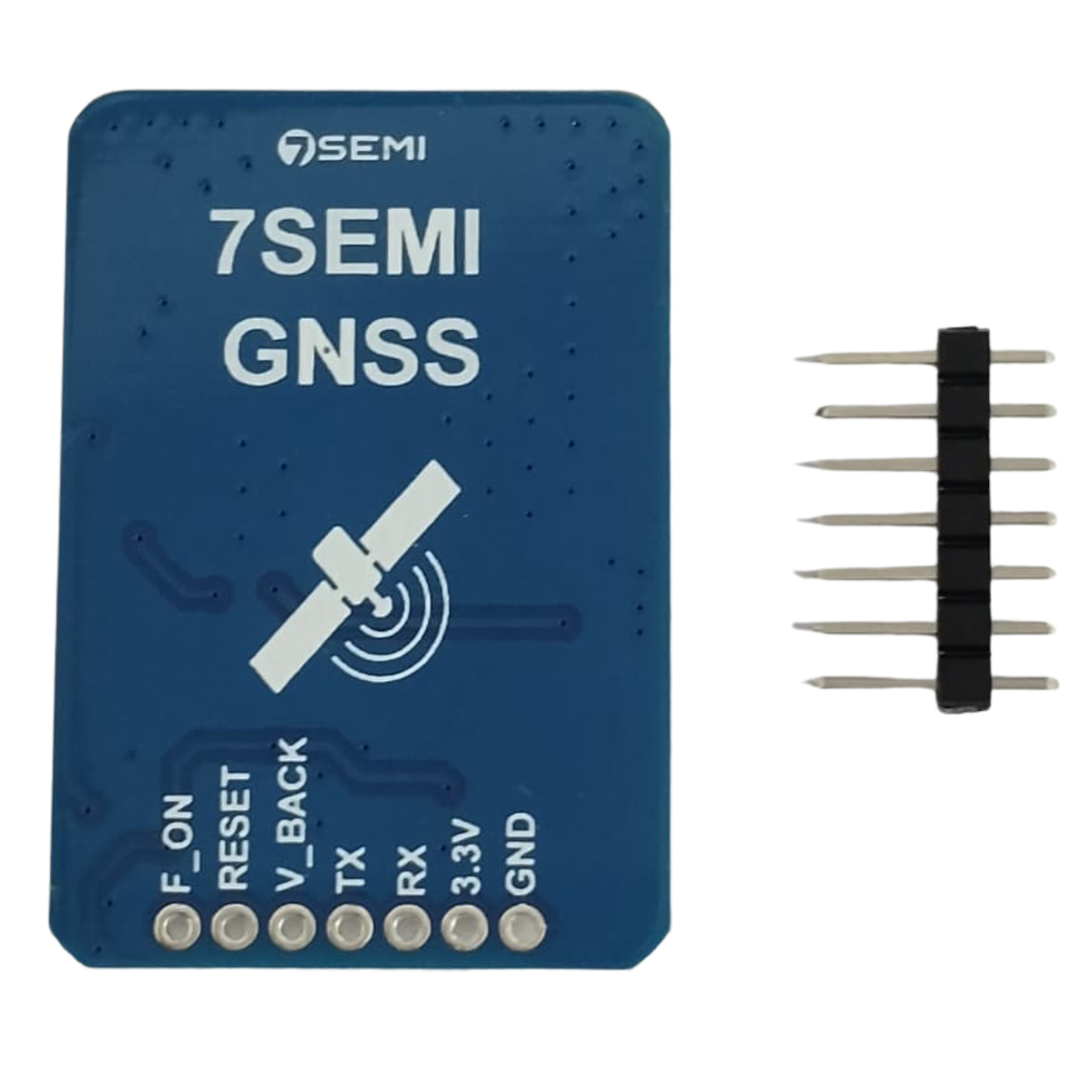
The board features a 3.3V power supply and a UART communication port.
Support several satellite systems, including GPS, GLONASS, Galileo, and QZSS.
Internal patch antenna is 18.4 x 18.4 x 4.0 mm.
Support automated switching between internal and external antennas.
Enable short circuit protection and antenna detection.
Built-in low-noise amplifier improves receiving sensitivity.
Support self-assisted AGPS (EASYTM technology, no external memory required).
Very low current consumption. 26mA @tracking mode.
Several power-saving modes: standby mode, backup mode, periodic mode, and AlwaysLocate mode.
LOCUS technology enables automatic log information recording and storage.
High sensitivity: -167dBm @ tracking mode and -149dBm @ acquisition mode.
Number of channels: 99 capture channels and 33 tracking channels
Support Balloon mode, setting altitude up to 80 kilometers.
Support DGPS and SBAS (WAAS/EGNOS/MSAS/GAGAN).
Multi-frequency active interference cancellation technology improves anti-interference ability.
Time service offers PPS and NMEA synchronization functions.
Support Quectel's independently created SDK commands.
₹1030.40
MRP. ₹1659.00
Incl. GST (No Hidden Charges)
Incl. GST (No Hidden Charges)
L86-M33 GPS GNSS Breakout Module -7Semi
L86-M33 GPS GNSS Breakout Module -7Semi The L86-M33 GPS GNSS Breakout Module by 7Semi is an advanced and compact positioning solution designed for precise and reliable location tracking across a …
As low as
₹1030.40
₹1030.40
MRP. ₹1659.00
Incl. GST (No Hidden Charges)
L89HA Multi-GNSS Breakout Mod…
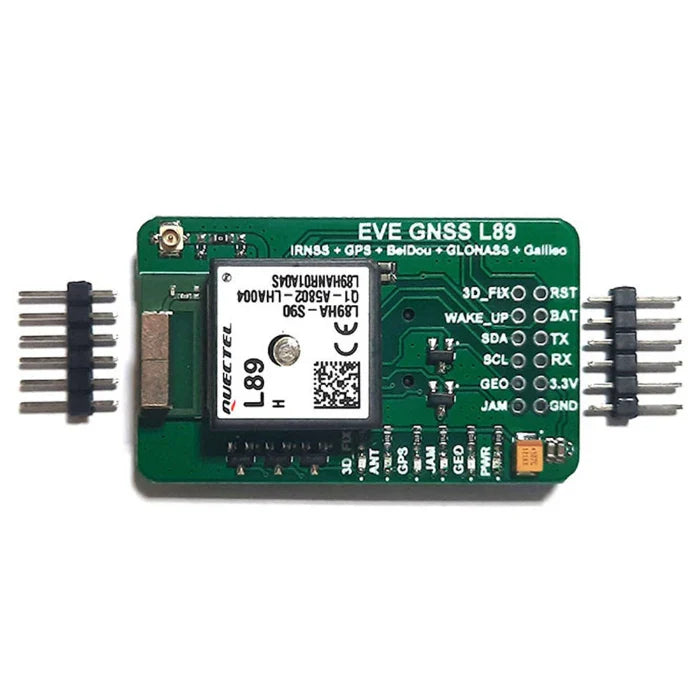
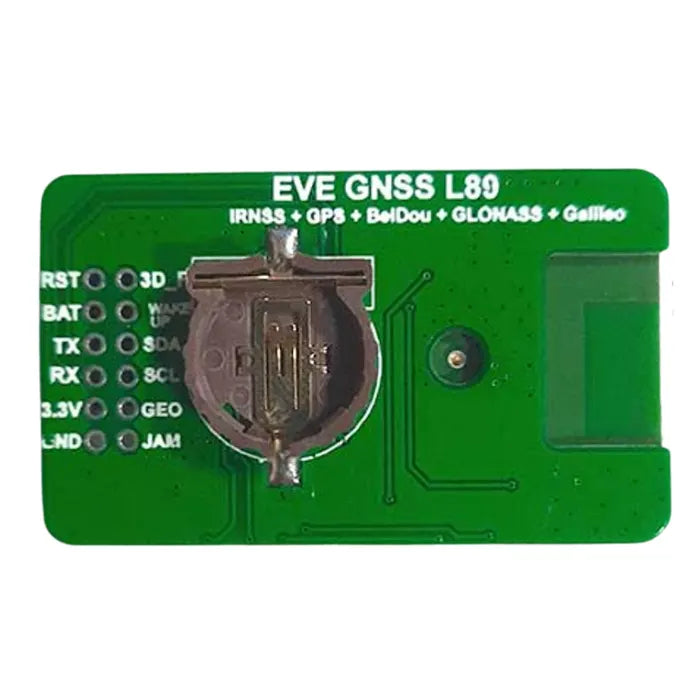
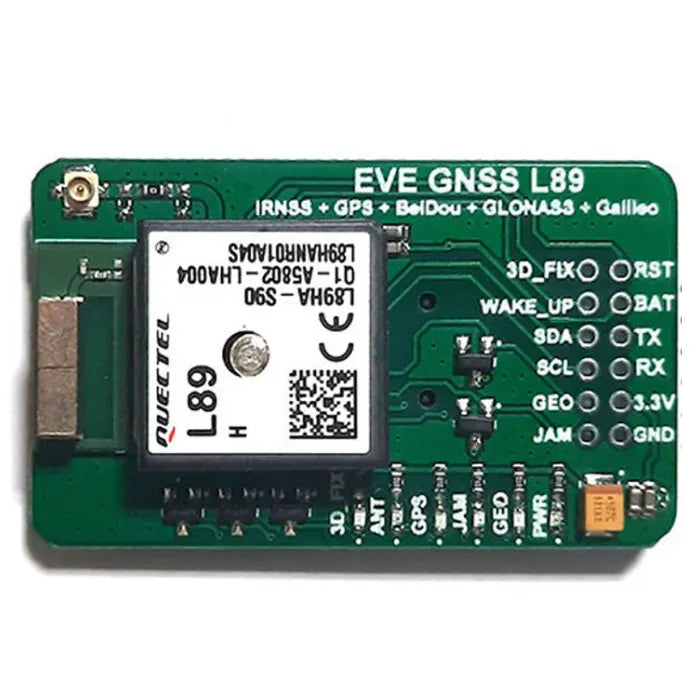
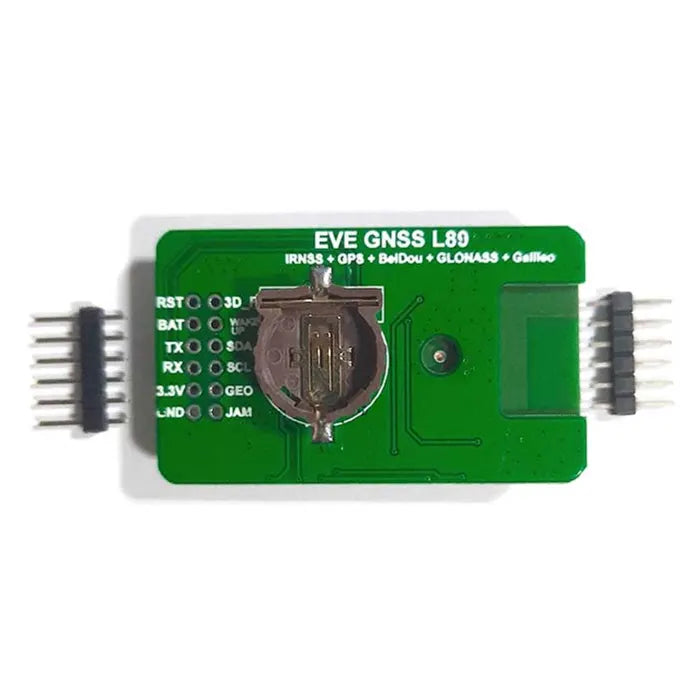
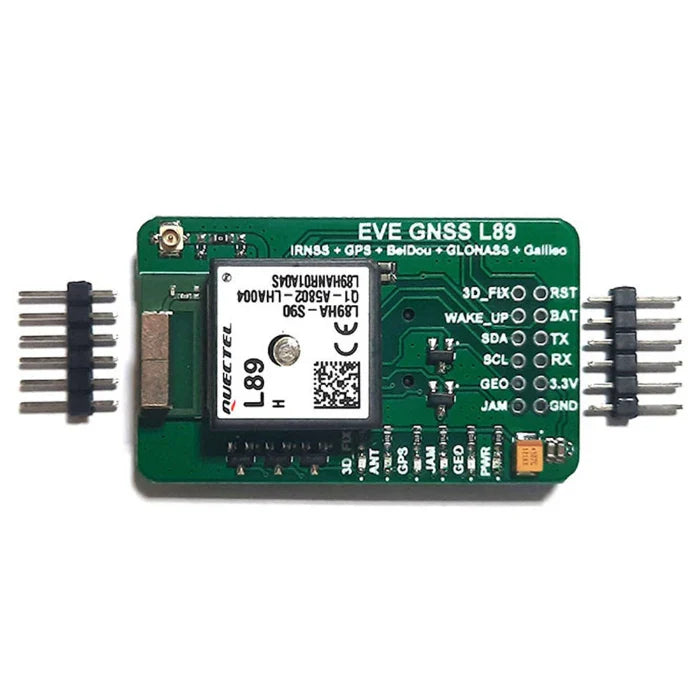
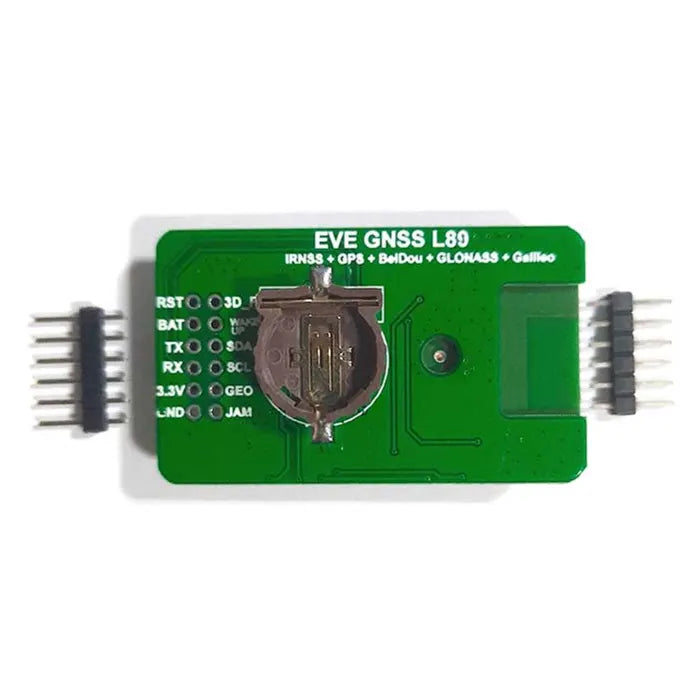
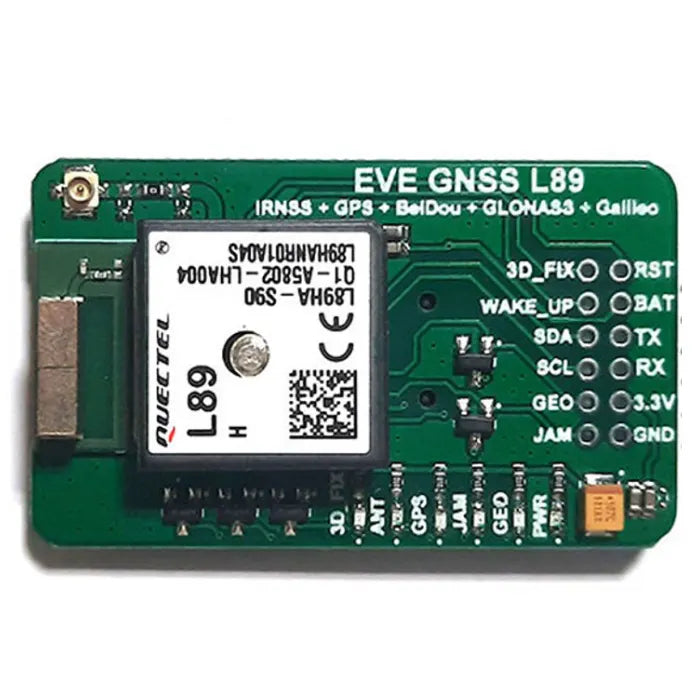
L89HA Multi-GNSS Breakout Module for GPS, IRNSS, GLONASS, BeiDou, Galileo & QZSS - 7Semi
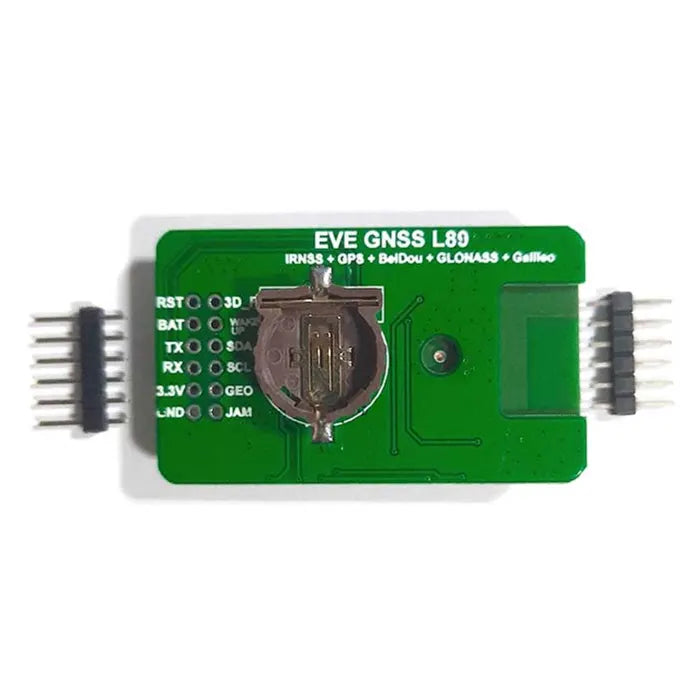
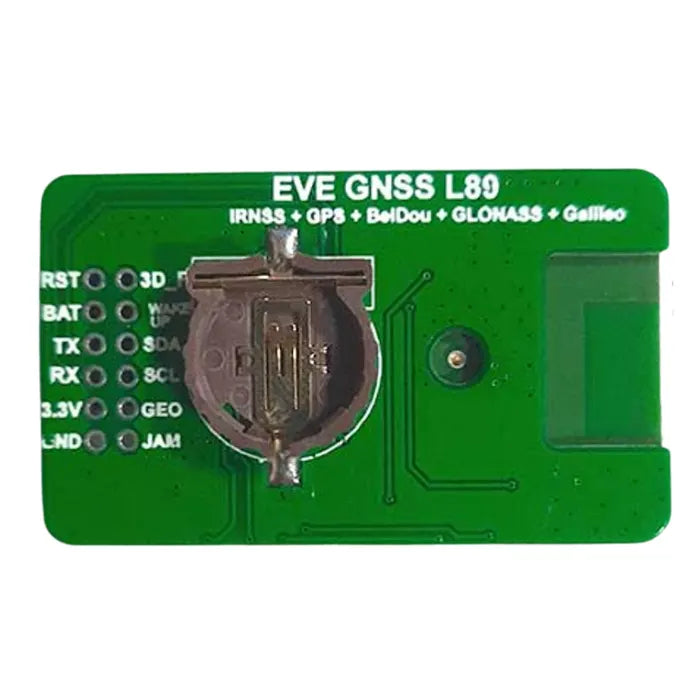
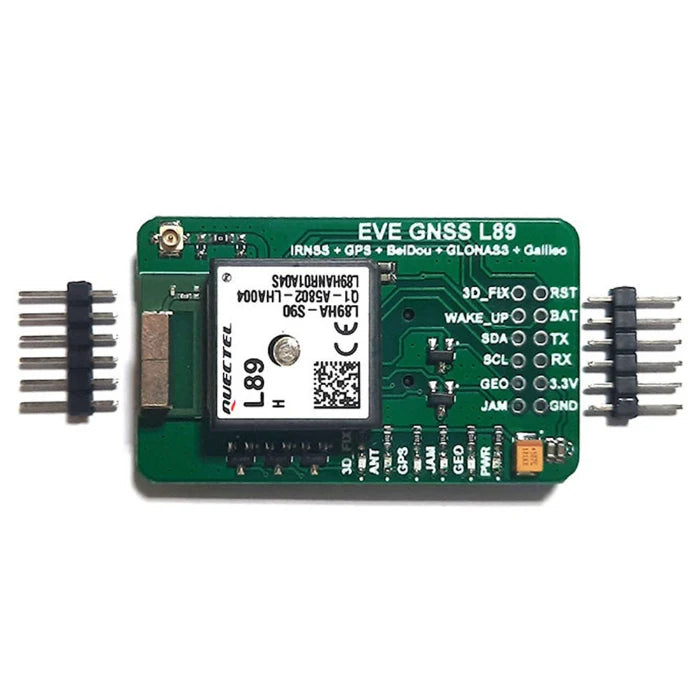
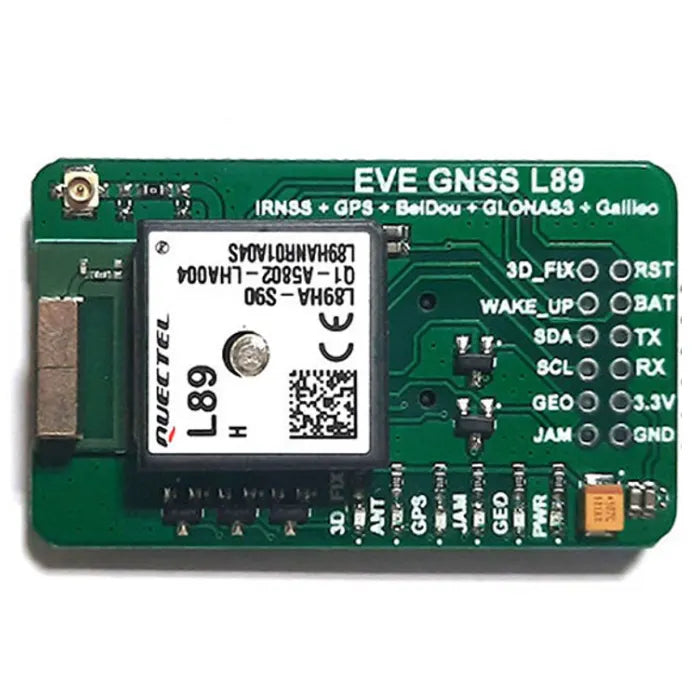
The L89HA Multi-GNSS Breakout Module is a compact and high-precision navigation solution based on the Quectel L89 module. It supports GPS, IRNSS, GLONASS, BeiDou, Galileo, and QZSS, enabling accurate and fast positioning with concurrent L1 and L5 band reception.
Powered by 3.3v, the L89 GNSS module offers I2C and UART interfaces for easy integration with various microcontrollers. It also features dual embedded antennas and a backup battery pin (BAT) for uninterrupted operation.
This L89 module is ideal for drones, wearables, smartphones, IoT devices, and any compact system requiring reliable GNSS tracking, geofencing, or timing. With high sensitivity and multi-constellation support, it ensures strong performance even in challenging environments.
L89 Breakout Dimensions
Features
Operates on a 3.3V power supply
Supports both I2C and UART communication interfaces
Compatible with IRNSS L5 band for enhanced regional accuracy
Built-in patch antenna and chip antenna for compact integration
Multi-GNSS support: GPS, IRNSS, GLONASS, BeiDou, Galileo, and QZSS
Supports DGPS and SBAS (WAAS, EGNOS, MSAS, GAGAN) for improved positioning accuracy
Integrated Low Noise Amplifiers (LNAs) for better signal sensitivity
Excellent anti-jamming performance with multi-tone active interference cancellation
L89 Breakout Arduino Connection
How to Enable IRNSS (NavIC) on the L89 GNSS Module
Follow the steps below to enable IRNSS (NavIC) on the L89 module:
Connect Hardware
Use a USB to Serial converter to connect the L89 module to your PC.
Open QNavigator
Launch QNavigator software and open the serial port connected to the module.
Enter AT Command
To enable IRNSS, send the following AT command:
PSTMSETCONSTMASK,1024
Use an External Active Antenna
Ensure you're using an external active antenna and position it under an open sky for best reception.
Access Command Manual
For more details, download the L89 AT command manual from the resources section.
₹1271.86
MRP. ₹2056.60
Incl. GST (No Hidden Charges)
Incl. GST (No Hidden Charges)
L89HA Multi-GNSS Breakout Module for GPS, IRNSS, GLONASS, BeiDou, Galileo & QZSS - 7Semi
L89HA Multi-GNSS Breakout Module for GPS, IRNSS, GLONASS, BeiDou, Galileo & QZSS - 7Semi The L89HA Multi-GNSS Breakout Module is a compact and high-precision navigation solution based on the Quectel …
As low as
₹1271.86
₹1271.86
MRP. ₹2056.60
Incl. GST (No Hidden Charges)
L9110S H Bridge Stepper Motor…
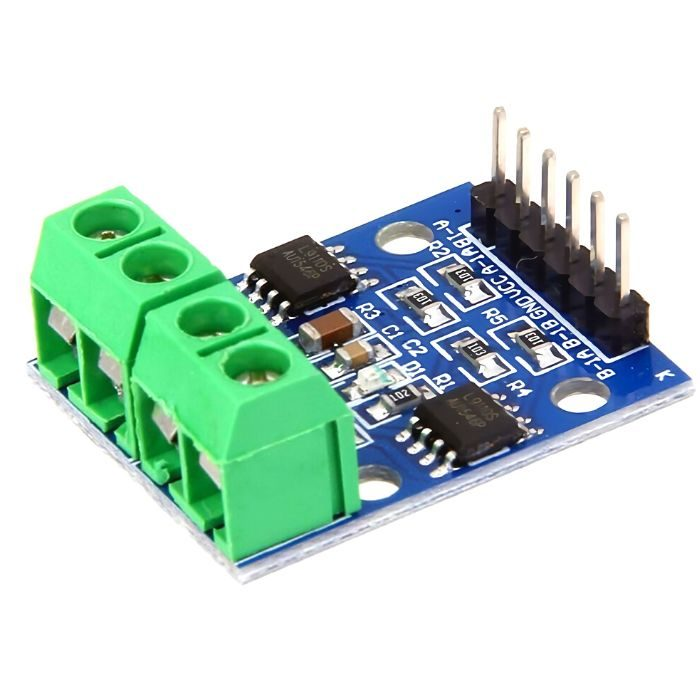
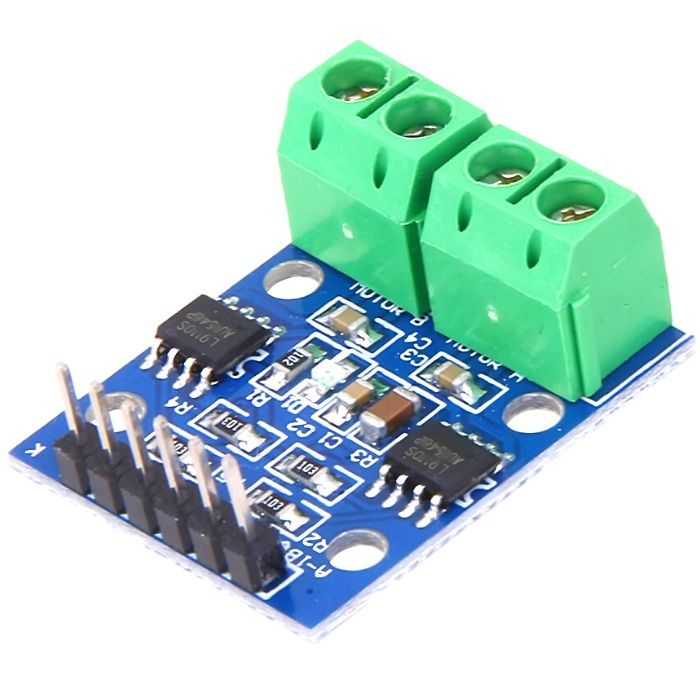
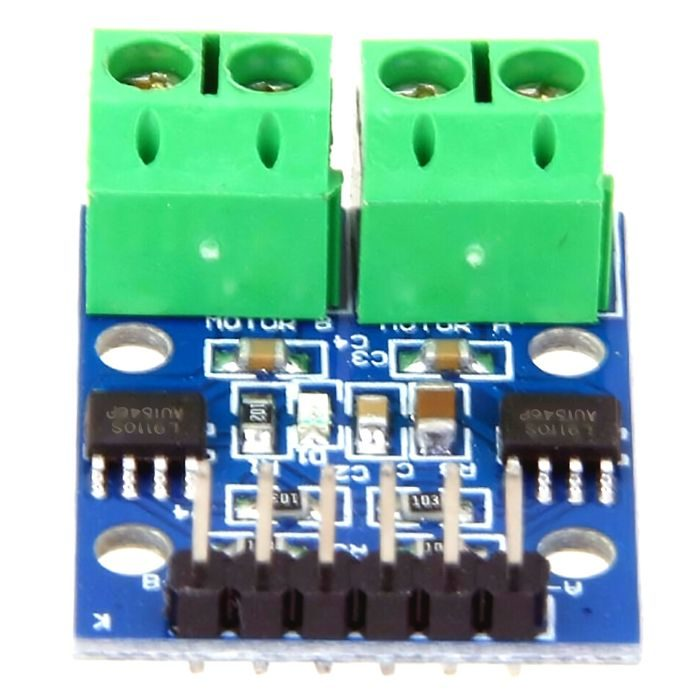
L9110S H Bridge Stepper Motor Dual DC Driver Controller Module For Arduino
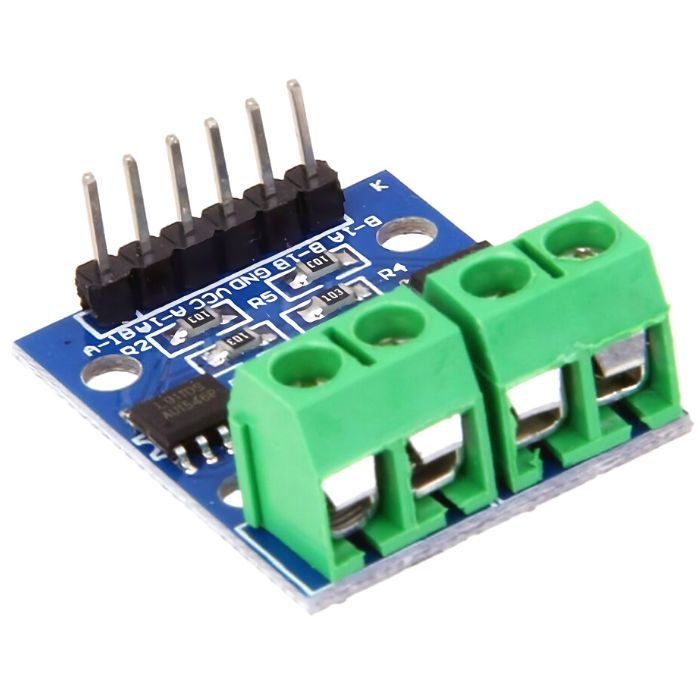
The L9110S dual channel h-bridge motor driver module is a compact board that can be used to drive small robots. This module is based on L9110 Motor Driver IC. This module has two independent
motor driver
chips which can each drive up to 800mA of continuous current. The boards can be operated from 2.5 volts to 12 Volts enabling this module to be used with both 3.3 Volts and 5 Volts microcontrollers. A set of female header pins and
jumper wires
are used to connect this module to a microcontroller like
Arduino
. The motors are attached via two sets of screw terminals.
A PWM Pulse Width Modulation signal is used to control the speed of a motor and a digital output is used to change its direction. This module can also be used to drive a single four-line two-phase stepper motor. Four holes make this board easy to mount onto your robot or other projects.
This dual-motor driver comes in a compact form factor and it is ideal for use in small robots.
The actual direction of “forward” and “reverse” depends on how the motors are mounted and wired. You can always change the direction of a motor by reversing its wiring.
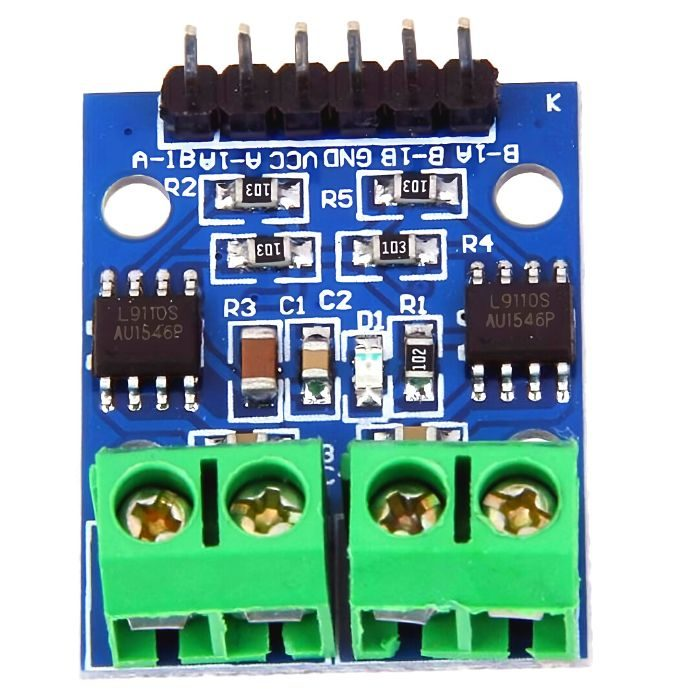
The HG7881 (L9110) Dual Channel Motor Driver Module uses two of these motor driver chips. Each driver chip is intended to drive one motor, so having two means that this module can control two motors independently. Each motor channel uses the same truth table as above. Each set of screw terminals is used to connect a motor. Refer to the table below for pin header connections.
Pin diagram of L9110S H Bridge Stepper Motor Dual DC Driver Controller Module:
L9110S DC Stepper Motor Driver Board Pin Diagram
Module Interfaces:
6P black bent pin description:
1 VCC external voltage 2.5V-12V
2 GND External GND
3 AIA external microcontroller IO port
4 AIB external microcontroller IO port
5 BIA external microcontroller IO port
6 BIB external microcontroller IO port
4P green terminal:
1 OA1 OB1 contact DC 2-pin, non-directional
2 OA2 OB2 contact DC 2-pin, non-directional
Use:
ON VCC, GND module power indicator light
AIA input high, AIB input low, [OA1 OB1] motor is transferred;
AIA input low, AIB input high, [OA1 OB1] motor reversal;
BIA input high, BIB input low, [OA2 OB2] motor is transferred;
BIA input low, BIB input high,] [OA2 OB2] motor reversal
Features:
L9110S-chip motor drive
Small-sized, suitable for assembly
This can drive two DC motors or a 4-wire 2-phase stepping motor
This is provided with fixed mounting holes
₹50.08
MRP. ₹103.60
Incl. GST (No Hidden Charges)
Incl. GST (No Hidden Charges)
L9110S H Bridge Stepper Motor Dual DC Driver Controller Module For Arduino
L9110S H Bridge Stepper Motor Dual DC Driver Controller Module For Arduino The L9110S dual channel h-bridge motor driver module is a compact board that can be used to drive …
As low as
₹50.08
₹50.08
MRP. ₹103.60
Incl. GST (No Hidden Charges)
Laser Module
Laser Module
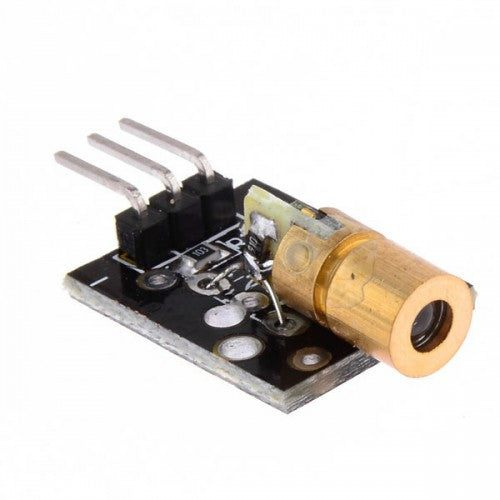
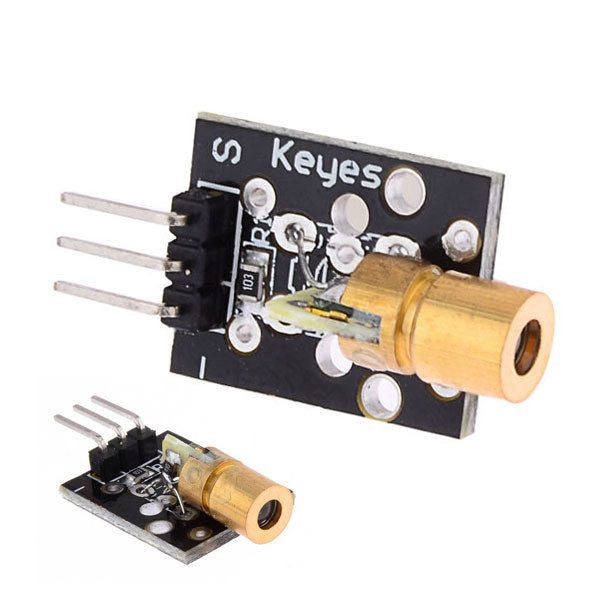
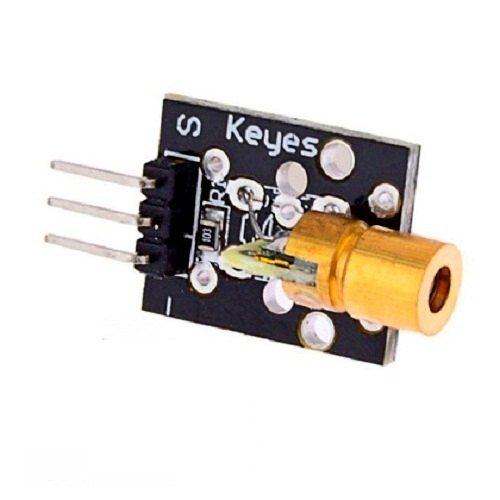
A laser module is a device that produces a highly focused beam of light, usually in the visible or infrared range. A laser diode, a power supply, and a focusing lens are typical components of a laser module. A laser diode is a semiconductor device that emits a light beam when current is supplied through it.
The Laser
Sensor Module
is composed of a light-emitting tube, condenser lens, and adjustable copper sleeve and it is assembled when delivered, the focal length of the lens is adjusted glued by strong glue stick, which can work directly after connecting to a 5V DC power supply.
Pay attention to the laser cell to prevent from being burnt or battery explosion due to a short circuit when removing the battery.
The Laser Module is an advanced, easy to use tool that offers users a wide range of applications and functions. This high-tech device makes it possible for the user to control lighting levels and colours in their interior or exterior space by converting electrical signals into soundwaves which can be manipulated accordingly.
The module has been designed using robust components backed with reliable technology specifically made for precise performance even under challenging conditions like low-temperature environments or dusty locations making them ideal for industrial settings. Moreover, its compact size allows users to carry it around easily wherever they go providing precision-regulated power output every time without any downtime worries ensuring complete reliability at all times regardless of whatever environment you might find yourself operating in!
check out :
650nm 6mm 5V DC Mini Laser Dot Diode Module
Pinout:
1 – GND
2 – 5V
3 – S (Control: HIGH = Laser on)
Applications:
Laser test tools.
Concentricity positioning.
Medical equipment positioning.
Production of signal equipment.
Use for DIY or robots.
All kinds of level meters.
Laser projector.
Laser toys, etc.
Package Include:
1 x Laser Module
₹33.38
Incl. GST (No Hidden Charges)
Out of Stock
MRP. ₹61.60
Incl. GST (No Hidden Charges)
Laser Module
Laser Module A laser module is a device that produces a highly focused beam of light, usually in the visible or infrared range. A laser diode, a power supply, and …
As low as
₹33.38
₹33.38
MRP. ₹61.60
Incl. GST (No Hidden Charges)
Out of Stock
Laser Receiver Module
Laser Receiver Module
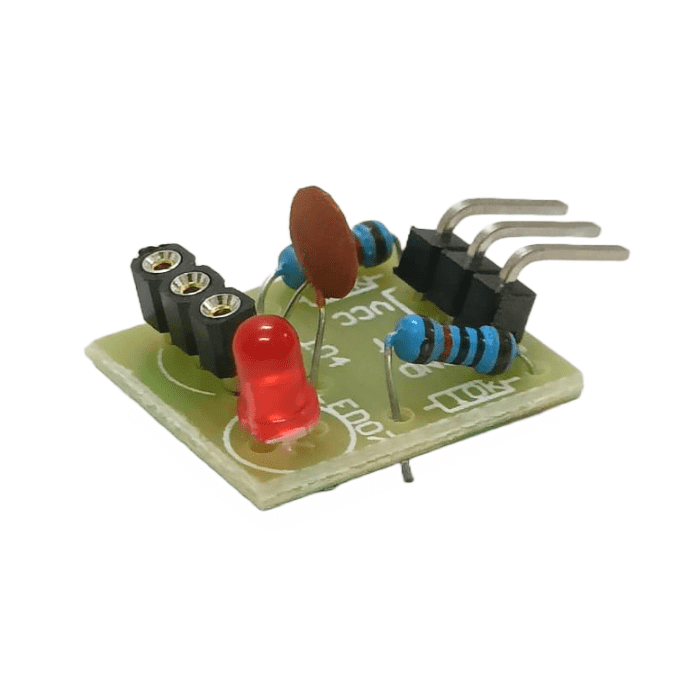
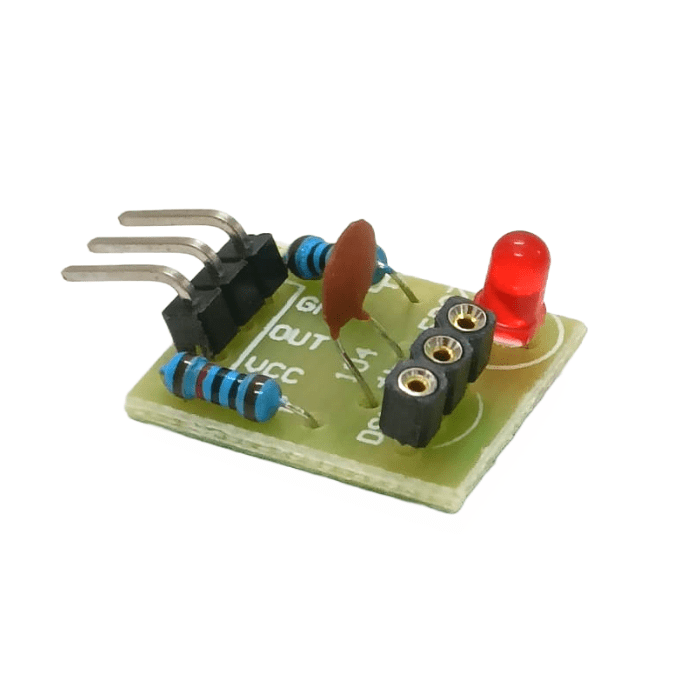
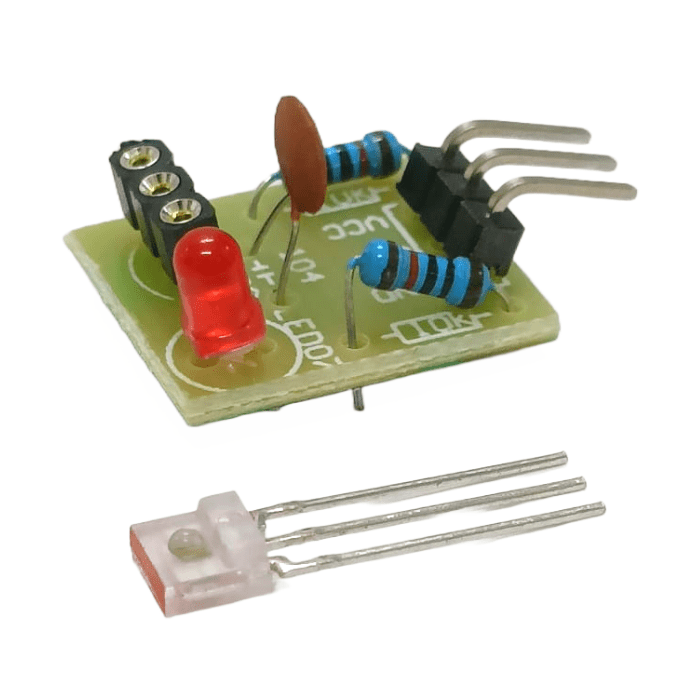
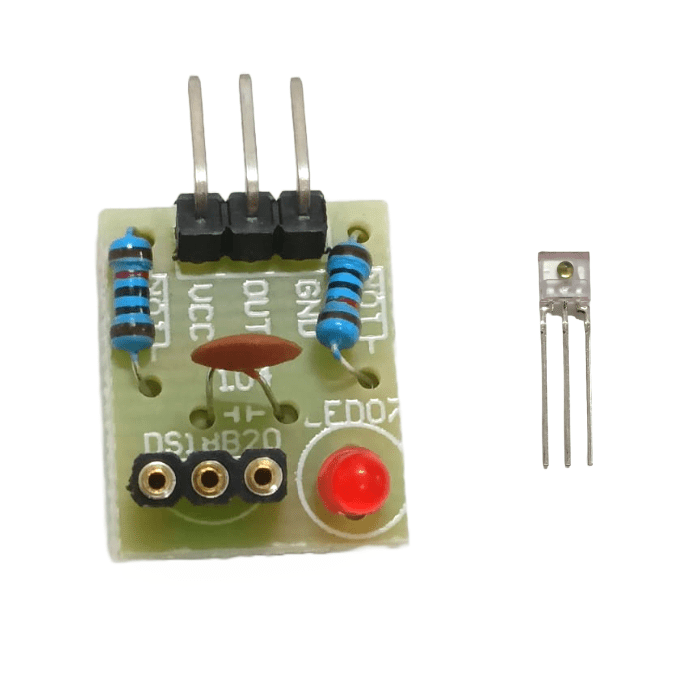
LASER lights have many applications like in counting, time measurement, laser guidance systems etc. It is very vital to correctly read and perform the corresponding function given in your code as any misread or malfunction in system can lead to fatal errors and losses to company. To keep this error in check this Non- Modulator Tube LASER Receiver sensor module is there to help you read the incoming laser signals accurately. It gives output of laser receiver in digital format and output pin is high when LASER is detected and low when LASER is not detected. This module works on 5V Voltage input and due to its small size you can use it in portable devices and industrial equipment.
This Laser Receiver
Sensor Module
Laser output High Level is a sensor for
Raspberry Pi
and Arduino to receive the laser output and decode it digital data. At Input, the module Receives a laser signal when output high level; Does not receive a laser signal when output low level. On detecting a laser signal, output goes at a high level (5V) until the laser signal is there.
Circuit diagram
As you can see the setup consists only one amber LED and its current limiter 10K
resistor
connected across the output of the module (OUT & VCC).
Features:
PCB Color: Green
Output high level when receiving the laser signal
Output low level when not receiving laser signal.
Application: Electronic Circuits
₹72.33
MRP. ₹110.60
Incl. GST (No Hidden Charges)
Incl. GST (No Hidden Charges)
Laser Receiver Module
Laser Receiver Module LASER lights have many applications like in counting, time measurement, laser guidance systems etc. It is very vital to correctly read and perform the corresponding function given …
As low as
₹72.33
₹72.33
MRP. ₹110.60
Incl. GST (No Hidden Charges)
LC100A 2.5inch LCD Digital Hi…
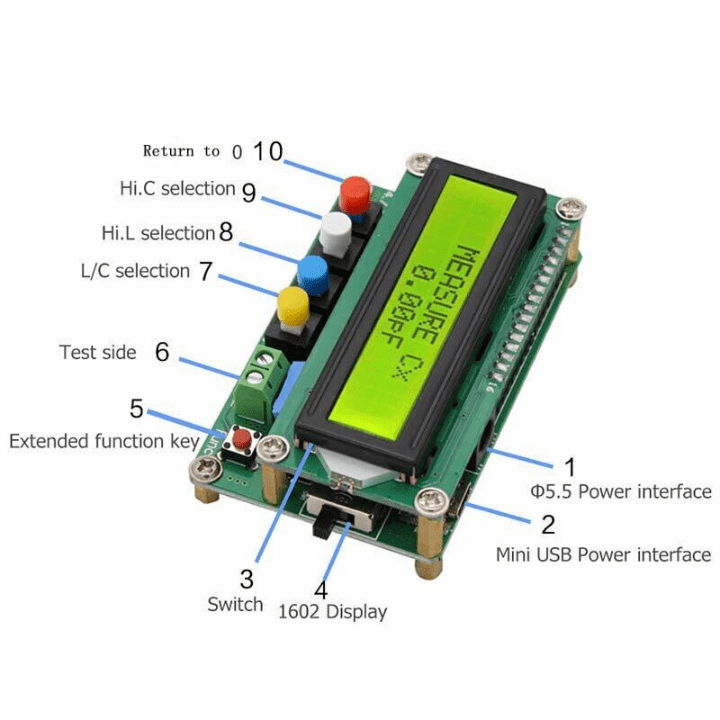
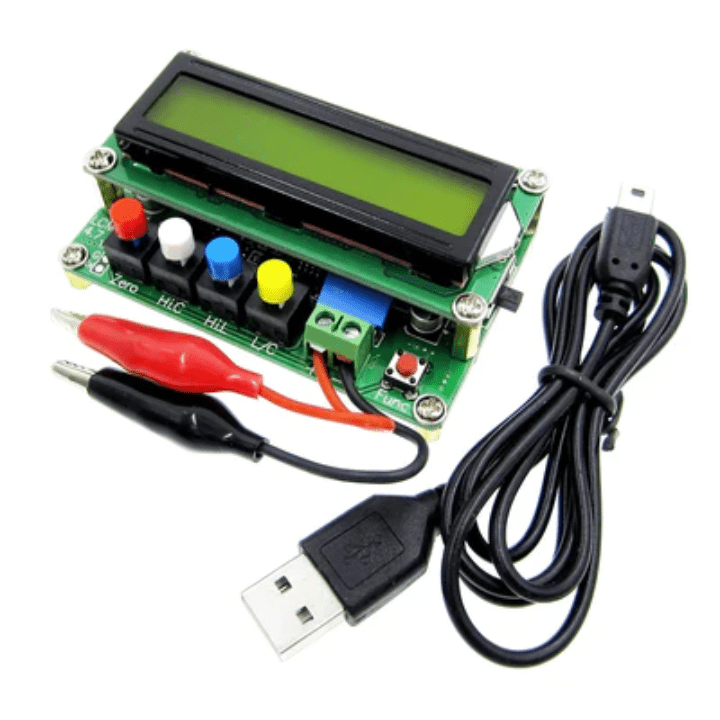
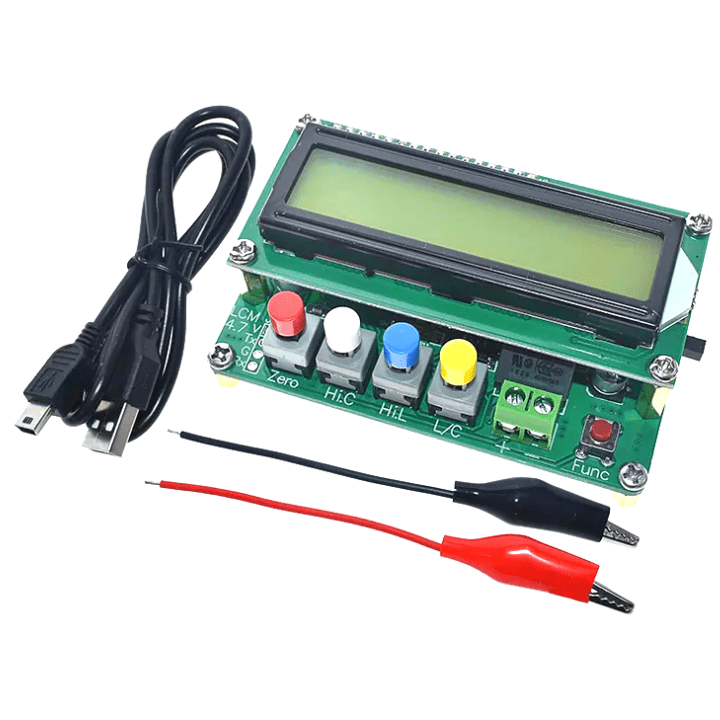
LC100A 2.5? LCD Digital High Precision Inductance Capacitance (LC) Meter
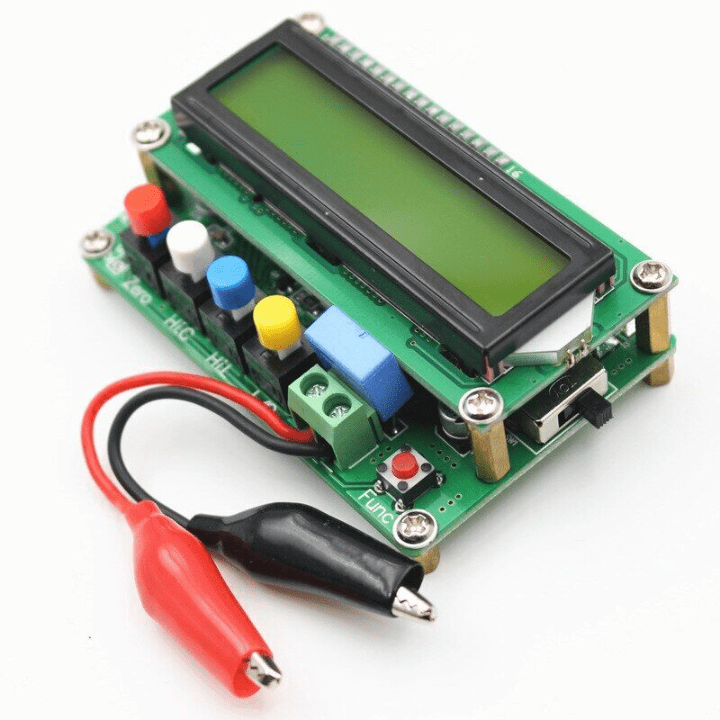
The LC100A 2.5 LCD Digital High Precision Inductance/Capacitance (L/C) Meter can measure the capacitance of 1pF-100mF and the inductance of 1uH – 100H. Based on the principle of LC resonance, this instrument incorporates the precision measurement calculation of high-speed microcontroller. It can measure the inductance below 1uH and the small capacitance less than 1pF.
Apart from measuring regular capacitor and inductor parts, an LC100-A LC meter can be the handy tool for measuring the inductance of your mini-quad motor windings, to determine if a particular motor has shorted turns or not.
The biggest feature of the LC100A 2.5 LCD Digital High Precision Inductance/Capacitance (L/C) Meter is especially suitable for microwave production and measurement of switching power supply transformers and filter inductors. This product has an absolute advantage over small-value test in comparison with the finished inductor and capacitance meter (such as 6243 series) sold on the market.
Degree and minimum resolution, and flexible online calibration can maintain measurement accuracy at any time; the instrument does not use any potentiometer adjustment. The calibration parameters are completely stored in the FLASH of the microcontroller after power loss data will not be lost. The calibration method is accurate and convenient.
To make the LC100 a bit more workbench friendly, it features a few modifications. The LC100-A expects a 5V power supply, either by the USB connector or the coaxial DC socket. With the DC input socket, there is a risk of accidentally hooking up a supply of more than 5 volts, so a 5V regulator is being fitted, so that it can be powered off anything from 7 volts to the upper limit of the regulator (usually 35 volts).
Measuring range position:
C range - Capacitance (0.01pF-10uF)
L range - Inductance (0.001uH-100mH)
HL range - Big inductance (0.001mH-100H)
HC range - Big capacitance range (1uF-100mF)
Also check the
T-66 Continuity Tester With 2 Button Cell
available on the Iotcart website. It is a multi-purpose, lightweight continuity tester designed for checking electrical wires and power between two points.
₹1514.44
Incl. GST (No Hidden Charges)
Out of Stock
MRP. ₹2728.60
Incl. GST (No Hidden Charges)
LC100A 2.5inch LCD Digital High Precision Inductance Capacitance (LC) Meter
LC100A 2.5? LCD Digital High Precision Inductance Capacitance (LC) Meter The LC100A 2.5 LCD Digital High Precision Inductance/Capacitance (L/C) Meter can measure the capacitance of 1pF-100mF and the inductance of …
As low as
₹1514.44
₹1514.44
MRP. ₹2728.60
Incl. GST (No Hidden Charges)
Out of Stock
LDR 5mm Metal Housing (Pack o…
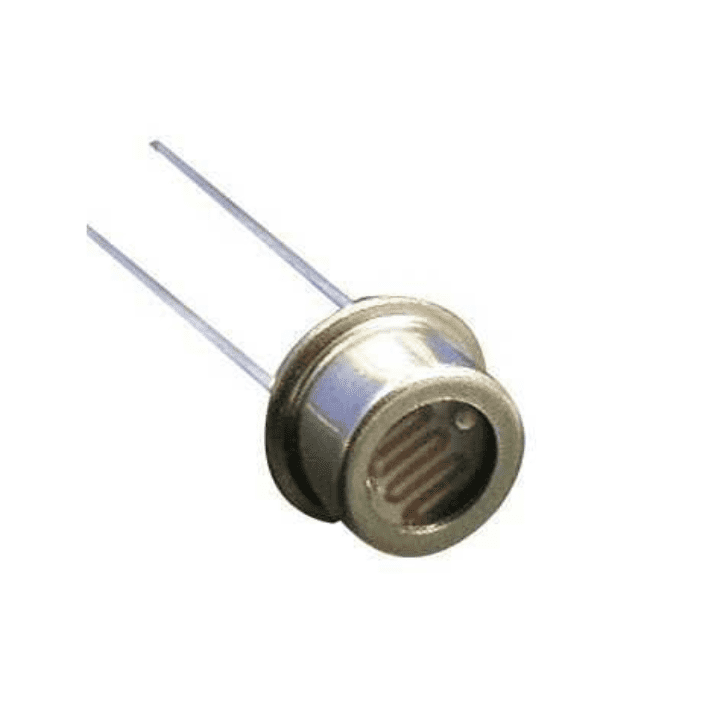
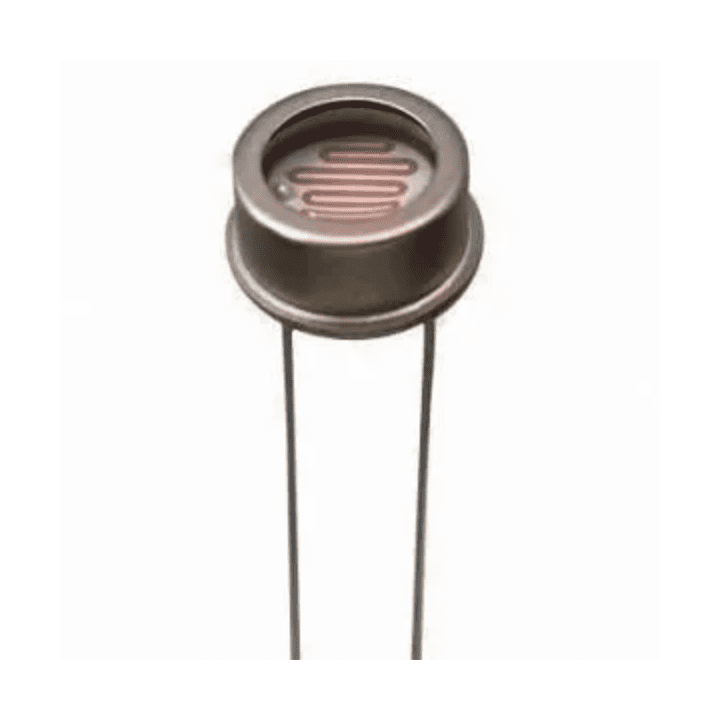
LDR 5mm Metal Housing
LDR Stands for Light Dependent Resistor and its Resistivity varies with Incident Electromagnetic Radiations so, its resistivity is a function of Incident Electromagnetic Radiations or light. Other names of LDR are photoresistor, Photoconductor, Photocell, and photo conducting cell.
LDR
sensor
5mm – Metal Housing is a
resistor
which made of semi-conductor material, and the conductance changes with luminance variation .The photoresistor can be manufactured with different figures and illuminated area based on this characteristic. Photoresistor is widely used in many industries, such as toys, lamps, camera, etc.
LDR is made of Semiconductor materials with high Resistance like Silicon or Germanium. It is a light-sensitive device, so this resistor has a different resistance value in day and night as given below:
Daylight: 5000?
Dark: 20000000?
Also, read our blog
Uses of LDR
detailing every related LDR Sensor from the definition, and working principle, to the uses of LDR sensors in a variety of projects.
Features
It requires less power to operate
Quick Response
Easy to use
Generate high current
Application
Camera Exposure Control
Auto Slide Focus
Photocopy Machines
Colorimetric Test Equipment
Densitometer
₹176.93
Incl. GST (No Hidden Charges)
Out of Stock
MRP. ₹270.20
Incl. GST (No Hidden Charges)
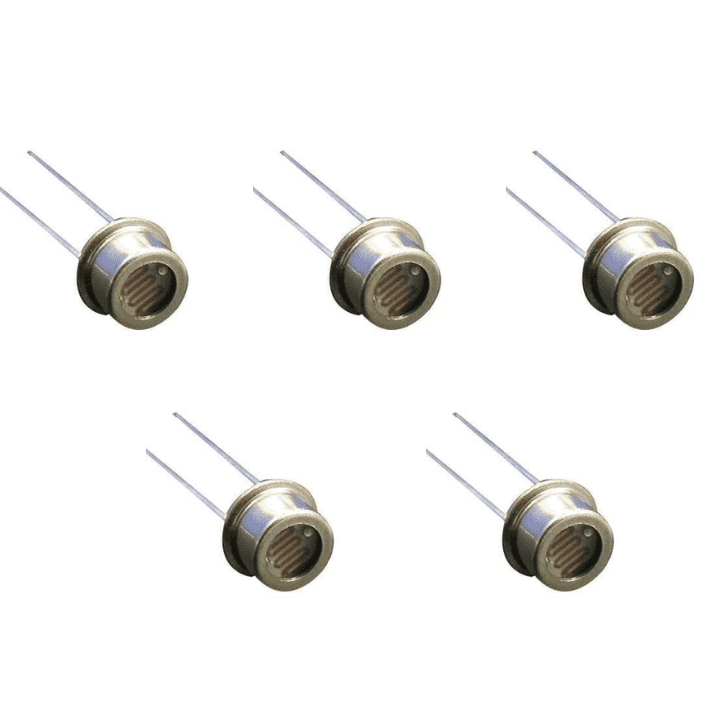
LDR 5mm Metal Housing (Pack of 5)
LDR 5mm Metal Housing LDR Stands for Light Dependent Resistor and its Resistivity varies with Incident Electromagnetic Radiations so, its resistivity is a function of Incident Electromagnetic Radiations or light. …
As low as
₹176.93
₹176.93
MRP. ₹270.20
Incl. GST (No Hidden Charges)
Out of Stock
