

Sort by

Browsing
Light/Colour/Camera Sensor
Color Recognition Sensor Modu…
Color Recognition Sensor Module TCS3200D/TCS2300
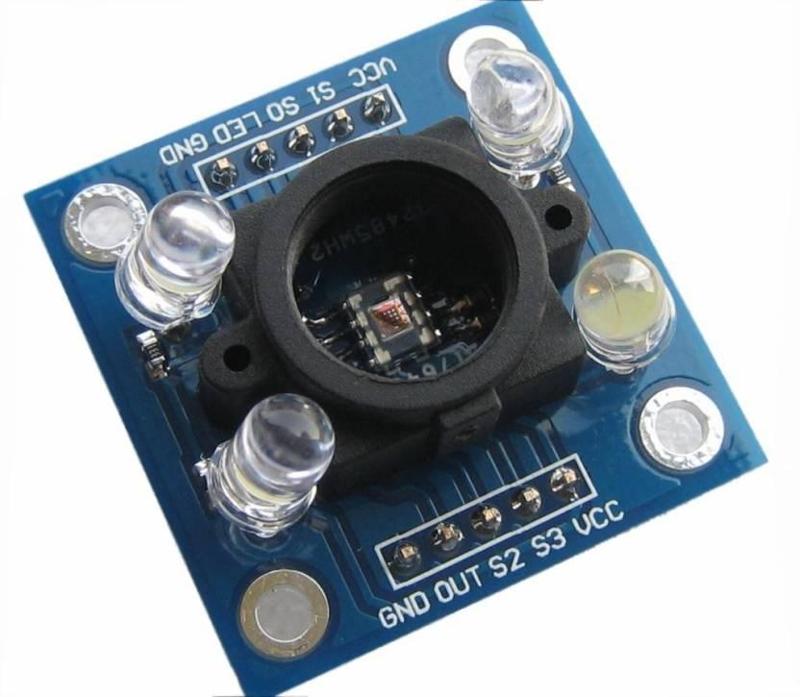
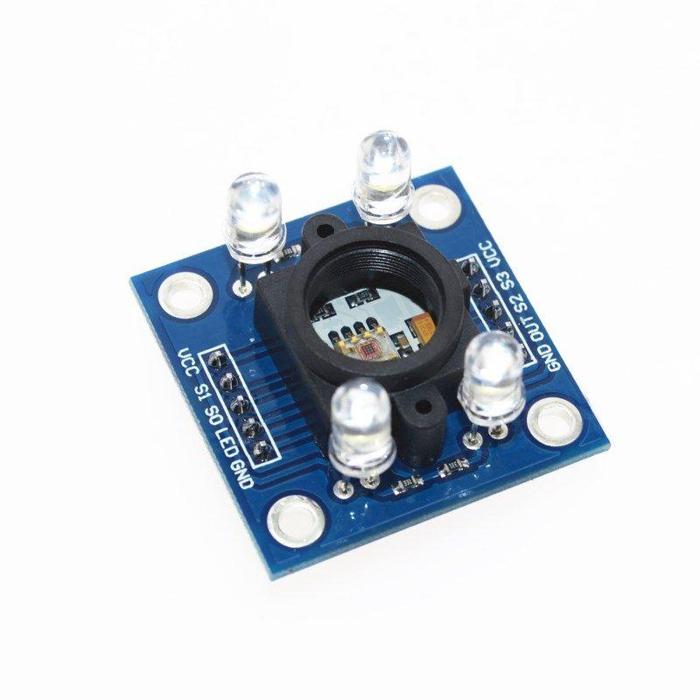
The TCS3200 Color Recognition Sensor Module uses a high-quality light sensor allowing you to sense any color through a combination of Red, Green, and Blue. The module provides all of the pins of the TCS3200 on convenient 0.1? headers – ideal for use with PCBs, breadboard or stripboard.
Four white LEDs provide plenty of light for the
color sensor
and allow you to use the module in any ambient light.
The
sensor module
requires only a single supply voltage between 2.7V and 5.5V – making it compatible with nearly all common microcontrollers, including PICs, AVRs, ARM,Arduino and more.
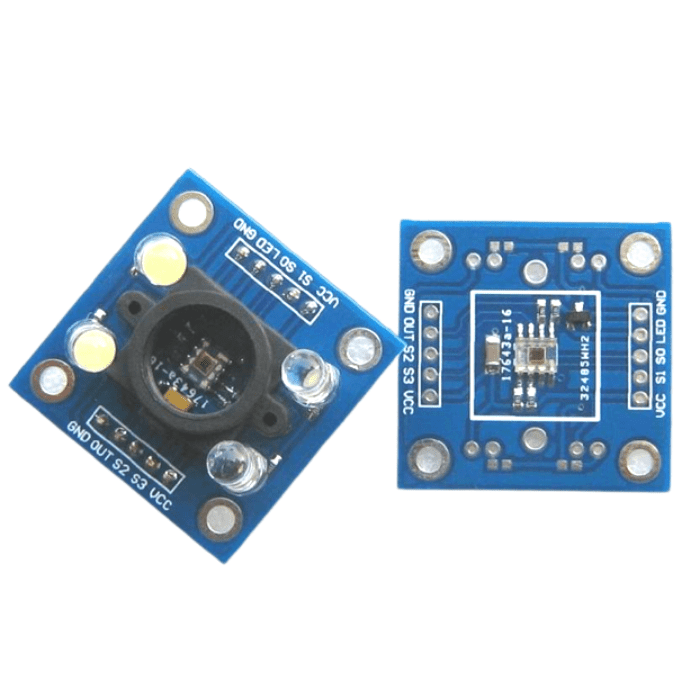
Header one on the left side of the board
S0: Output frequency scaling selection input (along with S1)
S1: Output frequency scaling selection input (along with S0)
OE: Output Enable – if held low, the output of the module is turned on
GND: Ground – connect to 0V
Header two on the right side of the board
S3: Photodiode type (along with S2)
S2: Photodiode type (along with S3)
OUT: Output – A square wave appears here showing the intensity of the detected colour
VCC: Power – connect to 2.7V-5.5V
₹432,86
Incl. GST (No Hidden Charges)
Backorder Available
₹768,60
Incl. GST (No Hidden Charges)


Color Recognition Sensor Module TCS3200D/TCS2300
Color Recognition Sensor Module TCS3200D/TCS2300 The TCS3200 Color Recognition Sensor Module uses a high-quality light sensor allowing you to sense any color through a combination of Red, Green, and Blue. …
As low as
₹432,86
₹432,86
₹768,60
Incl. GST (No Hidden Charges)
Backorder Available
Colour Sensor
Colour Sensor
A colour sensor is a device that detects and measures an object's or surface's colour. Color sensors measure the amount of light reflected or transmitted by an object in various wavelength bands. RGB (red, green, blue) sensors detect the intensity of light in the red, green, and blue areas of the spectrum, whereas CMYK (cyan, magenta, yellow, black) sensors measure the intensity of light in the cyan, magenta, yellow, and black regions of the spectrum.
White light is a mixture of three basic colors known as primary colors. They are red, blue and green. These colors have different wavelengths. Combinations of these colors at different proportions create different types of colors. When the white light falls on any surface, some of the wavelengths of the light are absorbed by the surface while some are reflected back based on the properties of the surface material.
Colour of the material is detected when these reflected wavelengths fall on the human eye. A material reflecting wavelengths of red light appears as red. The component used to detect colors is the Color
sensor
.
What is a Color Sensor?
A color sensor detects the color of the material. This sensor usually detects color in RBG scale. This sensor can categorize the color as red, blue or green. These sensors are also equipped with filters to reject the unwanted IR light and UV light.
Working Principle of Color Sensor
To detect the color of material three main types of equipment are required. A light source to illuminate the material surface, a surface whose color has to be detected and the receivers which can measure the reflected wavelengths.
Colour sensors
contain a white light emitter to illuminate the surface. Three filters with wavelength sensitivities at 580nm, 540nm, 450nm to measure the wavelengths of red, green and blue colors respectively.
Applications:
Ensures accurate color in printing and packaging processes.
Checks color consistency in food to maintain product quality.
Matches colors in fabric and yarn production.
Adjusts colors in cameras and displays for better images.
Helps robots recognize objects based on color for automation.
Matches colors in fabric and yarn production.
₹415,05
Incl. GST (No Hidden Charges)
Backorder Available
₹698,60
Incl. GST (No Hidden Charges)
Colour Sensor
Colour Sensor A colour sensor is a device that detects and measures an object's or surface's colour. Color sensors measure the amount of light reflected or transmitted by an object …
As low as
₹415,05
₹415,05
₹698,60
Incl. GST (No Hidden Charges)
Backorder Available
12mm Light Sensitive Photores…
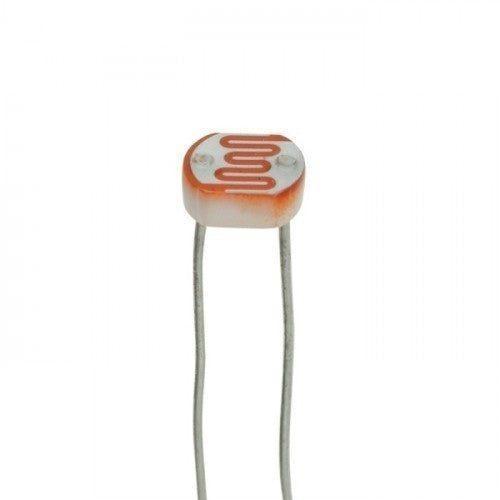
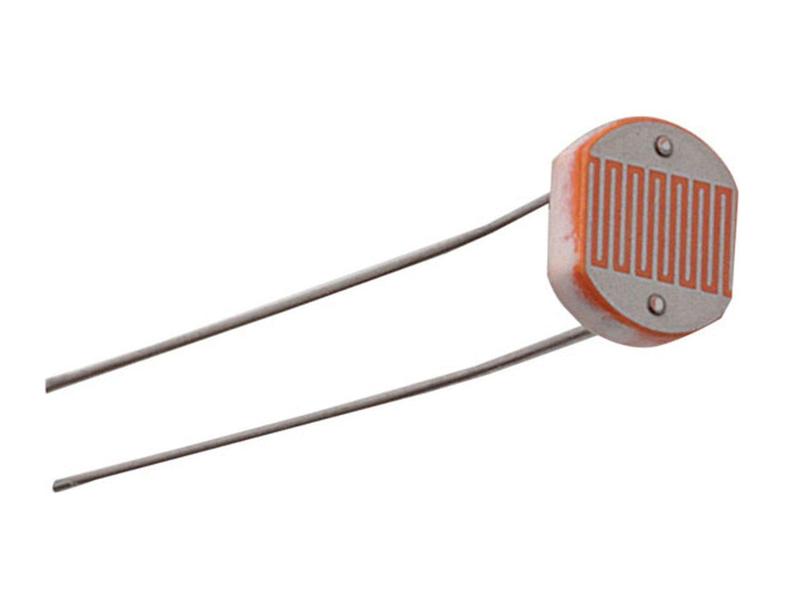
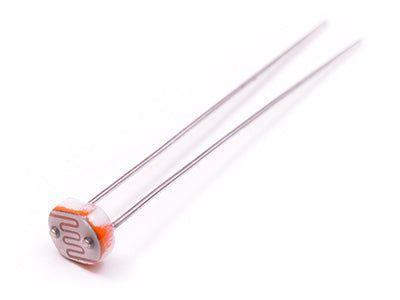
Light Sensitive Photoresistor LDR - 12mm
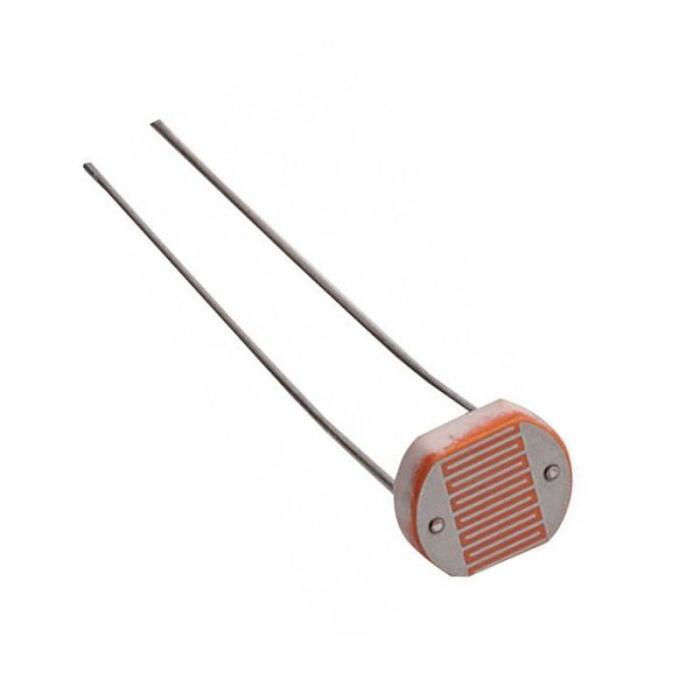
LDR Stands for Light Dependent Resistor and its Resistivity varies with Incident Electromagnetic Radiations so, its resistivity is a function of Incident Electromagnetic Radiations or light. Other names of LDR are photoresistor, Photoconductor, Photocell, and photo-conducting cell
Read more:
How LDR Sensor Works
The LDR
sensor
is made of Semiconductor materials with high Resistance like Silicon or Germanium. It is a light-sensitive device, so this resistor has a different resistance value day and night as given below:
Daylight: 5000?
Dark: 20000000?
Features
It requires less power to operate
Quick Response
Easy to use
Generate high current
Read our blog on
LDR Sensor
detailing what is LDR, the working principle of LDR, Variations in resistance to change in light intensity, types, advantages, disadvantages, and applications of LDR sensors.
Application
Camera Exposure Control
Auto Slide Focus
Photocopy Machines
Colorimetric Test Equipment
Densitometer
Also check
LDR 5mm Metal Housing (Pack of 5)
available on the Iotcart website. The Light Dependent Resistor (LDR) is a semiconductor device made of materials like Silicon or Germanium. Its resistivity varies with incident electromagnetic radiations or light, with resistance values of 5000? in daylight and 20000000? in the dark. The product features quick response, low power consumption, and high current generation. It is commonly used in applications such as camera exposure control, auto slide focus, photocopy machines, colorimetric test equipment, and densitometers.
₹40,06
Incl. GST (No Hidden Charges)
Backorder Available
₹61,60
Incl. GST (No Hidden Charges)
12mm Light Sensitive Photoresistor LDR
Light Sensitive Photoresistor LDR - 12mm LDR Stands for Light Dependent Resistor and its Resistivity varies with Incident Electromagnetic Radiations so, its resistivity is a function of Incident Electromagnetic Radiations …
As low as
₹40,06
₹40,06
₹61,60
Incl. GST (No Hidden Charges)
Backorder Available
5mm LDR (Light Dependent Resi…
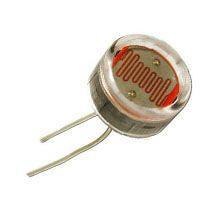
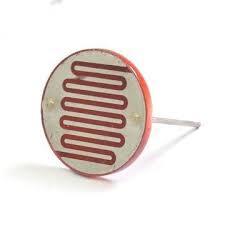
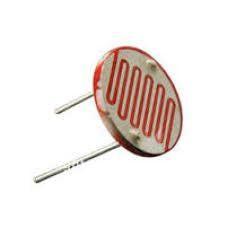
5mm LDR (Light Dependent Resistor)
A 5mm LDR photoresistor
sensor
is made of a high resistance semiconductor. If light falling on the device is of high enough frequency, photons absorbed by the semiconductor give the bound electron enough energy to jump into the conduction band. The resulting free electron (and its hole partner) conduct electricity, thereby lowering resistance. A photoelectric device can be either intrinsic or extrinsic. An intrinsic semiconductor has its own charge carriers and is not an efficient semiconductor, for example, silicon.
In intrinsic devices, the only available electrons are in the valence band, and hence the photon must have enough energy to excite the electron across the entire bandgap. Extrinsic devices have impurities, also called dopants, added whose ground state energy is closer to the conduction band; since the electrons do not have as far to jump, lower energy photons (that is, longer wavelengths and lower frequencies) are sufficient to trigger the device. If a sample of silicon has some of its atoms replaced by phosphorus atoms (impurities), there will be extra electrons available for conduction.
This is an example of an extrinsic semiconductor. Photoresistors are basically photocells. Sensitivity The sensitivity of a photodetector is the relationship between the light falling on the device and the resulting output signal. In the case of a photocell, one is dealing with the relationship between the incident light and the corresponding resistance of the cell.
Learn about the
Light Dependent Resistor
.
Applications:
Camera Exposure Control
Auto Slide Focus
Photocopy Machines
Colorimetric Test Equipment
Automated Rear View Mirror Digital
Automatic Headlight Dimmer
Night Light Control
Street Light Control
Read our blog explaining
how LDR works
, detailing what is an LDR, how LDR Works in Street Lights, what are the types of LDR, how to make an LDR Sensor Module and applications of an LDR Sensor.
₹11,13
Incl. GST (No Hidden Charges)
Backorder Available
₹23,80
Incl. GST (No Hidden Charges)
5mm LDR (Light Dependent Resistor)
5mm LDR (Light Dependent Resistor) A 5mm LDR photoresistor sensor is made of a high resistance semiconductor. If light falling on the device is of high enough frequency, photons absorbed …
As low as
₹11,13
₹11,13
₹23,80
Incl. GST (No Hidden Charges)
Backorder Available
